
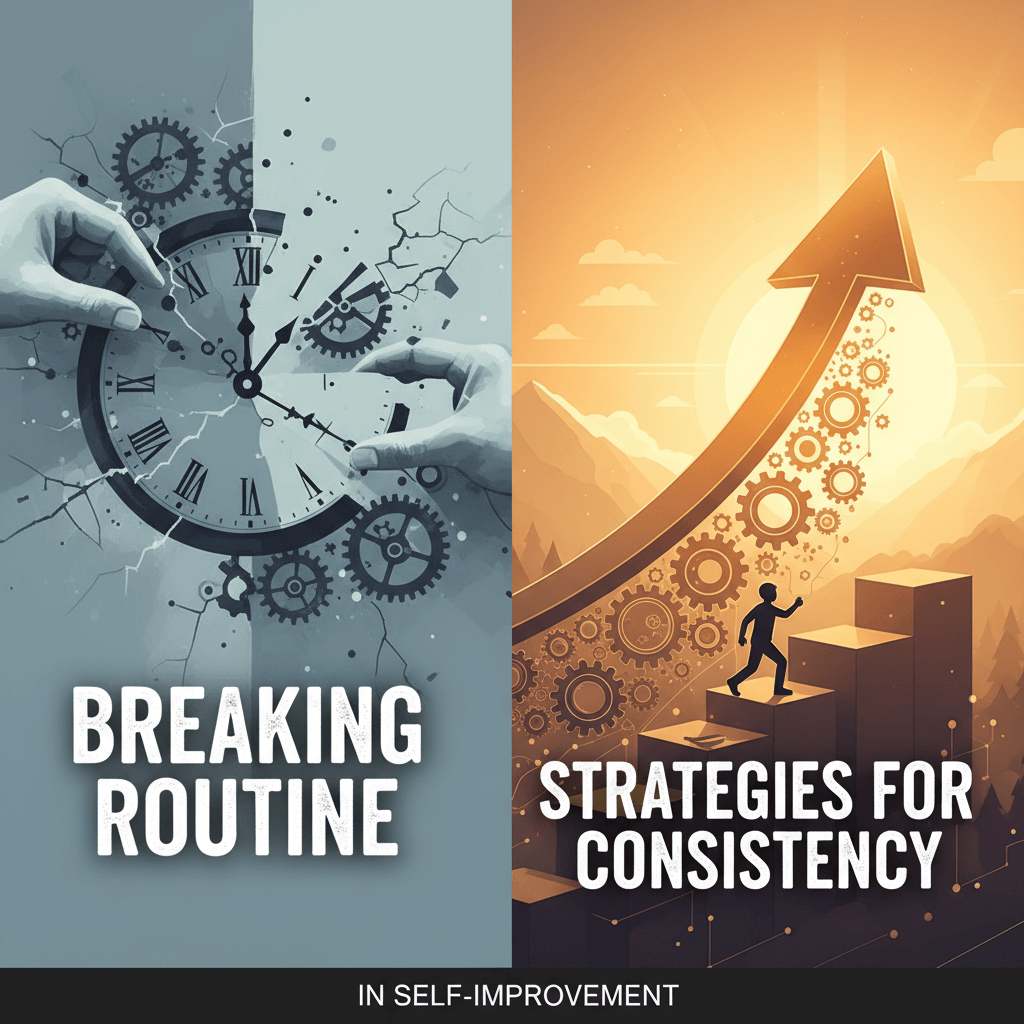
I stared at my running shoes, tucked neatly in the corner where they’d sat untouched for three weeks. The training plan on my refrigerator showed a series of checkmarks that abruptly stopped on day 12. It was the third time this year I’d committed to a morning running routine, and the third time I’d fallen off track before reaching the one-month mark.
Sound familiar? You’re not alone. Studies show that approximately 80% of New Year’s resolutions fail by February, and the average person makes the same resolution ten times without success. The cycle is painfully predictable: enthusiasm, commitment, early progress, disruption, abandonment, and finally, self-criticism.
But what if the problem isn’t your willpower or determination? What if the real issue is that we’ve been approaching consistency all wrong? In this article, I’ll share research-backed strategies and practical approaches that have helped thousands break free from the start-stop cycle of self-improvement—methods that acknowledge our human nature rather than fight against it.
Understanding the Psychology of Habit Formation
Before diving into strategies, it’s essential to understand why consistency is so challenging in the first place.
The Myth of the 21-Day Rule
For decades, we’ve been told that it takes 21 days to form a habit. This widely circulated claim originated from Dr. Maxwell Maltz’s observations in the 1950s but has since been debunked. Research published in the European Journal of Social Psychology found that habit formation actually takes anywhere from 18 to 254 days, with an average of 66 days before a behavior becomes automatic.
This variance explains why so many of us feel like failures when we can’t maintain a new habit after just three weeks. The truth is, habit formation is highly individualized and depends on multiple factors including:
- The complexity of the habit
- Your personal history with similar behaviors
- Environmental factors and triggers
- The neurological reward associated with the activity
The Motivation Fallacy
Another misconception is that motivation precedes action. We wait to “feel motivated” before starting our workout or sitting down to write. James Clear, author of “Atomic Habits,” argues that this approach is backward. Action often comes before motivation, not after it.
Mark, a software engineer from Seattle, discovered this truth when building a meditation practice: “I kept waiting for the perfect moment when I’d feel drawn to meditate. It never came. When I finally committed to just one minute each morning before checking my phone, the habit stuck. After two weeks, I actually started looking forward to it.”
Designing Systems, Not Goals
Goals are destinations; systems are vehicles. While having clear objectives is important, sustainable self-improvement depends more on the systems you create to reach those goals.
The Environment Advantage
Research from the field of behavioral economics shows that our environment shapes our behavior far more than our intentions. A study published in Health Psychology found that people who kept fruit visible on their countertops weighed an average of 13 pounds less than those who didn’t.
Actionable environmental adjustments include:
- Placing your workout clothes beside your bed if morning exercise is your goal
- Using app blockers during designated focus periods
- Creating physical barriers between yourself and temptations (like storing junk food in hard-to-reach places)
Sarah, a graphic designer and mother of two, transformed her home office to support her goal of writing a novel: “I created a dedicated space with no internet connection, pre-loaded my favorite writing music, and set out a carafe of water and tea. Making my environment conducive to writing meant I didn’t have to rely on willpower alone.”
The Two-Minute Rule
When creating new habits, the initial barrier to entry should be minimal. The two-minute rule, popularized by productivity expert David Allen, suggests that any new habit should take less than two minutes to do.
Want to read more? Commit to reading one page. Want to start running? Put on your running shoes and step outside for just two minutes. This approach makes habits so easy to start that you overcome the initial resistance that often derails consistency.
Research on habit formation supports this approach. A 2020 study in the Journal of Behavioral Medicine found that participants who broke larger health goals into tiny, manageable actions showed significantly higher adherence rates after six months compared to those who attempted to change everything at once.
Leveraging Technology Mindfully
Technology can be both our greatest ally and worst enemy when it comes to maintaining consistency. The key is using it intentionally.
Automation and Friction Reduction
Technology excels at removing friction from our routines. Consider implementing these tech solutions:
- Calendar blocking for dedicated self-improvement time
- Automated reminders that include preparation cues (“Meditation in 30 minutes—find a quiet space now”)
- Smart home routines that signal habit transitions (lights dimming for reading time)
Jason, a marketing executive, used technology to maintain a consistent journaling practice: “I set up a daily calendar invite with a direct link to my digital journal and three prompt questions. The notification comes with a custom sound that my brain now associates with reflection time. My journaling consistency went from 20% to 85% in just one month.”
The Double-Edged Sword of Tracking
Habit tracking apps can provide valuable data and dopamine hits when you maintain streaks. However, research published in the Journal of Consumer Research found that tracking can sometimes backfire, creating anxiety and abandonment when streaks break.
The solution? Track process metrics rather than outcome metrics. Instead of tracking “pounds lost,” track “healthy meals eaten” or “workouts completed.” This approach acknowledges your effort rather than results, which are often influenced by factors beyond your control.
Additionally, implement the “never miss twice” rule. If you break a streak, make returning to the habit your highest priority the next day. This prevents single misses from becoming permanent derailments.
The Power of Social Architecture
Humans are fundamentally social creatures, and leveraging this aspect of our nature can dramatically improve consistency.
Accountability Partners and Communities
A study published in the Journal of Consulting and Clinical Psychology found that participants with accountability partners had a 95% higher completion rate for goals compared to those working alone.
Effective accountability systems include:
- Weekly check-ins with specific reporting parameters
- Financial stakes (apps like StickK allow you to commit money that goes to charity if you don’t follow through)
- Public commitments that leverage our desire for consistency
Elena, a software developer, joined an online writing community when working on her technical blog: “Knowing that five other people expected to see my weekly post made all the difference. On days when I didn’t feel like writing, I’d remember that my accountability group would notice my absence, and somehow I’d find the energy to write.”
Identity-Based Habits
Perhaps the most powerful social aspect of habit formation is identity. Research from NYU shows that framing habits as expressions of identity (“I’m a runner” versus “I’m trying to run more”) significantly increases consistency.
This approach works because humans have a strong drive for internal consistency. Once we see ourselves as “someone who meditates daily” or “a person who reads before bed,” continuing those behaviors feels natural rather than forced.
Dr. Michael Rodriguez, a psychologist specializing in behavior change, explains: “When you tie a habit to your identity, skipping it creates cognitive dissonance. Your brain essentially says, ‘Wait, this isn’t like me,’ which creates a stronger motivation than external rewards.”
Embracing Imperfection: The Science of Getting Back on Track
Perhaps the most crucial element of consistency is not perfect adherence but resilience—the ability to return after inevitable lapses.
The Abstinence Violation Effect
Research on addiction and habit change identified a phenomenon called the Abstinence Violation Effect (AVE), where people who slip once often abandon their goals entirely. This happens because they attribute the lapse to personal failure (“I have no willpower”) rather than circumstance (“I was unusually stressed yesterday”).
To combat AVE, implement these mental frameworks:
- Pre-plan for lapses with specific “if-then” scenarios
- Practice self-compassion rather than self-criticism when lapses occur
- View consistency as a practice rather than a perfect record
Carlos, a teacher who lost 50 pounds over 18 months, credits his success to this approach: “Previous attempts failed because one bad weekend would spiral into weeks of giving up. This time, I planned for setbacks. I created a rule that after any ‘off-plan’ meal, the very next meal would be back on plan—no exceptions. This simple rule prevented short-term lapses from becoming complete abandonment.”
The Progress Principle
Harvard researchers Teresa Amabile and Steven Kramer discovered what they call “the progress principle”—the finding that even small wins can boost motivation and happiness. Celebrating minor victories creates a positive feedback loop that fuels consistency.
Consider keeping a “small wins journal” where you document daily successes, no matter how minor. This practice leverages our brain’s natural reward systems to reinforce consistent behavior.
Conclusion: The Consistency Journey
Consistency in self-improvement isn’t about perfection—it’s about persistence. By understanding the true nature of habit formation, designing supportive environments, using technology mindfully, leveraging social connections, and planning for imperfection, you can break the cycle of abandoned routines.
Remember that consistency builds compound interest in your life. Just as financial investments grow exponentially over time, small daily actions accumulate into remarkable transformations when sustained.
I challenge you to choose just one area of self-improvement and apply these principles for the next 66 days—the average time research suggests it takes to form a habit. Start small, expect imperfection, and focus on systems rather than willpower. The path to lasting change isn’t found in motivation or discipline alone, but in creating an ecosystem that makes consistency the path of least resistance.
What small habit will you commit to today? And more importantly, what system will you design to support it when motivation inevitably wanes? Your future self is shaped not by your intentions, but by your consistent actions—however imperfect they may be.
Where This Insight Came From
This analysis was inspired by real discussions from working professionals who shared their experiences and strategies.
- Share Your Experience: Have similar insights? Tell us your story
At ModernWorkHacks, we turn real conversations into actionable insights.
![[Workflow Included] A simple 5-node Instagram posting workflow for beginners](https://modernworkhacks.com/wp-content/uploads/2026/04/workflow-included-a-simple-5-node-instagram-posting-workflow-for-beginners-1024x675.png)





0 Comments