I started this deep dive at 3:17 a.m., midway through a familiar ritual: a “new” focus hack, a pile of tabs, a cup of coffee that had already gone cold. The pitch was irresistible: just one more trick, one more supplement, one more morning routine, and I’d unlock laser-like concentration on demand. I’ve tried the sunrise club, the midnight monk, the bulletproof drink, the binaural beat, and more breath protocols than I can count. Some felt great for a week. None stuck.
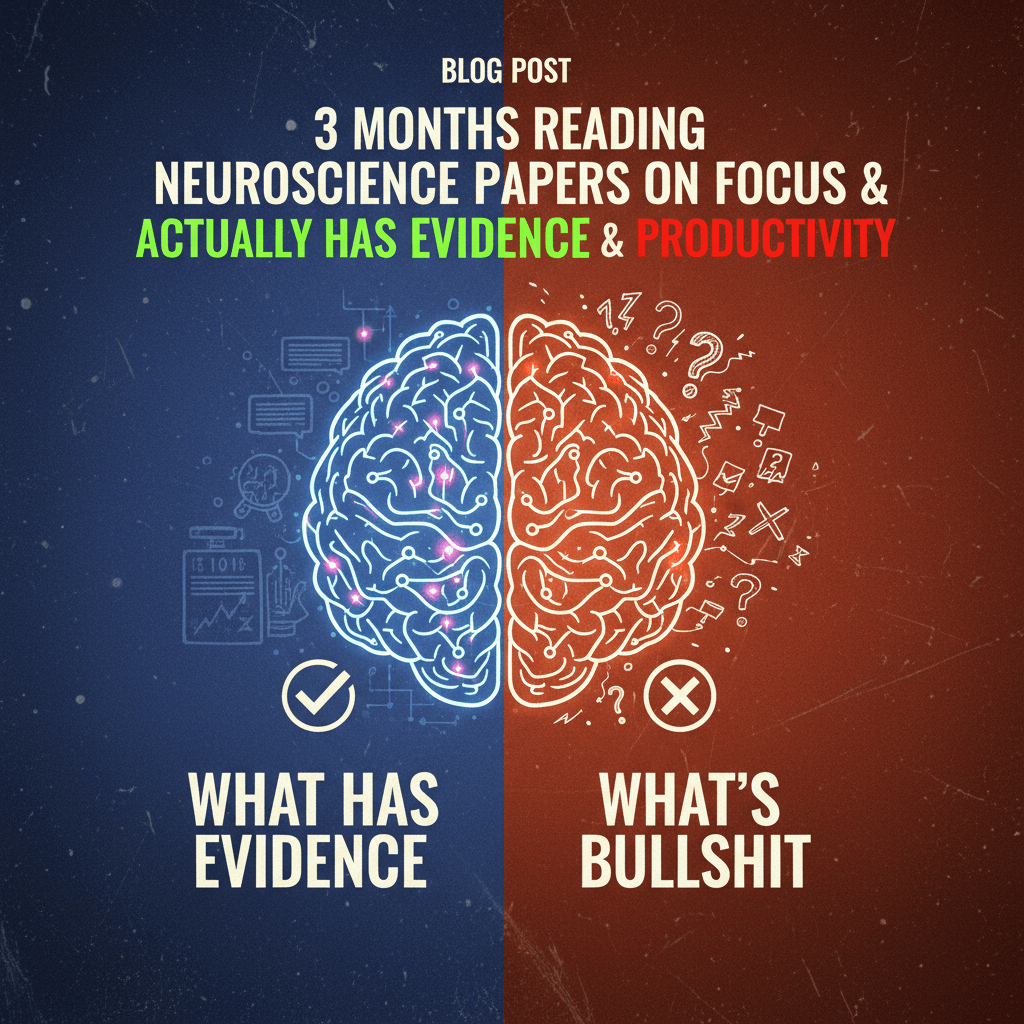
That frustration sent me into the literature. For three months, I read neuroscience and psychology papers on attention, arousal, working memory, executive control, habit formation, and performance under stress. I chased citations and methods sections, spoke with researchers and practitioners, and combed through negative findings as carefully as the headline-making ones. I wanted to know what reliably affects focus in everyday life—not just in a lab task or an influencer’s highlight reel. Discover actionable insights, not myths.
Here’s the good news: the fundamentals of focus are actually stable. The brain’s attention system is a dynamic balance of arousal, motivation, and control. You can shift that balance with surprisingly simple inputs—light, temperature, caffeine timing, task structure, and very deliberate constraints around distraction. The less-good news: your brain isn’t a vending machine. There are few one-shot fixes. The strategies that work are boringly consistent, and the hacks that promise miracles usually backfire or fizzle out within days.
This is a field where anecdotes are loud and data is quiet. So below, I’ll separate what’s supported by evidence from the stuff that’s mostly marketing. I’ll show you how to build a sustainable focus protocol, step by step, and where to experiment without wasting months. Most importantly, I’ll give you a short set of practices that, if you implement them for seven days, will change how you work. No monastic retreats required.
The Evidence-Backed Pillars of Focus
1) Light, Sleep, and Circadian Timing
Focus starts long before you sit down to work. The most powerful dial you can turn is your circadian rhythm—the brain’s 24-hour clock that modulates alertness, hormones, and cognitive capacity. Light anchors the clock. Morning daylight strengthens circadian signals, advances your wake cycle, and sets up more stable energy across the day. Conversely, bright light late at night delays the clock and impairs next-day attention.
Sleep deprivation reliably reduces working memory, slows reaction time, and increases distractibility. Even moderate restriction (5–6 hours) causes noticeable deficits, often without you realizing you’re impaired. Partial sleep loss accumulates across days. Napping helps, but it can’t compensate for chronic shortfalls.
- Actionable: Get 10–30 minutes of outdoor daylight within an hour of waking. Cloudy days still count; it’s the intensity and full-spectrum quality that matters.
- Actionable: Protect 7–9 hours in a regular sleep window, even on weekends. Earlier, consistent bedtimes pay dividends for next-day focus.
- Actionable: Dim lights and screens 1–2 hours before bed. If you must be on a device, enable warm color temperatures and reduce brightness.
- Actionable: Reserve late-night bright light for safety or necessity. If it’s entertainment, your next morning’s brain is footing the bill.
2) Temperature, Movement, and Arousal
Alertness is tied to core temperature. A cool sleeping environment improves sleep quality; a slightly cooler workspace and occasional brief cold exposure can increase alertness. Meanwhile, short bouts of movement raise catecholamines (like norepinephrine), improving readiness without draining willpower.
- Actionable: Keep your workspace slightly cool. If you get drowsy after lunch, a brisk 5–10 minute walk outside often restores alertness better than another coffee.
- Actionable: If you tolerate it, brief cold exposure (a cold face rinse or a 30–90 second cool shower finish) can provide a time-limited boost in arousal.
- Actionable: Avoid heavy meals right before deep work. Large glucose swings can nudge you toward sleepiness and mind-wandering.
3) Caffeine Timing (and Its Limits)
Caffeine works primarily by blocking adenosine receptors, temporarily lifting the brain’s “sleep pressure.” It helps attention and vigilance, especially when tired. But mistimed caffeine disrupts sleep and creates a vicious cycle. Most people benefit from delaying caffeine 60–90 minutes after waking, allowing adenosine to clear naturally and reducing afternoon crashes.
- Actionable: Delay coffee 60–90 minutes after waking. Use a second smaller dose before your second deep-work block, not after mid-afternoon.
- Actionable: Track your personal cutoff time. For many, that’s 6–8 hours before bedtime. If your sleep is fragile, move it earlier.
- Actionable: Consider tea or lower doses to reduce jitters. More isn’t better if it spikes anxiety—high arousal can reduce focus precision.
4) Single-Tasking and Context Control
Multitasking is costlier than it feels. Each switch carries a reconfiguration cost in attention and working memory. The effect compounds when tasks are dissimilar (e.g., writing and messaging). People who think they’re good at multitasking tend to be worse at it.
A compelling alternative is “context control”: define a narrow attentional set and make it the path of least resistance. Remove triggers that cue other contexts (apps, tabs, notifications) and reinforce the one you want (single file, single window, full screen).
- Actionable: Put your phone in another room for deep work. Not silent mode. Not face down. Physically elsewhere.
- Actionable: Work in one window, one tab, one document for the task at hand. Use website blockers as guardrails, not discipline substitutes.
- Actionable: Batch communications 2–3 times per day. Precommit in your calendar.
5) Ultradian Blocks: 25–90 Minutes of Effort, On Purpose
The brain cycles through fluctuations in alertness roughly every 90 minutes. Attention benefits from working in discrete blocks aligned with these rhythms. The right block length depends on task complexity and your current training. For tedious or novel work, shorter blocks (25–40 minutes) are effective. For deep, immersive work, 60–90 minutes can be ideal—if you’ve trained up to it.
- Actionable: Pick a block length you can complete without checking anything. Commit to “no context switches” inside the block.
- Actionable: Use clear block boundaries: a timer, a start ritual (two deep breaths, statement of intent), and an end ritual (brief walk, water, note next step).
- Actionable: Limit to 2–4 deep blocks per day. You don’t need eight “monk-mode” sessions; you need a few high-quality ones.
6) Goals, Constraints, and the Next Action
Focus collapses when the goal is vague. Your prefrontal cortex handles planning and control; it likes specificity. Overly abstract goals (“work on the paper”) leak attention because the brain must constantly renegotiate what to do. Tightening the goal and clarifying the next action reduces cognitive load and friction.
- Actionable: Before each block, write one sentence: “In this block, I will [produce X] by [doing Y].” If it’s not a thing you can finish, define a finish line (e.g., “outline three sections”).
- Actionable: Keep a “parking lot” note for intrusive ideas or tasks. Write them down; return to the block.
- Actionable: End each block by capturing the next action. This lowers startup friction for the next session.
7) Stress, Mindset, and the Attention Sweet Spot
Attention follows an inverted-U with arousal: too little, and you’re sluggish; too much, and you’re jittery and error-prone. Perception of challenge matters. Reframing stress as readiness (“my body is preparing me”) can improve performance. Brief breathwork helps regulate arousal, not because oxygen is magic, but because it modulates the autonomic nervous system.
- Actionable: Before a block, take 60–90 seconds for a physiological sigh: inhale through the nose, top it off, then slow exhale. Repeat 2–3 times.
- Actionable: Label the task difficulty honestly. If anxiety is high, reduce block length and lower the bar to “first ugly draft.” Momentum over perfection.
- Actionable: Use positive constraints: “until this timer ends” and “only this window.” Constraint beats willpower.
Key takeaways from real discussions
- Morning light, consistent sleep, and stable caffeine habits improve focus more than any single hack.
- Context control—phone away, single window, specific output—beats trying to “resist” distractions.
- Short, deliberate blocks with crisp start and end rituals increase the percentage of time you’re actually working.
- Movement and brief breathwork are powerful, low-cost ways to regulate arousal and reset attention.
- Perfectionism and vague goals kill momentum; “good enough, next step defined” wins over time.
Likely Helpful With Context and Caveats
Music, Noise, and Binaural Beats
Music’s effect on focus is task-dependent. Lyrics disrupt reading and language-heavy tasks. Repetitive, low-variability instrumental music or ambient noise can help with tedious work by masking distractions. “Binaural beats” have mixed evidence—some small effects on mood/arousal, but not a reliable focus booster across tasks.
- Actionable: For writing/coding, try instrumental-only at low volume, or consistent brown noise. Avoid novelty-heavy playlists.
- Actionable: If a track grabs your attention, it’s working against you. The best focus audio is boring.
Supplements and “Nootropics”
The market outpaces the data. Some ingredients have modest, context-specific effects (e.g., L-theanine for smoothing caffeine jitter, creatine for certain cognitive tasks in low-sleep or low-meat populations). Many blends rely on underdosed or poorly studied compounds. Individual differences are huge, and placebo effects are real.
- Actionable: If you experiment, change one variable at a time, track sleep and subjective focus, and stop if it disrupts rest or mood.
- Actionable: Start with caffeine and L-theanine if you’re sensitive. Be skeptical of proprietary blends and mega-doses.
Cold, Heat, and Breath Protocols
Cold exposure increases alertness acutely and may improve mood and resilience. Heat (sauna) can relax and improve sleep quality when used earlier in the day. Breath protocols can shift state quickly, but effects are transient unless paired with a clear work structure.
- Actionable: Use cold or a brisk outdoor walk to enter a focus block, not as a procrastination ritual. Time-box it.
- Actionable: Use breathwork as a start cue, then immediately begin the task with a simple first action.
Task-Specific Training
Working memory training rarely generalizes far beyond the trained tasks. But skill practice for your actual domain (e.g., deliberate practice for coding, writing drills for clarity) strongly improves performance and reduces the cognitive load of routine operations. Less load means more focus capacity for the hard parts.
- Actionable: Build micro-drills for your craft (e.g., 10-minute refactoring drills, paragraph rewriting drills). Practiced patterns clear space for creativity.
Nutrition and Hydration
Extreme diets are generally unnecessary for focus. Regular meals with protein and fiber stabilize energy. Dehydration impairs cognition, but you don’t need to chase gallons. Overhydration leads to frequent bathroom breaks—an underrated focus killer.
- Actionable: Eat balanced meals, don’t skip lunch if you crash mid-afternoon, and sip water to thirst. Avoid large sugar spikes before deep work.
Mostly Hype, Misinterpretations, and Marketing
“Miracle” Morning Routines
Waking at 4 a.m. isn’t a productivity strategy; it’s a scheduling decision. If you shift your sleep window and protect it, early mornings can be quiet and useful. But chronic sleep restriction in the name of hustle degrades attention, mood, and decision-making. Early alone isn’t better; consistent is.
- Actionable: Choose a wake time you can sustain. Optimize your first 90 minutes (light, movement, planning) rather than chasing arbitrary hours.
Blue-Light Blocking All Day
Blue light-avoidance during daytime can blunt alertness. Blue-enriched light in the morning promotes wakefulness; blocking it then works against you. At night, reducing blue and overall brightness helps. Context matters.
- Actionable: Skip daytime blue-blockers unless you’re treating a specific sensitivity. Dim and warm your lighting at night instead.
Brainwave Gadgets and Instant Neuroboosts
Headbands promising instant gamma waves and infinite focus rarely deliver beyond placebo-level effects without rigorous, individualized protocols. EEG nuances get lost in consumer tech claims. Some devices are interesting for biofeedback, but they’re not shortcuts.
- Actionable: If you use devices, treat them as awareness tools, not engines. Your environment and habits do the heavy lifting.
The “Dopamine Detox” Myth
You can’t detox dopamine. It’s a core neurotransmitter for motivation and reward prediction. The useful idea hidden beneath the hype: reduce high-salience, rapid-reward behaviors (doomscrolling, constant notifications) to make lower-salience, high-value work more attractive. That’s not a detox; it’s environment design.
- Actionable: Remove high-salience distractors during work hours. Allow them in scheduled windows. Scarcity increases satisfaction.
Ten-Minute “Hacks” That Promise Hours of Focus
Short priming routines can help with state shifts, but they’re multipliers, not creators. Without clear goals, constraints, and energy management, hacks are decoration.
- Actionable: Pair any priming routine with a concrete, finishable output for the next 30–60 minutes.
Eyes-Only Exercises for Focus
Eye movement is part of attention, but simple “eye yoga” hasn’t shown reliable improvements in general focus. Visual field orientation (narrow vs. broad) can shift arousal—narrow focus slightly elevates it, panoramic soft gaze can calm you—but these are minor dials, not cures.
- Actionable: Use a brief panoramic gaze to downshift, a narrowed gaze to cue engagement—but don’t expect miracles.
Build Your Personal, Evidence-Based Focus System
Design Principles
All the pieces above snap together into a simple system. The aim is to reduce decision fatigue, stabilize energy, and allocate your best attention to your highest-value work. You’ll notice the system relies on constraints, rituals, and environment more than motivation. That’s on purpose.
- Stability beats intensity: You’ll get more from four weeks of 2–3 daily blocks than a weekend of all-out effort.
- Friction is the enemy: Every decision costs attention. Standardize as much as possible.
- State follows setup: Create the conditions; don’t wait for the feeling.
The Daily Template
Use this as a starting point. Adjust times to your realities, not the other way around.
- Morning (first 90 minutes):
- Get outside for daylight. Move lightly (walk, mobility).
- Plan your day: identify 1–2 deep blocks, 2–4 shallow blocks, and communication windows. Write your “In this block I will…” sentences.
- Delay caffeine ~60–90 minutes; hydrate normally.
- Deep Block 1 (60–90 minutes):
- Phone in another room. One window. Timer on.
- Start ritual: two physiological sighs, read your task sentence aloud, begin with a 2-minute micro-task.
- End ritual: capture next action, 5-minute walk, sip water.
- Admin/Communication Batch (20–40 minutes):
- Inbox, messages, scheduling. Time-box it.
- Shallow Work (30–60 minutes):
- Mechanical tasks, review, reading. Consider low-volume instrumental music.
- Deep Block 2 (45–75 minutes):
- Use a smaller caffeine dose if desired.
- Repeat the same constraints and rituals.
- Afternoon Reset:
- Short walk, sunlight if possible. Keep caffeine light or skip if sleep is delicate.
- Evening Wind-Down:
- Dim lights 1–2 hours before bed. No heavy mental lifting late at night.
Weekly Structure
- Plan two “heavy lift” days with 3 deep blocks, three regular days with 2 deep blocks, and two lighter days with 1 deep block or none.
- Batch similar tasks together to reduce switching (content creation on one day, meetings on another where possible).
- Review weekly: What derailed blocks? What helped? Adjust environment and timing before chasing new hacks.
How to Handle Distractions When (Not If) They Hit
- Internal: If your mind is racing, write a one-minute braindump on a notepad, pick the next micro-action, and restart the timer.
- External: If someone interrupts, ask, “Can this wait 20 minutes?” Protect block boundaries. If not, stop the timer, handle it, and reschedule the block.
- Cravings: Set a five-minute permission rule. In five minutes, you can check X. Most urges pass if you keep your hands on the work.
Measure What Matters
Most tracking is performative. You don’t need five dashboards. Two numbers will transform your practice:
- Block completion rate: Of the blocks you scheduled, how many did you complete as designed?
- Output per block: For each block, record what you shipped (lines of code, paragraphs, slides, solved problems).
Focus improves when you close the loop: schedule, execute, record, learn, adjust.
Troubleshooting by Symptom
- Sleepy in the morning: More morning light, later caffeine, earlier bedtime, small protein-rich breakfast, short walk before block one.
- Jittery/anxious: Reduce caffeine dose, shorten blocks, breathe down with long exhales, switch to low-stim tasks temporarily.
- Mind-wandering: Tighten the output definition, shorten block length, remove one more layer of digital friction.
- End-of-day crash: Avoid late caffeine, include an afternoon movement reset, stabilize meal timing.
- Perfection paralysis: Commit to “ugly first pass” with a 25-minute block. You can’t edit what doesn’t exist.
A 7-Day Experiment to Prove It to Yourself
Day-by-Day Playbook
- Day 1: Baseline and Setup
- Time audit: Where did last week’s attention go? Identify top three derailers.
- Environment: Create a deep-work profile on your computer (or a separate user) with only essential apps.
- Plan two deep blocks for tomorrow and write your task sentences.
- Day 2: Light and Constraints
- Morning light, delayed caffeine, phone-free block one.
- Track block completion and output. Note any triggers that tempted you to switch.
- Day 3: Blocks and Breath
- Add the start ritual: two physiological sighs plus a micro-action. End ritual with a walk and next action capture.
- Day 4: Movement Reset
- Insert a 5–10 minute outdoor walk before deep block two. Evaluate afternoon energy.
- Day 5: Communication Batching
- Constrain messages/email to two windows. Record the difference in perceived control and block quality.
- Day 6: Optimize Arousal
- Experiment: lower caffeine dose, or switch to tea; try brown noise for shallow work; adjust room temperature.
- Day 7: Review and Personalization
- What worked? What didn’t? Keep the 3–5 practices with the highest ROI. Scrap the rest.
What Success Looks Like
You’re not aiming for perfection; you’re aiming for a higher percentage of “time on task” inside each block and a lower friction start. If you complete 8–10 deep blocks across the week, kept your phone out of the room for those blocks, and can point to concrete outputs, you’ve succeeded. The feeling of control is a lagging indicator; habit is the leading one.
Your Move: Turn Insight into Output
You don’t need another month of research to start. You need one week of disciplined, low-drama experiments. Pick your next workday and commit to:
- Morning daylight within an hour of waking.
- Two phone-free deep work blocks with one-sentence goals.
- A clear start ritual, a clear end ritual, and a five-minute walk between blocks.
- One communication batch in the late morning or early afternoon.
- Evening dim lights and a consistent sleep window.
The real flex is not a new hack; it’s the absence of excuses. Your brain is plastic. Your attention is trainable. Strip away the noise, run the experiment, and let your results—not marketing—tell you what works. Then share your findings with a friend or your team, compare notes, and refine together. Discover actionable insights by doing, not scrolling. Start today.
Where This Insight Came From
This analysis was inspired by real discussions from working professionals who shared their experiences and strategies.
- Source Discussion: Join the original conversation on Reddit
- Share Your Experience: Have similar insights? Tell us your story
At ModernWorkHacks, we turn real conversations into actionable insights.
![[Workflow Included] A simple 5-node Instagram posting workflow for beginners](https://modernworkhacks.com/wp-content/uploads/2026/04/workflow-included-a-simple-5-node-instagram-posting-workflow-for-beginners-1024x675.png)




0 Comments