
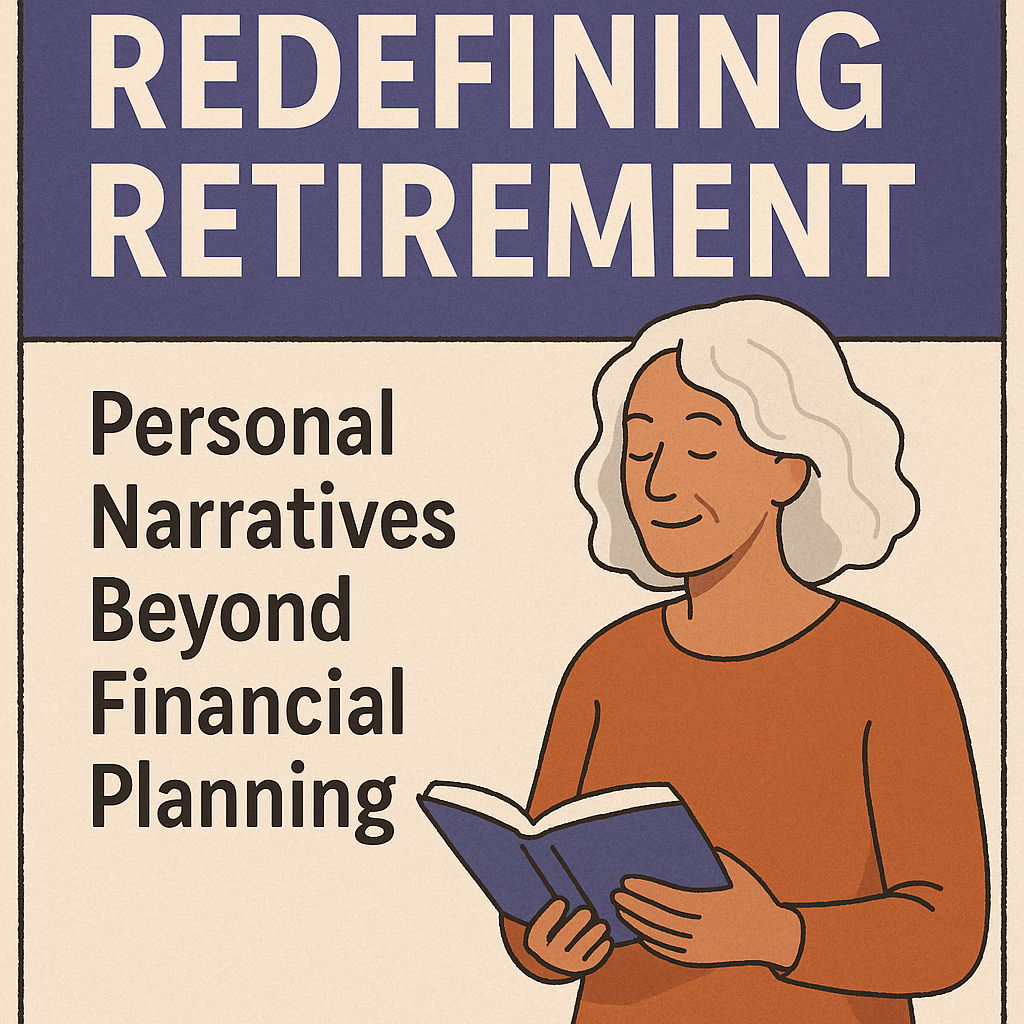
At 67, Barbara didn’t feel “retired” as she stood before a classroom of adult ESL students. After 40 years as an accountant, she now taught English three mornings a week. “I have more purpose now than when I was working full-time,” she told me, her eyes bright with enthusiasm. “My financial advisor prepared my portfolio perfectly, but no one prepared me for who I would become after retirement.”
We’ve long defined retirement primarily as a financial milestone—that magical number when investments, Social Security, and pension plans converge to free us from paid work. But for millions of Americans entering this phase each year, the financial threshold is merely the beginning of a profound identity transformation. The real retirement journey isn’t just about having enough money; it’s about discovering who you are when your business card no longer defines you.
The Identity Shift: Finding Purpose Beyond the Paycheck
When Michael Stevenson, 72, retired from his engineering career, he experienced what psychologists call “role exit”—the process of disengaging from a central identity. “For six months, I introduced myself as ‘formerly with Boeing,'” he recalls. “I couldn’t figure out who I was without that attachment.”
This identity crisis is remarkably common. A 2021 Edward Jones study found that 31% of retirees struggle with finding purpose and meaning in retirement—more than those who struggle with health concerns (25%) or even financial security (22%).
Navigating the Transition
For many successful retirees, the identity shift requires deliberate navigation:
- Gradual disengagement – Instead of “cold turkey” retirement, consider phased retirement or consulting to ease the transition.
- Identity exploration – Actively try new roles, communities, and activities before fully retiring.
- Purpose mapping – Document what gave you satisfaction beyond status and income in your working years, and find ways to amplify those elements.
Diane Lewis, a retired healthcare executive, created what she calls a “purpose portfolio” alongside her financial portfolio. “I listed everything that energized me throughout my career—mentoring, problem-solving, creating systems—and found volunteer opportunities that let me use these skills without the stress of my former position.”
The Time Revolution: From Scarcity to Abundance
James Richardson, 70, keeps a sign in his woodworking shop that reads: “The trouble with retirement is you never get a day off.” His joke highlights a profound truth—retirement transforms our relationship with time itself.
Research from the MIT AgeLab indicates that the average retiree gains approximately 2,500 hours per year that were previously dedicated to work and commuting. This sudden abundance creates both opportunity and challenge.
Mastering Time Affluence
Those who thrive in retirement often develop intentional approaches to this new time landscape:
- Structured flexibility – Maintaining routines and commitments while preserving spontaneity
- Time blocking – Designating specific periods for productivity, relationships, health, and leisure
- Seasonal living – Creating different rhythms and priorities for different times of year
Patricia Goodwin, a 69-year-old former teacher, describes her approach: “Monday through Wednesday are my ‘giving back’ days—volunteering, helping with grandchildren. Thursday is for personal projects. Fridays are for adventures with my husband. Weekends are unstructured. This rhythm gives me both purpose and freedom.”
The most satisfied retirees seem to strike a balance between productivity and leisure. A longitudinal study by the University of Michigan found that retirees who engage in a mix of productive activities (volunteering, caregiving, creative pursuits) and pure leisure report significantly higher life satisfaction than those who focus exclusively on either.
The Relationship Renaissance: Redefining Connections
When Robert and Susan Chen retired within a year of each other after 40-year careers, they made a startling discovery: “We had to relearn how to be together,” Susan explains. “At work, we were independent operators who reconnected in the evenings. Suddenly we were together all day, every day.”
Retirement profoundly reshapes our relationship landscapes—with partners, family members, friends, and community. According to gerontologist Karl Pillemer’s research, relationship quality becomes the single strongest predictor of retirement satisfaction, outweighing even health and financial stability.
Relationship Reinvention Strategies
Successful retirees actively redesign their social worlds:
- Partnership renegotiation – Explicitly discussing expectations, boundaries, and shared vs. independent activities with spouses/partners
- Friendship cultivation – Developing age-diverse social connections not tied to former professional identities
- Intergenerational engagement – Creating meaningful connections across age groups through mentoring, learning, or community involvement
Frank Gonzalez, 74, found retirement initially isolating after leaving his role as a sales manager. “I missed the daily interactions, the sense of being in the mix,” he says. His solution was joining a “men’s shed”—a community workshop where retirees collaborate on projects while building friendships. “We’re building furniture and building connections at the same time. It’s not about what we make; it’s about making it together.”
The Legacy Mindset: From Success to Significance
At 82, Eleanor Washington spends Tuesday mornings helping young entrepreneurs develop business plans. “In my career, I focused on building wealth,” she reflects. “Now I’m focused on building people. That’s a legacy that outlasts any account balance.”
This shift from accumulation to contribution represents one of retirement’s most profound psychological transformations. Developmental psychologist Erik Erikson described this life stage as centered on “generativity vs. stagnation”—the need to contribute to future generations versus feeling disconnected from what comes next.
Creating Meaningful Legacy
The most fulfilled retirees approach legacy creation with intentionality:
- Skill transmission – Teaching hard-earned knowledge to younger generations through mentoring, teaching, or documentation
- Story preservation – Recording family or community histories, creating ethical wills, or sharing wisdom through writing or recording
- Community investment – Contributing time, expertise, and resources to causes that will benefit future generations
Howard Klein, a 77-year-old retired judge, created what he calls his “wisdom transmission plan” alongside his estate plan. “I realized I had accumulated knowledge that would die with me if I didn’t actively share it,” he explains. He now writes regular letters to his grandchildren about life lessons, records oral histories of his neighborhood, and teaches constitutional law to high school students.
Research from the Stanford Center on Longevity suggests that this type of generative activity significantly increases well-being in retirement, activating reward centers in the brain similar to those triggered by personal achievement during working years.
The Learning Revolution: From Expertise to Exploration
After 35 years as a pediatrician, Maria Alvarez enrolled in an art history course at her local community college. Three years later, she leads museum tours as a docent. “In my career, I was the expert. Now I get to be the beginner again. It’s terrifying and exhilarating.”
This willingness to embrace novice status after decades of professional competence represents a profound psychological shift. Yet research from the Harvard Study of Adult Development suggests that learning new skills in retirement is associated with both cognitive preservation and emotional well-being.
Embracing Beginner’s Mind
Successful retirees approach learning with specific strategies:
- Skill pairing – Combining existing expertise with new domains (e.g., a former accountant learning to teach financial literacy)
- Deliberate discomfort – Intentionally pursuing areas of genuine challenge rather than staying in comfort zones
- Learning communities – Joining groups of fellow learners rather than pursuing isolated study
William Torres, 68, a retired construction manager, joined a writing group despite having “never written anything but work reports.” Three years later, he’s published a collection of short stories. “Learning something completely new rewired my brain,” he says. “I’m thinking differently about everything now.”
Creating Your Post-Career Narrative
The financial services industry has given us the 401(k), the IRA, and countless calculators to determine our “retirement number.” What we lack are equally robust tools for planning the human dimensions of retirement. Yet the stories of successful retirees offer clear guidance for creating your own post-career narrative:
- Start identity exploration before retirement – Test potential new roles and interests while still working
- Create a time portfolio – Design an intentional balance of productive activity, relationships, learning, and leisure
- Invest in relationship transitions – Have explicit conversations about changing roles with partners and family members
- Develop a legacy mindset – Identify specific ways to transmit knowledge, values, and support to future generations
- Embrace beginner status – Cultivate areas where you can experience growth rather than mastery
As Barbara told me in that ESL classroom, “My financial advisor kept asking if I had ‘enough.’ The better question was: enough for what? What did I want this chapter to be about? Once I answered that, the money part was just logistics.”
Retirement planning deserves more than spreadsheets and portfolio reviews. It requires imagination, introspection, and intention. The most successful retirees aren’t simply those who’ve saved enough—they’re those who’ve envisioned and created a post-career identity as carefully as they built their financial security. In doing so, they’ve discovered that retirement isn’t an ending but a beginning—perhaps the most creative chapter of all.
Where This Insight Came From
This analysis was inspired by real discussions from working professionals who shared their experiences and strategies.
- Share Your Experience: Have similar insights? Tell us your story
At ModernWorkHacks, we turn real conversations into actionable insights.
![[Workflow Included] A simple 5-node Instagram posting workflow for beginners](https://modernworkhacks.com/wp-content/uploads/2026/04/workflow-included-a-simple-5-node-instagram-posting-workflow-for-beginners-1024x675.png)



0 Comments