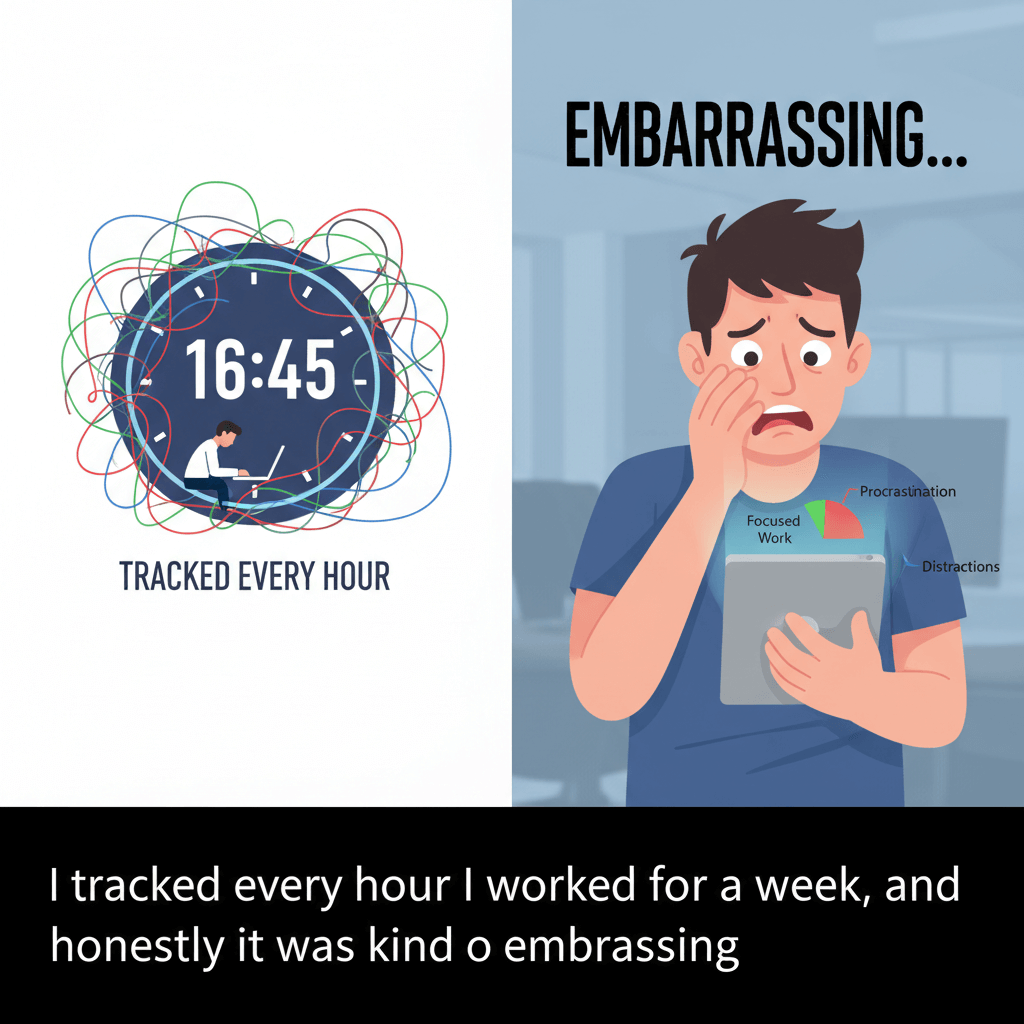
Discover actionable insights. That’s the short promise. The longer story is that I learned far more about how I spend my workday than I expected—some of it unflattering, all of it useful. If you’ve ever wondered where your time actually goes (not where you think it goes), this is the field report I wish I had before I started.
The week I turned my time into data
I started on a Monday with the flimsy confidence of someone who assumes they’re pretty efficient. I’m not a slacker. I hit deadlines. I answer messages fast. But I couldn’t shake the feeling that I was always “on” without moving the truly important work forward. So I did the only reasonable thing: I tracked every single hour I worked for seven days—meetings, messages, deep work, rabbit holes, the works. Every 30 minutes, I logged what I was doing, where I was, and why I chose it.
The setup that made it real
I kept it simple. Five categories covered nearly everything: Deep Work (focused, cognitively heavy tasks), Support (helping others, reviews, quick asks), Admin (email, scheduling, documentation), Meetings (live, synchronous time with others), and Drift (unplanned, reactive, or “I’ll just check this one thing” time). I also had a final column called Intent vs. Reality—what I planned to do in that block versus what actually happened.
The first morning felt like a reality show confessional. At 8:30 a.m., I planned to outline a major proposal. By 8:45, I was checking analytics stats I didn’t need. By 9:10, I was adjusting a slide deck header font. At 9:30, I wrote: “Intent: draft proposal. Reality: resize fonts, reply to 2 Slacks, skim 1 blog post.” I kept going. The friction of writing down the truth each half hour was uncomfortable enough to make me better, but not so painful that I quit.
The moment the illusion cracked
By lunch on day two, a pattern emerged that I couldn’t unsee: my calendar was packed, but my outcomes were thin. Mornings were peppered with tiny interruptions that felt important in the moment but dissolved into fog afterward. Afternoons were meeting marathons that left no oxygen for thinking. I was constantly multitasking at low intensity, mistaking fast response time for progress. The data wasn’t subtle. Deep Work blocks were tiny islands surrounded by an ocean of Support, Admin, and Drift.
Then came the number that embarrassed me: across five workdays, I logged 7 hours and 40 minutes in Drift—time I hadn’t planned to spend, doing things I wouldn’t have remembered if you asked me a day later. That’s basically a full workday lost to unplanned reactions. I thought I was a disciplined operator. My worksheet suggested otherwise.
What happened when I told the truth, out loud
On Wednesday afternoon, I shared early results with a couple of teammates. “I think I’m busy, but I’m not doing the right kind of busy,” I said. One person laughed in recognition. Another asked if I could share my tracker template. We ended up comparing notes about our “productivity theater” moments—the times we looked engaged without moving the needle. It was both bonding and clarifying. Transparency didn’t just make me accountable; it gave other people permission to be honest about their time, too.
By Friday, I wasn’t just collecting data. I was experimenting. I blocked a 90-minute Deep Work slot and set my status to “Heads down, ping if urgent.” I turned off notifications. I left one Slack channel. I asked to convert a standing meeting into an asynchronous update. My log changed immediately. Output went up. Stress dropped a notch. It wasn’t magic. It was a better ratio.
The patterns I couldn’t ignore
When the week ended, I didn’t want averages. I wanted leverage—patterns that, if I changed them, would change everything else. Four stood out.
1) Defaulting to “yes” is a debt, not a virtue
Every unexamined yes created invisible obligations. I was saying yes to one-off favors, yes to attending “optional” meetings (which never felt optional), yes to context-switching because it was easy, yes to being available at all times. My tracker showed the downstream payments on those debts: fragmented attention and Drift piling up in the margins.
Once I saw that pattern, I added a rule: if I can’t clearly name the outcome I’m responsible for in a request, it’s a “clarify or no.” If I can, I schedule the smallest possible commitment, not the biggest.
2) Meetings expand to the size of our uncertainty
I don’t hate meetings. I hate vague meetings. The vaguer the problem, the longer the call. My notes showed that short, purpose-built meetings with clear pre-reads were efficient. The real offenders were “let’s sync” sessions that tried to solve three problems at once without a decision owner. I started setting a firm agenda, a time cap, and a decision tree before I accepted or requested time. I also learned to ask, “What’s the decision?” and “What input do you need from me?” If there wasn’t an answer, it wasn’t a meeting yet.
3) Deep Work is a product of friction management
I used to think Deep Work was about heroics—grit, willpower, monk-like concentration. The log told a simpler story. When friction was low (notifications off, door closed, single tab, narrow scope), Deep Work happened. When friction was high (Slack buzzing, inbox open, undefined tasks), it didn’t. I stopped expecting myself to triumph over triggers. I engineered fewer triggers. I put friction in front of distractions (news sites required two-step logins; messages were batch-checked). I put grease in front of important tasks (checklists pre-written, files pre-opened, calendar blocked).
4) “Fast” and “effective” are not synonyms
I was fast, which felt admirable. But speed without selectivity was sabotaging the big work. I would clear low-effort tasks quickly—little dopamine hits—while postponing the chunky, ambiguous projects that mattered most. My tracker called me out: speed was my shield against discomfort. To fix it, I started measuring daily wins by “advances” instead of “completions.” An advance meant I moved a priority forward in a visible way (outline done, key decision made, prototype drafted), even if it wasn’t finished.
What the numbers looked like
Across the week, the percentages were humbling. Only about 28% of my working time counted as Deep Work before I intervened midweek. After I changed a few rules (notification batching, meeting triage, explicit goals), that jumped to roughly 43% for the final two days. Admin dropped by a third. Drift nearly halved. The lesson wasn’t that I needed a personality transplant. I needed a system that didn’t reward reactivity.
What real conversations revealed
The data was honest, but it wasn’t complete. Insight came from talking through the findings with people who see my work from different angles. Those discussions were candid, sometimes surprising, and occasionally hard to hear. They unlocked changes I wouldn’t have made alone.
A manager’s lens: outcomes > optics
When I walked my manager through the tracker, I braced for a comment about hours. Instead, I got a question: “Which of these blocks moved company priorities?” We talked about the difference between “visible busyness” and “business impact.” She suggested I identify the two weekly outcomes that matter most and make them non-negotiable. Everything else should contour around them. That reframe was freeing. It gave me explicit permission to protect time for impact work—even if it made me slower in the shallow stream.
A peer’s truth: your urgency bleeds
A teammate told me that when I respond instantly to everything, I create a norm that others feel pressured to follow. My urgency bleeds into their calendars. I thought I was being helpful; sometimes I was just spreading churn. We agreed to use “response windows” (e.g., “I’ll get back to you by 3 p.m.”) instead of immediate replies. We also started tagging messages by need: “FYI,” “Input,” “Decision,” “Blocker.” Our chats got shorter and more precise overnight.
A project partner’s nudge: make decisions cheaper
Another colleague pointed out that I treated decisions like events, not flows. We’d hold issues until a meeting, then try to decide everything in a rush. She proposed a lightweight decision log in our shared doc: context, options, owner, due date, chosen path, and a one-sentence why. Most choices didn’t need a live debate; they needed visibility and a bias for action. The tracker confirmed it: when decisions moved in writing, meetings got leaner and projects accelerated.
A mentor’s reminder: energy is the first resource
I also spoke with a mentor who asked a question I’d avoided: “When are you actually sharp?” I realized I scheduled my hardest work against my lowest energy. I put heavy tasks after lunch and then beat myself up when they dragged. I flipped it: mornings became Deep Work, afternoons held Support and Admin. Energy matching isn’t a luxury; it’s efficiency.
Key takeaways from those conversations
- Define outcomes weekly so priorities aren’t negotiated hour by hour.
- Set response windows to reduce pressure, churn, and performative urgency.
- Move routine decisions to a written log with clear owners and deadlines.
- Match task difficulty to energy peaks; protect the peaks.
- Normalize agenda-first meetings; decline or defer when the decision isn’t ready.
A simple system that survived reality
There’s no shortage of productivity advice. The problem is that much of it wilts on contact with real life. What survived contact for me was a lightweight loop I could run daily and weekly. Think of it as a rhythm, not a rulebook: Track, Triage, Timebox, Tend, and Tune.
1) Track (briefly, honestly)
Full-time tracking forever would drive anyone nuts. But one week of honest logs gives you a mirror. After that, a daily two-line check is enough: “What was my one advance? What stole time?” If I can’t name either, I’m not paying attention. For heavier weeks—new projects, changing roles—I’ll run a two-day mini-audit to recalibrate.
- Use five categories max to reduce judgment paralysis.
- Log in 30-minute slices to reveal context-switching costs.
- Note intent vs. reality to diagnose drift.
2) Triage (decide what doesn’t deserve you)
Triage is where courage lives. It’s saying no or not now to inputs that don’t advance outcomes. My rule: apply a 3-question filter to any new ask—What’s the outcome? What’s my role? What’s the minimum viable next step? If those answers are fuzzy, the request goes to “clarify” or “park.”
- Convert “Can we meet?” into “What decision are we making and by when?”
- Batch similar tasks to avoid paying the context-switch tax repeatedly.
- Default to asynchronous updates unless a decision is blocked.
3) Timebox (protect the work that matters)
Timeboxes turn intentions into appointments. I schedule two 60–90 minute Deep Work blocks on my high-energy days and guard them with visible status updates. I also set “no-meeting” corridors—short windows that stay sacred, even during busy seasons. Timeboxing isn’t about rigidity. It’s about making the important work findable on your calendar, not just in your head.
- Block deep work when you’re sharpest; make it public on your calendar.
- Cap meetings at 25 or 50 minutes to preserve transition time.
- Add friction to distractions and grease to priorities (pre-open docs, draft outlines).
4) Tend (maintain the system lightly)
Tending is the small maintenance that keeps entropy at bay. I do two five-minute sweeps daily: morning planning and afternoon close. Morning sets one clear advance and preps the arena (docs open, agenda set). Afternoon clears the decks (inbox triage, next-step notes, decision log updates). This keeps tomorrow from stealing today’s attention.
- Write a one-sentence “win target” each morning.
- End with a two-minute “what moved, what stalled, what needs help?” note.
- Keep a visible decision log to reduce meeting sprawl.
5) Tune (inspect and adapt weekly)
Every Friday, I spend 15 minutes looking at the week: time mix, advances achieved, frictions spotted. I adjust one thing—not ten. Maybe I trim a recurring meeting, prewrite briefs, or reset response norms with the team. Small, consistent tuning compounds faster than dramatic overhauls you can’t sustain.
- Review your time mix against outcomes, not just hours.
- Pick one constraint to change next week (e.g., “No meetings before 10 a.m.”).
- Share one insight with your team to normalize learning.
Guardrails that made everything easier
A few structural choices paid outsized dividends:
- Agenda or async: If there’s no agenda or pre-read, the meeting becomes an async doc by default.
- Single-tab rule for deep blocks: One work doc, one research tab, nothing else.
- Message batching: Check messages at set times (e.g., 10, 1, 4) with alerts off in between.
- Outcome-first standups: “What moved, what’s next, where stuck”—no status theater.
- Office hours: A weekly open block for quick questions, reducing random pings.
The playbook: actionable takeaways you can use today
You don’t need a perfect week or a fancy app. Start small, aim for clarity, and build momentum. Here’s a practical playbook distilled from the experiment and those real conversations.
Do this in the next 24 hours
- Run a mini-audit: For one workday, log what you do in 30-minute blocks across five categories. Note intent vs. reality.
- Declare one advance: Choose the single outcome that will make today a win. Put it on your calendar, not just a list.
- Batch communications: Turn off notifications for two hours. Check messages at the top of each hour for five minutes.
- Prep one deep block: Schedule 60–90 minutes tomorrow morning with files pre-opened. Write a two-sentence brief for yourself.
- Set a response window: Tell your team when you’ll respond today. Replace instant replies with reliable ones.
Do this in the next 7 days
- Outcome map: Identify your top two outcomes for the week. Share them with your manager or team.
- Meeting triage: Decline or convert one meeting without a crisp agenda into an async doc. Propose a deadline and owner for the decision.
- Energy match: Put your hardest task where your sharpest energy lives. Protect it with a visible status.
- Decision log: Create a shared doc with these fields: context, options, owner, due date, decision, rationale. Update it twice this week.
- Friction audit: Add one speed bump to your biggest distraction (e.g., sign out of social media; move the email icon off your dock). Remove one speed bump from your priority work (e.g., a template for briefs).
Do this in the next 30 days
- Recurring cleanup: Review all recurring meetings. For each, specify purpose, owner, deliverable, and stop date. If you can’t, pause or redesign it.
- Asynchronous by default: For updates and status checks, switch to written memos with a comment deadline. Reserve live time for decisions.
- Build office hours: Offer a weekly 45-minute drop-in block. Redirect ad-hoc pings there. Watch Slack calm down.
- Quarterly themes: Pick one theme to shape your work (e.g., “Reduce cycle time” or “Increase decision quality”). Align weekly outcomes to it.
- Personal SLA: Publish your response norms—when you’re available, how to escalate, and expected turnaround. Invite your team to do the same.
Templates you can steal
- Morning brief (2 minutes): Today’s advance, support tasks, meeting must-wins, risk/ask.
- Deep work prep (5 minutes): Define the “done” for the block, open needed docs, list first three moves, set status, silence alerts.
- End-of-day note (2 minutes): What moved, what stalled, what changed, what I need tomorrow.
- Decision entry (3 minutes): Context, options considered, decision owner, by when, decision taken, why we chose it, next step.
Mindset shifts that stick
- Progress beats polish: Ship clarity early; refine with feedback instead of hiding in perfecting loops.
- Visibility creates velocity: Make work-in-progress and decisions visible to reduce rework and meetings.
- Constraints are kindness: Caps on time and scope protect attention and unlock creativity.
- Reacting is a choice: “Ping” doesn’t mean “priority.” Your calendar is a product you design.
- Honesty is a tool: Tracking isn’t to shame you; it’s to show you where small changes pay big dividends.
Common traps and how to avoid them
- The heroic sprint trap: Don’t try to fix everything in a week. Change one lever at a time so you can see what works.
- The tool swap trap: A new app won’t fix unclear priorities. Start with outcomes, then pick tools that reinforce them.
- The silent calendar trap: If your deep blocks aren’t visible, others will fill them. Put guardrails in your calendar notes.
- The unclear ask trap: If you can’t explain what you need in two sentences, it’s not meeting-ready. Draft the question first.
- The busy badge trap: Activity is not credibility. Outcomes are.
Signals your system is working
- You can name two weekly outcomes without checking your task list.
- Your meetings have agendas, owners, and end early more often.
- You feel less “always on” and more “selectively available.”
- Your deep work blocks produce visible advances, not just effort.
- Decisions are documented and referenceable, not re-debated.
Your one-week challenge
The embarrassment I felt wasn’t about laziness. It was about honesty. I was proud of my responsiveness and hustle, but I wasn’t protecting the work that creates real value—for my team, my company, or myself. A simple week of tracking turned fog into focus. It gave me the leverage to change my ratios, reshape my calendar, and end the day with outcomes I could point to.
You can do this, too. You don’t need a productivity overhaul. You need a short, honest experiment and a few hard decisions. Give yourself one week to see what’s true, then make one change that sticks.
Call to action
- Commit: Choose a start date this week. Tell one colleague you’re running a time audit for five workdays.
- Track: Use five categories. Log every 30 minutes. Note intent vs. reality.
- Share: At week’s end, discuss your findings with a teammate or manager. Ask for one suggestion to improve your ratios.
- Change: Pick one lever—meeting triage, deep work block, message batching—and commit to it for the next two weeks.
- Report back: After two weeks, share what changed. Invite others to try. Build a team norm around outcomes over optics.
If you want a nudge, set a calendar reminder right now titled “One-week time audit begins.” Future you will be grateful. And if embarrassment shows up? Good. That’s the first sign you’re about to learn something useful. Protect the work that matters. The rest will reorganize itself around it.
Where This Insight Came From
This analysis was inspired by real discussions from working professionals who shared their experiences and strategies.
- Source Discussion: Join the original conversation on Reddit
- Share Your Experience: Have similar insights? Tell us your story
At ModernWorkHacks, we turn real conversations into actionable insights.



0 Comments