
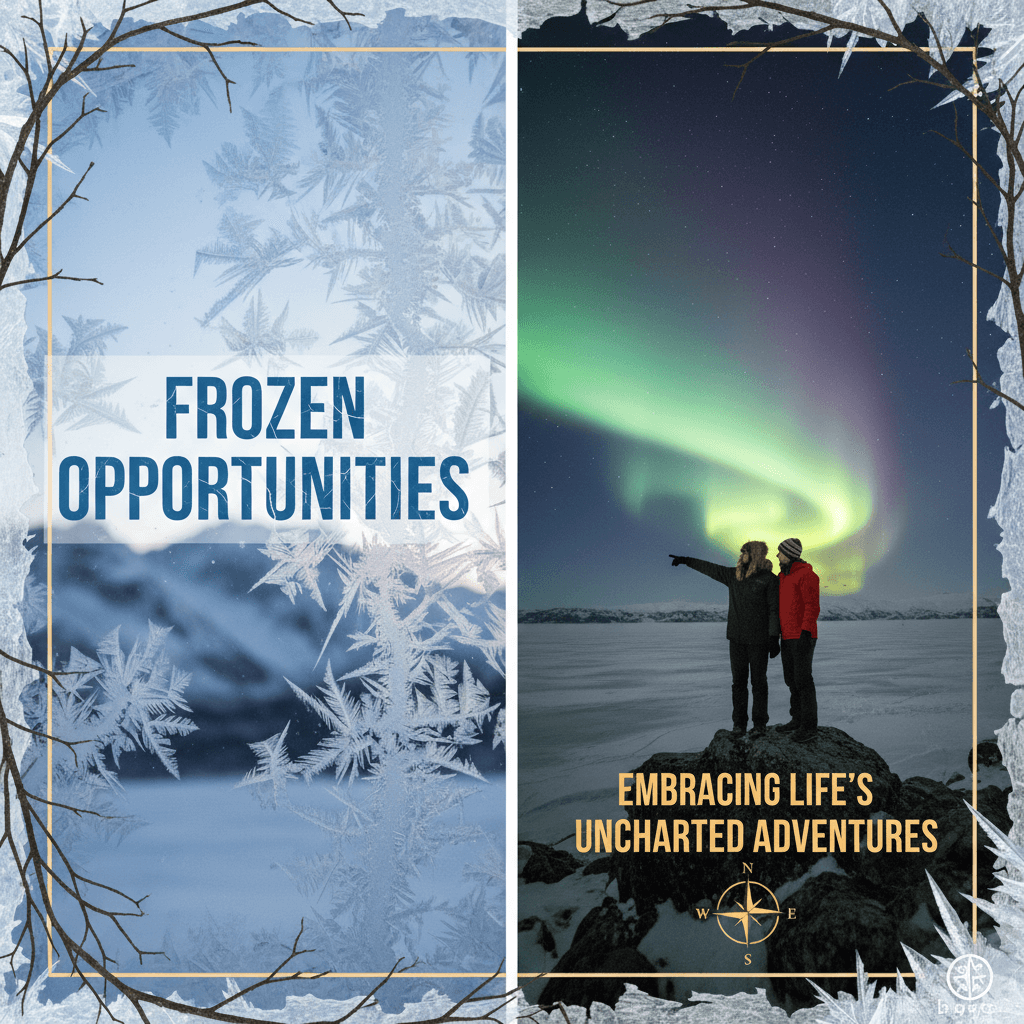
The call came on an ordinary Tuesday. “Congratulations, you’ve been selected for the six-month research position at McMurdo Station.” My heart raced as I processed what this meant—trading my comfortable apartment and predictable routine for life on the most remote continent on Earth. Antarctica. The frozen desert that fewer than 100,000 humans have ever set foot on.
While this particular call wasn’t mine, thousands of people each year face similar decision points—opportunities that require leaving comfort behind to embrace the unknown. Antarctica represents the ultimate uncharted territory, both literally and metaphorically. It stands as a powerful symbol for all the frozen opportunities in our lives—those adventures we know exist but hesitate to pursue because they require us to break free from the warmth of our familiar worlds.
This exploration isn’t just about working in Antarctica (though we’ll examine that unique opportunity). It’s about understanding why stepping into life’s polar regions—those experiences that initially feel cold, distant, and intimidating—often leads to our most profound personal growth and most treasured memories.
The Allure of Antarctica: Why the End of the Earth Calls to Us
When Reddit user u/AntarcticGirl shared her story about accepting a six-month contract at an Antarctic research station, thousands responded with a mixture of envy, curiosity, and admiration. “It’s the modern-day equivalent of sailing to new worlds,” one commenter noted. But what exactly makes this particular frozen opportunity so compelling?
The Rarity Factor: Exclusivity as Motivation
Antarctica remains one of the few places on Earth where humans are visitors, not residents. The continent hosts no permanent population, only rotating teams of scientists, support staff, and occasional tourists. According to the International Association of Antarctica Tour Operators, only about 74,000 people visit annually—fewer than attend a single sold-out NFL game.
Dr. Melissa Turner, a psychologist who studies extreme environment adaptation, explains: “We’re naturally drawn to experiences few others have had. There’s something deeply satisfying about being able to say ‘I’ve done something extraordinary’ in an age where social media makes it seem like every experience has already been documented.”
This exclusivity creates three distinct advantages for those who accept the challenge:
- Unparalleled storytelling capital that lasts a lifetime
- Perspective shifts that only come from truly unique experiences
- Self-knowledge that can only be gained at the edges of comfort
Financial Freedom Through Extreme Saving
Beyond the adventure, Antarctica offers a practical benefit that draws many applicants: the ability to save nearly 100% of your income. With housing, food, and transportation provided and virtually no opportunities to spend money during your contract, many workers return with their entire salary intact.
James Kirkland, who spent 14 months as a maintenance technician at McMurdo Station, shares: “I paid off $42,000 in student loans after one extended season. Where else can you work where your only expenses are internet access and maybe some souvenirs? I lived like a monk for a year and came back financially reborn.”
This financial reset creates powerful opportunities:
- Debt elimination that might otherwise take decades
- Seed funding for entrepreneurial ventures upon return
- Freedom to pursue less lucrative but more fulfilling career paths afterward
The Antarctic Effect: How Extreme Environments Transform Us
The transformation begins before you even board the plane. The moment you commit to Antarctica (or any similarly challenging adventure), your identity begins to shift. You’re no longer just a lab technician, cook, or engineer—you’re someone willing to go to the literal end of the Earth for an experience.
The Psychological Impact of Isolation and Confinement
NASA and other space agencies have long studied Antarctic stations as analogs for space missions. The psychological effects of isolation in extreme environments provide valuable insights into human resilience and adaptation.
Dr. Nathan Carpenter, who researches polar psychology at the University of Canterbury, notes: “We see consistent patterns in people who winter over in Antarctica. There’s typically an initial honeymoon phase, followed by a mid-winter decline in mood, and then a rebound as the return date approaches. What’s fascinating is how this experience permanently alters their approach to challenges back in normal society.”
These psychological shifts manifest in three key areas:
- Increased comfort with uncertainty and ambiguity
- Greater emotional resilience when facing everyday stressors
- Enhanced appreciation for social connections and simple comforts
The Community You Never Expected
Perhaps counterintuitively, extreme isolation often creates the most tight-knit communities. When your entire world consists of 150 people in winter (or up to 1,000 during summer at larger stations), relationships develop intensity and depth rarely experienced in normal society.
Sarah Emmerson, who worked as a chef at Palmer Station for three seasons, describes it this way: “You know everything about everyone—their quirks, their stories, their fears. There’s nowhere to hide, so you either develop extraordinary patience and acceptance or you crack. Most of us learn to embrace each other’s full humanity in ways I’ve never experienced elsewhere.”
This intense community creates lasting effects:
- A global network of connections with similarly adventurous souls
- Enhanced ability to navigate complex interpersonal dynamics
- Profound appreciation for diversity of thought and background
The Cost of Frozen Opportunities: What You Leave Behind
No transformative adventure comes without sacrifice. The decision to embrace Antarctica—or any similarly demanding opportunity—means temporarily surrendering parts of normal life that many take for granted.
Relationships in Suspended Animation
Perhaps the heaviest cost is separation from loved ones. While modern Antarctic stations have internet access, connectivity remains limited and expensive. Video calls are often impossible, and even text messages can be delayed.
Michael Chen, who proposed to his girlfriend just before leaving for a 12-month contract, shares: “We had to decide if our relationship could survive a year with only email and occasional voice calls. It tested us in ways we never anticipated, but it also eliminated all the noise. When all you have is words on a screen, you learn to communicate with incredible clarity.”
Research from the University of Denver’s Center for Marital and Family Studies suggests that relationships can actually strengthen through temporary separation, provided three conditions are met:
- Clear expectations about communication frequency and methods
- Shared understanding of the separation’s purpose and value
- Rituals that maintain connection despite physical distance
The Reintegration Challenge
What many Antarctic veterans find most surprising isn’t the difficulty of the experience itself, but the challenge of returning to “normal” society. After months in an environment where everyone shares a common purpose and basic needs are provided for, the complexity and often meaningless nature of everyday life can be jarring.
“I remember standing in a grocery store aisle, completely overwhelmed by having 27 different kinds of cereal to choose from,” recalls former McMurdo electrician Danielle Lopez. “After Antarctica, where every resource is precious and choices are limited, the excess of regular life felt obscene and disorienting.”
To ease reintegration, experienced polar workers recommend:
- Planning a buffer period of 2-4 weeks before jumping back into full responsibilities
- Connecting with others who’ve had similar experiences
- Journaling about both the challenges and insights of the transition
Beyond the Ice: Finding Your Personal Antarctica
Not everyone can—or should—work in Antarctica. But everyone has their own version of a frozen opportunity: that challenging, uncertain path that promises growth but guarantees discomfort.
Identifying Your Frozen Opportunities
Your personal Antarctica might be starting a business, moving to a new country, changing careers at 45, or finally writing that novel. What these opportunities share is that they all require leaving comfort behind and stepping into uncertainty.
To identify your frozen opportunities, ask yourself:
- What adventure have I been contemplating but continually postponing?
- Which opportunity would I immediately pursue if I knew I couldn’t fail?
- What experience would make for the most interesting story in my memoir?
Creating Your Own Expedition
Once you’ve identified your frozen opportunity, treat it like an Antarctic expedition. No one travels to the South Pole without preparation, and neither should you embark on your personal adventure without proper groundwork.
Career transition coach Elena Martínez recommends this three-step approach:
- Research phase: Learn everything you can about the path ahead
- Equipment gathering: Acquire the skills, resources, and support you’ll need
- Expedition plan: Create concrete steps with timelines and contingencies
“The people who successfully navigate major life transitions aren’t necessarily braver than others,” Martínez notes. “They’re just more methodical about how they approach uncertainty.”
The Return on Investment: Why Frozen Opportunities Pay Dividends Forever
When researchers follow up with Antarctic personnel years after their service, they consistently report that the experience remains one of the defining periods of their lives. The same holds true for anyone who embraces their personal version of a frozen opportunity.
Dr. Turner’s longitudinal studies show three enduring benefits:
- Enhanced self-efficacy that transfers to all future challenges
- More accurate self-knowledge about personal strengths and limitations
- A recalibrated perspective on what constitutes a genuine problem versus a minor inconvenience
As former station manager Robert Halliday puts it: “After Antarctica, I never again said ‘I can’t’ about anything that didn’t involve actual physical impossibility. The continent strips away your excuses and shows you what you’re capable of.”
The Ultimate Souvenir: A New Relationship with Fear
Perhaps the most valuable takeaway from any frozen opportunity is a transformed relationship with fear itself. When you’ve voluntarily stepped into the unknown and not only survived but thrived, future uncertainties lose much of their power to paralyze you.
This doesn’t mean becoming fearless—it means developing the capacity to act meaningfully despite fear. It means recognizing that discomfort is the price of admission for any experience worth having.
The question isn’t whether you should embrace your frozen opportunities. The question is: Can you afford not to?
Antarctica waits, unchanging and indifferent to whether you specifically ever experience its harsh beauty. But your personal Antarctica—that growth opportunity you’ve been circling—won’t wait forever. The ice is shifting. The season for adventure is now.
What frozen opportunity will you say yes to today?
Where This Insight Came From
This analysis was inspired by real discussions from working professionals who shared their experiences and strategies.
- Share Your Experience: Have similar insights? Tell us your story
At ModernWorkHacks, we turn real conversations into actionable insights.
![[Workflow Included] A simple 5-node Instagram posting workflow for beginners](https://modernworkhacks.com/wp-content/uploads/2026/04/workflow-included-a-simple-5-node-instagram-posting-workflow-for-beginners-1024x675.png)





0 Comments