
Hook: Discover actionable insights.
A turning point on a Tuesday
At 8:07 a.m. on an ordinary Tuesday, Maya walked into a conference room knowing the product launch was slipping out of reach. Her team had the talent and the budget. What they lacked was momentum. The calendar overflowed with meetings, yet decisions felt stuck in wet cement. In the past week alone, two high performers had asked if they could transfer to other projects. As the leader, Maya felt like a bottleneck and a lifeguard at the same time—waving her arms at the chaos while quietly trying to keep the whole effort afloat.
That morning, she did something different. She put away the slide deck and put three sentences on a whiteboard: “What matters most this week? Where are we stuck? What will we try?” She’d seen the practice in a leadership book club the month before, where managers swapped their favorite tactics. No lectures. No theory debates. Just stories about what actually worked.
Three patterns kept surfacing in those discussions. First, trust and straight talk. Teams can handle hard news; they can’t handle silence. Second, strategy that fits on a page instead of a 40-slide deck. Third, small execution rituals that compound—short 1:1s, visible goals, and a cadence for learning. Maya decided to borrow a move from each of the books her peers swore by. From a book on candid feedback, she committed to pairing care with clear challenge. From a submarine captain’s memoir about decentralizing control, she asked her leads to bring intent, not just updates. From a goal-setting classic, she replaced vague aspirations with outcomes and weekly check-ins.
By Friday, something shifted. The design lead stopped waiting for “approval” and stated, “My intent is to run a 48-hour customer test on the onboarding flow.” The team rallied. In their retros, engineers began inviting feedback with curiosity, not defensiveness. A QA analyst mapped one measurable outcome to each priority and posted them in the team channel. Within two sprints, cycle time fell. The launch still required hard choices, but the energy changed because the communication changed.
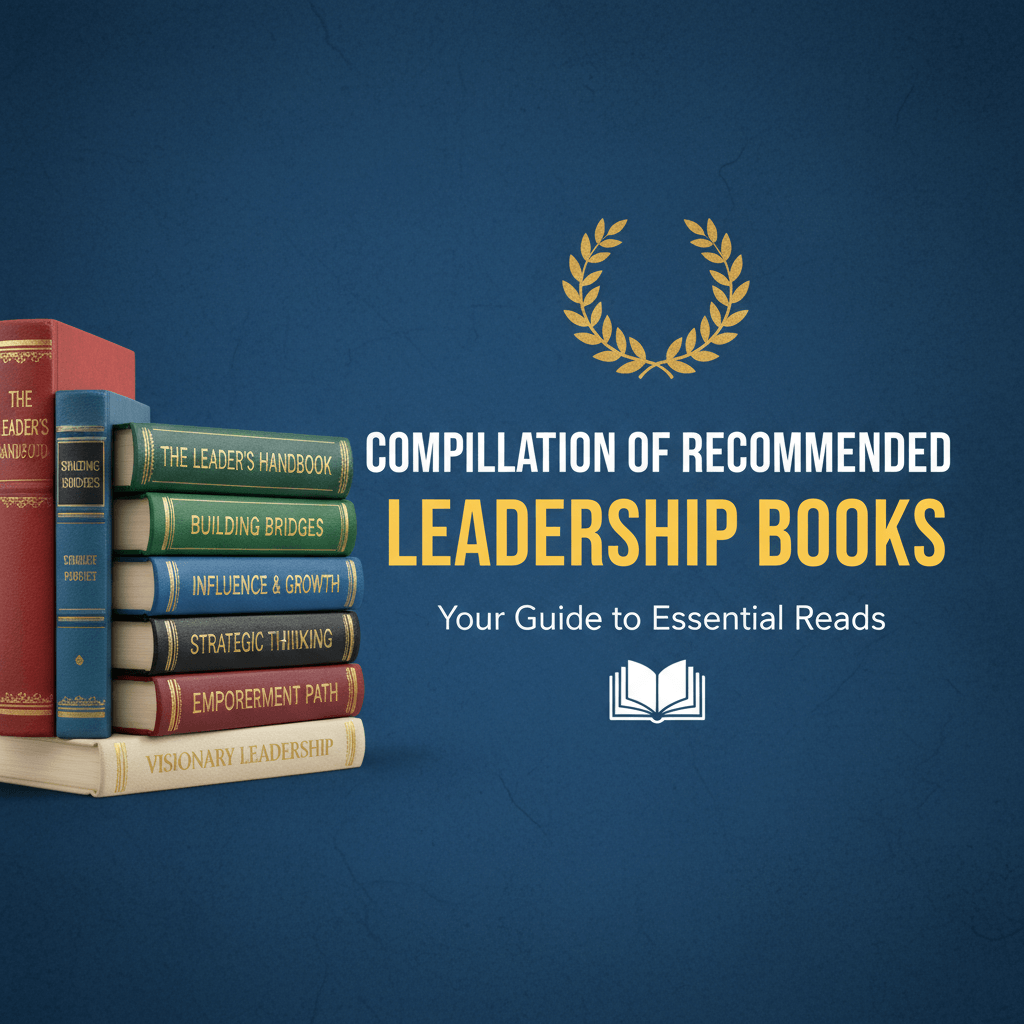
This article is a compilation of recommended leadership books and the field-tested plays readers said helped them most. It doesn’t assume you have a free weekend or a quiet cabin. It pulls out the moves leaders actually use on real Tuesdays like Maya’s—summarized, sequenced, and ready to try.
What leaders keep asking in real discussions
In roundtables, internal AMAs, and cross-functional book clubs, leaders at every level ask similar questions. The best answers tend to repeat too. Here are the key takeaways that surfaced most often from those real conversations:
- “How do I build trust fast?” Trust compounds through consistent, specific follow-through. Small commitments kept, visible decisions, and transparent criteria beat grand speeches every time.
- “How honest can I be without hurting morale?” Pair high care with direct challenge. Avoiding hard truths erodes morale more than candor ever will; tone and timing are your levers.
- “What if strategy feels abstract?” Make strategy testable. Write a one-page brief with a clear diagnosis, a guiding approach, and a few coherent actions. If it can’t be tested, it isn’t strategy yet.
- “Why do decisions stall?” Ambiguity about who decides and by when slows everything. Clarify “who owns,” “by when,” and “what good looks like” in writing—then revisit weekly.
- “How do I motivate without burning people out?” Focus on meaningful progress. Leaders who map work to outcomes, celebrate learning, and end meetings with one next step see higher energy and lower churn.
- “What’s the most effective meeting habit?” Start with purpose, end with owners. Every meeting should answer: Why are we here? What did we decide? Who will do what by when?
- “How do I give feedback that sticks?” Use behavior-impact-ask: describe the behavior you observed, the impact it had, and ask how you can move forward together. Keep it recent and specific.
- “How do I lead when I don’t have all the answers?” Narrate your uncertainty and your plan to learn. Teams follow clarity of process as much as clarity of direction.
In the sections that follow, you’ll find a curated set of leadership books mapped to five common challenges. For each, we share practical reasons to read and concrete plays to try the same day.
Recommended leadership books by challenge
Build trust and candor
Trust accelerates every other part of leadership. Without it, strategy and execution stall. These books help you practice straight talk that strengthens relationships rather than frays them.
Radical Candor (Kim Scott) — A playbook for giving and receiving feedback that is both human and clear, so people grow without guessing where they stand.
- Block 10 minutes after any tough conversation to write what you said, what landed, and one way to improve your next delivery.
- Ask each direct report, “What’s one thing I could do differently to make your work easier?” Then act on one suggestion within a week.
Dare to Lead (Brené Brown) — A guide to courageous leadership grounded in vulnerability, values, and skillful boundary-setting, especially when stakes are high.
- Before a difficult meeting, write two sentences: your core value at play and the behavior you will model under pressure.
- Normalize learning moments: share a recent leadership miss and what you changed as a result at your next team stand-up.
Crucial Conversations (Kerry Patterson, Joseph Grenny, Ron McMillan, Al Switzler) — Techniques to keep dialogue productive when opinions differ, emotions run hot, and outcomes matter.
- Prep with “STATE”: briefly share facts, tell your story, ask for their view, talk tentatively, encourage testing of ideas.
- During conflict, surface mutual purpose by explicitly naming what you both care about and revisiting it when conversation drifts.
Clarify strategy and align execution
Alignment is not agreement on slogans; it’s shared understanding of problems, trade-offs, and measurable outcomes. These books make strategy concrete and collaborative.
Start with Why (Simon Sinek) — A reminder that purpose fuels persistence. When teams connect work to meaning, decisions and priorities come into focus.
- Open your next planning session with two minutes on the customer problem you exist to solve and why it matters now.
- Rewrite one team goal to specify the user outcome, not the internal activity (e.g., “increase activation rate” vs. “ship tutorial”).
Good Strategy/Bad Strategy (Richard Rumelt) — Cuts through buzzwords to emphasize diagnosis, guiding policy, and coherent actions—the backbone of real strategy.
- Draft a one-page strategy for a single initiative: identify the critical constraint, your approach to address it, and three linked actions.
- Run a “bad strategy bingo” scrub on your plan: remove fluff, untestable claims, and unrelated initiatives until only essentials remain.
Measure What Matters (John Doerr) — A practical framework for defining ambitious goals paired with clear, quantitative results and the rituals to review them.
- Set one quarterly objective per team with 3–4 measurable key results; review progress in a 15-minute weekly check-in.
- Replace status slides with a shared scoreboard that turns red/amber/green based on defined thresholds visible to everyone.
Strengthen team dynamics and culture
Culture is the set of behaviors you consistently reinforce. The books below help you diagnose dysfunctions, distribute ownership, and multiply the intelligence already in the room.
The Five Dysfunctions of a Team (Patrick Lencioni) — A model to understand the cascading costs of low trust, shallow conflict, weak commitment, fuzzy accountability, and inattention to results.
- Start retrospectives with a 5-minute wins/thanks round to build trust, then address one hard issue with a pre-agreed timebox.
- Publish your team’s explicit commitments and revisit them at the end of each sprint with a simple “met/not met/why” review.
Turn the Ship Around! (L. David Marquet) — A case study in intent-based leadership: move authority to where the information is by asking for people’s intentions instead of granting permissions.
- Replace “What should I do?” with “What do you intend to do and why?” in 1:1s, then coach quality of thinking, not just answers.
- Define two decisions your team can own end-to-end this month; document the guardrails and the debrief cadence upfront.
Multipliers (Liz Wiseman) — Shows how leaders can amplify the capability around them by asking better questions, giving stretch challenges, and removing “diminisher” habits.
- In your next problem-solving session, talk last: ask three open questions before offering any opinion or solution.
- Assign a “challenge with safety net”: frame a tough outcome, the range of acceptable approaches, and checkpoints to learn.
Drive execution and accountability
Execution is a system of habits, not heroics. These books offer tools to manage leverage, own outcomes, and establish a cadence that turns plans into shipped work.
High Output Management (Andrew S. Grove) — Classic management mechanics: leverage, leading indicators, process quality, and the manager’s most powerful tool—effective 1:1s.
- Adopt a 30-minute weekly 1:1 template: status (10), problem-solving (10), growth (10). Capture actions and send notes same day.
- Define one leading indicator for your team’s main outcome (e.g., qualified demos per week) and review it every Monday.
Extreme Ownership (Jocko Willink and Leif Babin) — A mindset to own outcomes end-to-end, simplify plans, prioritize, and execute with clear communication under pressure.
- Run “prioritize and execute” at the start of each day: list top three objectives, pick one, align owners, and block time to finish.
- Use brief, decentralized updates: three lines—what you did, what you’re doing next, where you need help—posted by noon.
The First 90 Days (Michael D. Watkins) — A blueprint for leaders in transition: diagnose context, align early wins, and avoid the common traps of new roles.
- Map your new role using the STARS framework (startup, turnaround, accelerated growth, realignment, sustaining success) and tailor actions.
- Schedule listening tours in week one: 10–15 short conversations with peers, customers, and team to surface quick wins and risks.
Strengthen personal effectiveness and mindset
Leaders set the ceiling for a team’s focus and stamina. These books center on sustainable habits, belief systems, and ruthless clarity about what matters.
Atomic Habits (James Clear) — Practical techniques for building good habits and breaking bad ones by making small changes obvious, attractive, easy, and rewarding.
- Attach a tiny leadership habit to an existing routine: after you open your laptop, send one note of specific praise to a teammate.
- Design your environment: keep your weekly priorities visible where you decide your calendar, not buried in a doc.
Mindset (Carol S. Dweck) — Explores how a growth mindset fuels learning and resilience, especially under challenge and scrutiny.
- Reframe feedback: replace “I failed” with “I learned X and will try Y next.” Model the language in your team updates.
- Ask in 1:1s, “What did you learn this week that we should share?” to normalize learning as a team-level output.
Essentialism (Greg McKeown) — A method for doing less, but better. Focus on the vital few, eliminate the trivial many, and protect time for what truly moves the needle.
- Establish one “no-meeting block” per week for deep leadership work; treat it as unbreakable.
- For any new commitment, ask, “What will we stop or delay?” Make trade-offs explicit and visible.
How to read leadership books for impact (without drowning)
Leaders don’t need more pages; they need more progress. Here’s a lightweight way to turn reading into results:
- Start with a problem, not a book. Define the leadership challenge in one sentence. Choose a book because it addresses that sentence, not because it’s trending.
- Skim for the play. Read the introduction, the chapter summaries, and one chapter you will immediately apply. Flag the two tactics that fit your context.
- Design a micro-experiment. Turn a tactic into a 7–14 day experiment with a clear owner, a start/stop date, and a success metric you can observe weekly.
- Get public about learning. Share the experiment with your team and ask for feedback. Transparency increases ownership and accelerates iteration.
- Schedule a debrief now. Put a 20-minute review on the calendar when you start the experiment. Decide to adopt, adapt, or drop the practice.
- Build a tiny library with tags. Create a shared doc listing your team’s favorite plays by situation (e.g., “feedback,” “prioritization,” “1:1s”) and link the relevant book pages.
- Rotate book captains. Have one person own extracting two plays and facilitating a 30-minute discussion. Decision rights belong to the team, not the book.
This approach keeps reading tightly coupled to behavior. Instead of asking “What did we learn?” ask “What did we try, and what changed?” The goal is not to finish a book—it’s to install one better habit.
A 30-day leadership reading sprint (actionable plan)
Want a structure you can start today? Use this four-week plan to go from ideas to habits with your team.
Week 1: Choose the problem and the play
- Define your leadership challenge in one sentence (e.g., “Feedback feels sporadic and late”).
- Select one book from the relevant section above and skim for two tactics that directly address your challenge.
- Write a one-page experiment brief: the tactic you’ll try, where, with whom, and what outcome will signal it worked.
- Announce the experiment in your team channel, inviting feedback and co-ownership.
Week 2: Run the first experiment
- Implement the tactic in at least two real scenarios (e.g., two 1:1s, one planning meeting, one retro).
- Capture friction: where did it feel awkward or unclear? Adjust wording, sequencing, or scope—not the intent.
- Share one learning publicly midweek to normalize iteration.
Week 3: Measure and multiply
- Look for early signals: faster decisions, clearer outcomes, more specific feedback, less back-and-forth.
- If signals are positive, expand to a second team or ritual. If not, try the second tactic you shortlisted from the same book.
- Invite a peer to observe one meeting and note where the new practice slipped or stuck.
Week 4: Decide, document, and hand off
- Hold a 20-minute debrief: adopt, adapt, or drop the tactic. If adopted, write a one-paragraph standard and add it to your team playbook.
- Record a 2-minute walkthrough video showing the practice in action to onboard new team members.
- Nominate next month’s book captain and challenge sentence. Keep the momentum by making the process light and visible.
Quick matching: situations to books
- Need straighter talk without blowups? Start with Radical Candor, then Crucial Conversations for high-stakes moments.
- Strategy feels fuzzy or scattered? Good Strategy/Bad Strategy for clarity; Measure What Matters to align metrics and cadence.
- Team waits for direction and decisions? Turn the Ship Around! to push ownership; Multipliers to amplify thinking.
- New in role or shifting context? The First 90 Days to diagnose and sequence early wins with less risk.
- Execution whiplash and context-switching? High Output Management for leverage; Essentialism to protect the vital few.
- Energy dips and setbacks? Mindset to reframe struggle; Atomic Habits to rebuild momentum in small, compounding steps.
Common pitfalls and how to avoid them
- Collecting frameworks instead of making choices. Remedy: After reading, commit to one decision you will make differently this week because of it.
- Copy-pasting practices without context. Remedy: Write your constraints and adapt the practice to fit your team’s size, cadence, and stage.
- Overloading the team with “new.” Remedy: Introduce one new ritual per month and measure it; avoid stacking multiple changes at once.
- Focusing on activity, not outcomes. Remedy: For every meeting, ask what outcome it serves and how you’ll know it worked.
- Letting old norms persist by default. Remedy: Explicitly retire practices that no longer serve you; write “stop doing” lists alongside goals.
Putting it all together
If today feels like Maya’s Tuesday—too many meetings, slow decisions, and an important launch at risk—start small and specific. Pick one challenge. Choose one book matched to that challenge. Extract two plays. Run one experiment for two weeks. Share what you learn. Then either adopt it or try the second play. That’s it.
Leadership books are not instruction manuals; they’re reservoirs of tested moves. The leaders who benefit most don’t read more, they install more. They commit to a cadence of trying, measuring, and deciding—and they involve their teams in the experiment. Over time, these small, intentional steps compound into a culture that is candid, aligned, and relentlessly focused on outcomes that matter.
Call to action
Start a leadership sprint today: name your challenge, pick one book from this list, and schedule a 15-minute kickoff with your team. Share the one tactic you’ll try this week and the date you’ll review it. Then send this article to a peer and invite them to join you. The next decisive Tuesday is coming—use it to build trust, align on what matters, and turn ideas into action.
Where This Insight Came From
This analysis was inspired by real discussions from working professionals who shared their experiences and strategies.
- Source Discussion: Join the original conversation on Reddit
- Share Your Experience: Have similar insights? Tell us your story
At ModernWorkHacks, we turn real conversations into actionable insights.
![[Workflow Included] A simple 5-node Instagram posting workflow for beginners](https://modernworkhacks.com/wp-content/uploads/2026/04/workflow-included-a-simple-5-node-instagram-posting-workflow-for-beginners-1024x675.png)




0 Comments