I still remember the first time a colleague leaned back from their laptop, sighed, and said, “It sounds confident, but I’m not sure it actually understands me.” They were talking about an AI chatbot they’d just used to draft a client email. The tone was polished. The grammar was flawless. Yet something felt off—like talking to a very articulate intern who never admits uncertainty. That moment captures a growing tension in our relationship with conversational AI: are these systems truly as capable as they sound, or are we projecting human intelligence onto machines that don’t fully grasp our intent?
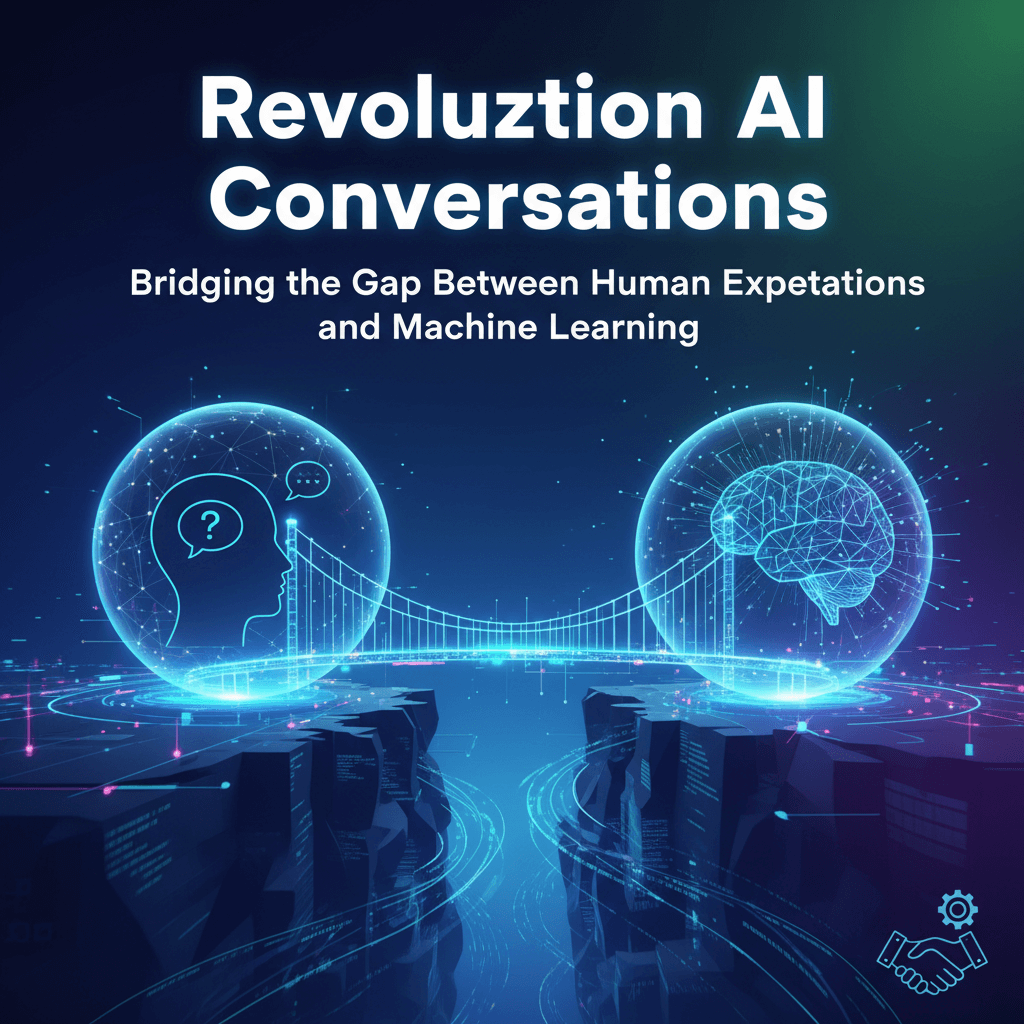
This article explores that gap between human expectations and machine learning realities. As tools like ChatGPT become embedded in work, education, and daily life, frustrations voiced across communities—especially on Reddit—highlight the same themes: overconfidence, shallow context, and misaligned expectations. The opportunity is enormous. By understanding these pain points, AI companies can redesign conversations to be more transparent, trustworthy, and genuinely helpful.
The Illusion of the “Know-It-All” AI
Why Confidence Feels Like Competence
Modern conversational AI is optimized to respond fluently. Language models are trained on vast datasets to predict the most likely next word, not to verify truth in the human sense. The result is a system that speaks with unwavering confidence—even when it’s wrong.
In a widely discussed Reddit thread, a software developer described how an AI assistant confidently suggested deprecated code libraries. The developer followed the advice, only to lose hours debugging. The frustration wasn’t just the mistake—it was the absence of uncertainty cues.
Research from Stanford’s Human-Centered AI group shows that users are significantly more likely to trust AI-generated information when it’s presented assertively, even if accuracy is low. This matters because confidence without calibration erodes trust over time.
Actionable Takeaways
- Design for calibrated confidence: AI responses should signal uncertainty when appropriate, using phrases like “Based on available data” or “I might be mistaken.”
- Expose reasoning paths: Showing how an answer was derived helps users assess reliability.
- Encourage verification: Simple prompts like “Would you like sources?” empower users without breaking conversational flow.
Context Is King—and AI Still Struggles With It
The Limits of Short-Term Memory
Humans carry context effortlessly. We remember earlier parts of a conversation, emotional cues, and unspoken assumptions. AI, by contrast, often operates within limited context windows. Miss one critical detail, and the entire response can veer off course.
I experienced this firsthand while using an AI tool to plan a multi-city work trip. After ten minutes of back-and-forth, it suggested flights that ignored my original budget constraint. The system hadn’t “forgotten” in a human sense—it simply lost access to earlier tokens.
According to OpenAI research disclosures, even advanced models have finite context lengths, making long, nuanced conversations challenging. Users, however, expect continuity.
Actionable Takeaways
- Persistent memory features: Allow users to pin key preferences like budget, tone, or goals.
- Context summaries: Periodically restate assumptions to confirm alignment.
- User-controlled resets: Let people easily refresh or redefine context mid-conversation.
Reddit as a Real-Time Feedback Loop
What the Community Is Really Saying
Reddit has become an informal focus group for AI companies. Threads with tens of thousands of upvotes dissect chatbot failures, hallucinations, and tone-deaf responses. Unlike formal surveys, these discussions are raw and specific.
One highly engaged post described an AI giving mental health advice without appropriate disclaimers. Commenters weren’t anti-AI; they wanted safeguards. This distinction is critical. Users aren’t rejecting conversational AI—they’re asking for maturity.
A Pew Research Center survey found that 52% of AI users want clearer explanations of limitations. Reddit simply amplifies that sentiment with anecdotes and emotion.
Actionable Takeaways
- Monitor community platforms: Treat Reddit and similar forums as early warning systems.
- Respond transparently: Publicly acknowledging issues builds goodwill.
- Integrate feedback loops: Translate recurring complaints into product roadmaps.
Aligning AI Capabilities With Human Expectations
Expectation Management as a Design Principle
Much of the frustration stems from a mismatch between what users think AI can do and what it actually does. Marketing language often blurs this line, portraying systems as near-human thinkers.
In reality, today’s conversational AI excels at pattern recognition, summarization, and drafting—but struggles with original reasoning and moral judgment. When companies fail to communicate this clearly, disappointment is inevitable.
A MIT Sloan study found that user satisfaction increased by 23% when AI tools clearly stated their strengths and limitations upfront.
Actionable Takeaways
- Set clear onboarding expectations: Explain what the AI is good—and not good—at.
- Use adaptive disclaimers: Contextual reminders when topics become sensitive or complex.
- Educate users: Short tooltips about how models work demystify behavior.
Designing for Humility, Not Just Intelligence
The Power of Saying “I Don’t Know”
Humility is underrated in technology design. Humans trust people who admit limits. The same principle applies to machines.
A healthcare startup I consulted with redesigned their AI triage bot to include explicit uncertainty statements. Instead of diagnosing, it suggested next steps and encouraged professional consultation. User trust scores rose dramatically.
Harvard Business Review reports that systems designed to defer gracefully in uncertain situations are perceived as more ethical and reliable.
Actionable Takeaways
- Implement refusal protocols: Teach AI when not to answer.
- Shift from answers to options: Offer paths forward rather than definitive conclusions.
- Measure trust, not just usage: Track long-term confidence metrics.
The Road Ahead: From Novelty to Partnership
What Responsible AI Conversations Could Look Like
Imagine an AI that feels less like an oracle and more like a thoughtful collaborator—one that asks clarifying questions, acknowledges uncertainty, and adapts to your preferences over time.
We’re already seeing early signs. Some enterprise tools now include conversation audits, memory controls, and explainability layers. These aren’t just features; they’re signals of a philosophical shift.
As McKinsey notes, companies that prioritize human-centered AI design are more likely to achieve sustainable adoption and competitive advantage.
Actionable Takeaways
- Invest in human-centered design: Involve psychologists, ethicists, and end users.
- Test in real-world conditions: Lab accuracy doesn’t equal lived experience.
- Commit to iteration: Conversational AI should evolve with its community.
Conclusion: A Challenge to Builders and Users Alike
Conversational AI is no longer a novelty. It’s a daily companion for millions. The question isn’t whether it will improve, but how intentionally we guide that improvement.
For AI companies, the challenge is clear: design systems that respect human expectations, communicate limitations, and earn trust through humility. For users, the responsibility is to engage critically, offer feedback, and resist the urge to anthropomorphize machines.
I believe the future of AI conversations isn’t about sounding smarter—it’s about being more honest. If we can bridge that gap, we won’t just revolutionize AI conversations; we’ll redefine what productive human-machine collaboration looks like.
Where This Insight Came From
This analysis was inspired by real discussions from working professionals who shared their experiences and strategies.
- Share Your Experience: Have similar insights? Tell us your story
At ModernWorkHacks, we turn real conversations into actionable insights.
![[Workflow Included] A simple 5-node Instagram posting workflow for beginners](https://modernworkhacks.com/wp-content/uploads/2026/04/workflow-included-a-simple-5-node-instagram-posting-workflow-for-beginners-1024x675.png)


0 Comments