Discover actionable insights.
The night it clicked
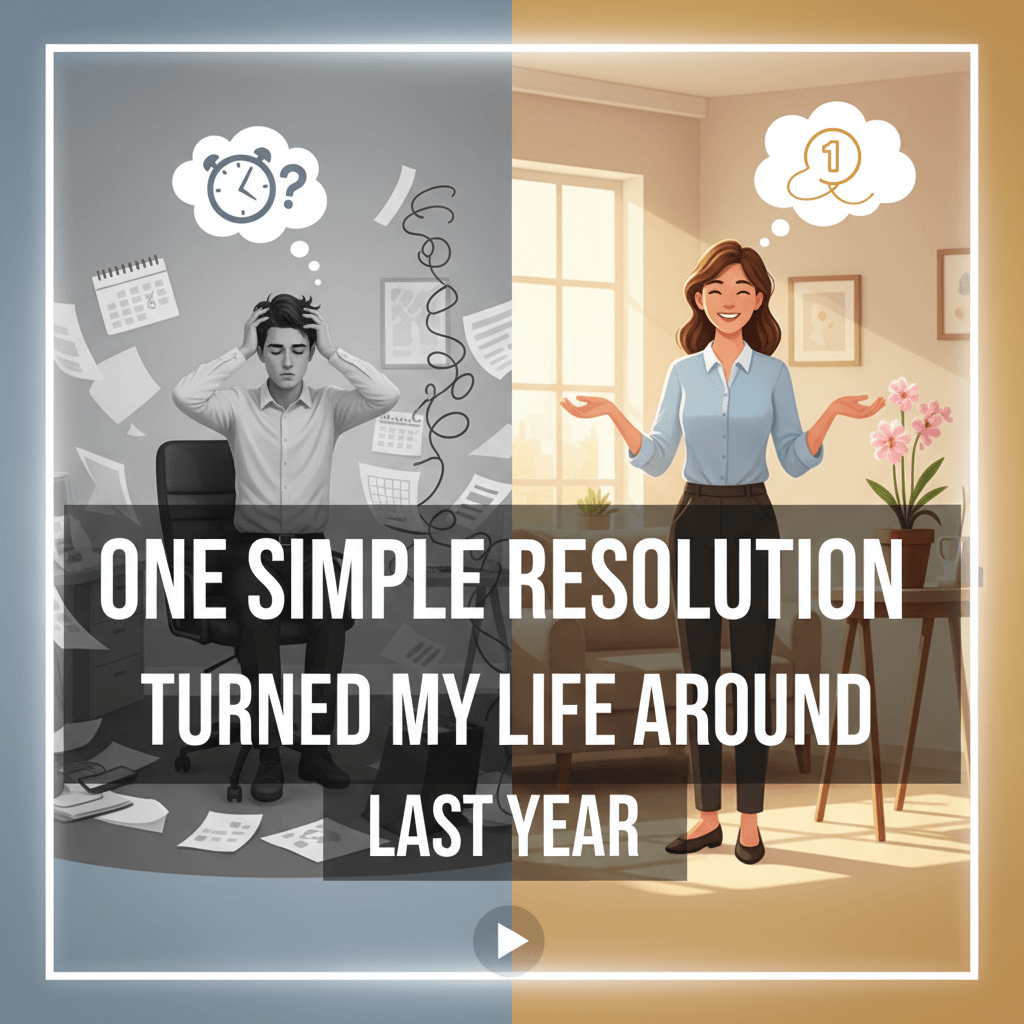
Last January, two weeks into a new year that already felt old, I found myself at a quiet corner table in a late-night coffee shop, staring at a to-do list that looked like a ransom note. I had color-coded everything. I had tried a new app. I had rearranged my desk twice that day. And still, the important things—the phone call I needed to make, the pitch I wanted to send, the workout I kept “scheduling”—floated to tomorrow like unclaimed luggage at an airport carousel.
The truth stung: I wasn’t procrastinating because I was lazy. I was procrastinating because I was busy. The day filled up with urgent work that felt productive but left me oddly hollow. I wrapped up each evening with a tidy report of tasks “in progress,” and nothing I could point to and say: that’s done. And without something done, there was nothing to build confidence on—just more planning, more deferral, more swirl.
On my third refill of coffee, my phone buzzed. A friend had texted me a screenshot of his calendar: mornings blocked to a single line—“Ship one concrete outcome.” He wrote, “This saved me.” I smiled, half-impressed and half-annoyed. Simple fixes rarely solve complex lives. But as I looked down at my own calendar, crammed with “check-ins” and “syncs” and “review outlines,” I realized I had no ritual that forced me to deliver something tangible daily. I was taking pride in effort, not outcomes.
So I made one resolution, the only one I kept: before noon every weekday, I would ship one concrete outcome. Not research. Not drafting. Not “touching base.” Ship. Something visible. Something that could be shown, measured, or delivered—an email sent that could get a yes or a no, a proposal handed off, a bug fix merged, a training scheduled with invites sent, a workout completed and logged, a note of appreciation written and sent. If I finished that one outcome before lunch, I could consider the day a success. Everything else would be bonus.
I wrote it into my calendar for the next 30 days: “Ship Before Noon.” It felt embarrassingly small and, at the same time, oddly daring. Was I really going to place my bets on one tiny daily outcome while the world demanded so many things at once? Yes. Because I needed a new center of gravity—something that could not be postponed into the fog of later.
What happened next wasn’t a movie montage of overnight success. It was quieter, steadier, and much more powerful. Each day I picked one thing, shipped it, and moved on. After a week I noticed my afternoons felt different—looser, more confident. After a month I noticed my colleagues responded differently—they trusted my estimates because they saw me finishing. After a quarter I noticed my life felt different—less anxious, more directional. And by the end of the year, that one resolution had become the clearest lens I’ve ever used to focus my time, effort, and attention.
Why “one outcome before noon” works
At a glance, “ship one concrete outcome before noon” looks like a productivity trick. In practice, it is a systems change. It reshapes your mornings, your calendar, your identity, and the way others relate to your work. It’s not magic. It’s mechanics—and it pulls on three levers that most of us neglect when busyness takes over.
Momentum over motivation
Motivation is fickle. Momentum is reliable. When I started shipping before noon, I stopped waiting to “feel ready.” The sequence flipped: action first, feelings later. Crossing a finish line early creates a tiny psychological snowball that keeps rolling through the day. In chat with a nurse friend who often works 12-hour shifts, she told me, “If I complete one chart fully before 10 a.m., I’m calmer for the rest of the shift. It sets the tone.” A teacher I spoke with said, “When the first class ends and I’ve already graded one stack, I stop dreading the rest.” Getting a win early reduces cognitive drag. It quiets the mental tabs that whisper, you’re behind.
Visibility beats busyness
Shipping creates artifacts: an email, a document, a commit, a scheduled date, a delivered message. Artifacts are reliable proof of progress—for you and for others. In one-on-ones, my manager started saying, “It’s clear what you’re moving forward.” That wasn’t because I worked harder; it was because my work took a shape others could see. In conversations with founders, a pattern emerged: the teams that moved faster were the ones that celebrated shipped outcomes daily, not just hours worked. Real outcomes improve trust, shorten feedback loops, and make course corrections possible. Busyness is a fog; visibility is a compass.
Constraints build clarity
“Before noon” is an intentional constraint. It limits the canvas and forces focus. Many of us spend mornings checking everything and moving nothing. By putting a fence around the morning, you reduce decision fatigue. “I used to start by triaging email,” a colleague in customer success told me. “Now I ask: what outcome can I deliver to a customer by lunch? A recorded walkthrough? A proposal? It shifted me from reacting to delivering.” Timeboxing and outcome selection create a daily minimum viable victory. That minimum becomes the floor of your day, not the ceiling.
Compounding confidence
Confidence is a lagging indicator of kept promises. When you keep the same promise to yourself every morning, you change the story you tell yourself about who you are. After two months of shipping before noon, I noticed I worried less about whether I could handle big projects. The proof was in the streak. “When I train early, I stop negotiating with myself later,” a distance runner told me in a neighborhood coffee chat. “It’s like the day has already been decided in my favor.” Confidence compounds. So do outcomes. Thirty shipped mornings become thirty visible steps forward—more than a year of “thinking about it.”
Key takeaways from real discussions
- From engineers: “Shipping small every morning kept the repo green and the team aligned. Pull requests got reviewed faster because they were smaller and earlier.”
- From healthcare workers: “One completed chart or one tough call before lunch made the afternoon lighter and reduced errors.”
- From educators: “Grading one class set or drafting one lesson plan early freed mental space for the human work of teaching.”
- From managers: “I started asking my team, ‘What’s your before-noon outcome?’ It made standups crisp and unclogged our backlog.”
- From parents: “One meaningful connection—packing a note in my kid’s lunch or planning dinner—set a family tone that survived the day’s chaos.”
How I implemented it in 30 days
Resolutions fail when they’re abstract aspirations with no process. To give “Ship Before Noon” teeth, I treated it like a micro-habit with a clear definition, a daily trigger, and a low-friction path from intention to outcome. Here’s exactly what I did in the first month.
Step 1: Define “ship” for your life
“Ship” has to mean something you can observe. For me, a shipable outcome is an action that leaves a trace another person could see or that finishes a discrete unit of work. I created a personal menu to choose from:
- Work: Send a proposal, publish a draft to the team, merge a bug fix, schedule a decision meeting with an agenda and invites.
- Growth: Submit an application, publish a blog post, send a thoughtful cold email, complete a module and post notes in a shared folder.
- Health: Complete a 30-minute workout and log it, prep three healthy lunches and refrigerate, book a check-up with confirmation.
- Relationships: Write and send a gratitude note, schedule a catch-up with someone I haven’t seen in months, plan a date night with a reservation.
The key was specificity. “Work on the deck” didn’t count. “Send v1 of the deck to review” did. “Think about running” didn’t count. “Run 3 miles and log it” did. If I couldn’t take a screenshot or say, “It’s delivered,” it wasn’t a ship.
Step 2: Make a “tomorrow card” each evening
Every night, I wrote a short index card titled “Ship Before Noon.” It had three lines: the one outcome I would ship, the first 5 minutes of effort, and the obstacles I could foresee. Example:
- Outcome: Send revised proposal to Acme with new pricing tiers.
- First 5 minutes: Open last week’s doc, duplicate, change section headers, pull pricing table from sheet.
- Potential obstacles: Need approval on tier names—Slack Sam before 9 a.m.
Going to bed with that one card made mornings frictionless. I didn’t wake up negotiating with myself. I woke up following a script I had already agreed to when my standards were highest and my willpower was freshest.
Step 3: Guard the golden hours
From 8 to 11 a.m., I set my status to “Heads down—shipping,” turned off notifications, and politely declined meetings that could fit elsewhere. The people around me learned to expect a response after lunch. I also created an “emergency channel” code with my team: if something truly couldn’t wait (we defined what that meant together), they could call me twice in a row and I’d pick up. Otherwise, mornings were sacred. This boundary nervous system took a week to establish and immediately paid off.
Step 4: Start with the smallest actionable variant
Perfection is the enemy of shipping. I practiced asking, “What is the smallest version of this outcome that is still useful?” A 1-page brief instead of a 20-page deck. A recorded 5-minute walkthrough instead of a 60-minute meeting. A first pass of code behind a feature flag instead of a complete system overhaul. Shipping small is not about lowering standards; it’s about raising the frequency of feedback and learning faster.
Step 5: Log the ship
I kept a simple “Ship Log” in a notes app: date, outcome, time completed, and one line on impact. Reviewing the log weekly became fuel. “Jan 5: Published onboarding checklist; support tickets down 10%.” “Jan 12: Sent investor update; got two helpful replies.” Wins compound when you can see them in a row.
Step 6: Recruit a morning ally
I paired up with a colleague who liked the idea. We sent each other our tomorrow cards the night before and a thumbs-up emoji when the ship was done. On days I wanted to slide, the little accountability nudge kept me honest. You can do this with a friend, partner, or team. It’s simple and human—no elaborate system required.
Results I saw in the first 8 weeks
By week two, I felt calmer by noon than I used to feel at 6 p.m. By week four, my manager commented that my updates were “crisp and finished.” By week six, a side project that had stalled for months had a live beta because I shipped one bite-sized deliverable each morning. By week eight, I’d lost the knot in my stomach that used to tighten when I opened my laptop. Not every day was spectacular. But every day had a floor: one outcome, shipped, before lunch. That floor raised everything else.
Interestingly, the impact stretched beyond work. Mornings that included a shipped workout translated to better choices all afternoon. Mornings that included a shipped gratitude note translated to warmer interactions throughout the week. It wasn’t just about time management. It was about identity management—proving to myself daily that I do what I say I’ll do.
Obstacles you’ll face and how to disarm them
No resolution survives first contact with reality without some friction. Here are the most common blockers I hit—and that many people shared in their own words during hallway conversations, mentoring sessions, and Slack threads—plus exactly how to handle them.
“Morning emergencies keep ambushing me.”
- Define “emergency” with your team or household. Agree on what qualifies—e.g., a live customer outage, a family health issue—not “someone asked a question.”
- Create a single escalation path. Mine: two back-to-back phone calls. Everything else waits until after noon.
- Preempt the common ambushes. If your mornings get hijacked by rescheduling, send a weekly scheduling window and block your mornings in your calendar. If approvals derail you, ask for pre-approval on schemas or naming before you sit down to ship.
“I run out of energy by 10 a.m.”
- Front-load fuel. Hydrate on waking, eat protein, and avoid doomscrolling. The first 20 minutes sets your mental glucose.
- Use a 10-2-10 pattern. Ten minutes to start, two minutes to celebrate when you ship, ten minutes to reset. Small rituals prevent burnout.
- Pick energy-fitting outcomes. On low-energy mornings, choose ships that require less creativity and more execution, like scheduling, follow-ups, or documentation.
“My work is long-range. I can’t finish a feature before lunch.”
- Split outcomes by value, not by task. Don’t slice “write code” into arbitrary chunks; slice by useful checkpoints: design approved, API spec sent, demo stub recorded.
- Adopt the two-sentence spec. Before you start, write: “I will deliver [outcome] that lets [person] do [thing]. It is done when [visible condition].” It clarifies what counts.
- Use “integration shipping.” Even if the feature isn’t ready, you can ship a test harness, a design decision, or a user interview summary. Make the invisible visible.
“Perfectionism stalls me.”
- Timebox your first pass. Give yourself 30 minutes to draft the ugly V1 and send it to a friendly reviewer. Remember: drafts invite collaboration; silence invites assumption.
- Define your “good enough threshold” upfront. What does a useful version look like today? Write it down. Stick to it.
- Create stakes. Tell someone, “I’ll send you something by 11:30,” and mean it. Social promises beat private wishes.
“Meetings swallow my mornings.”
- Negotiate. Many meetings are flexible. Ask, “Can we move this to after lunch? I’m protecting my morning delivery window.” People often say yes.
- Batch and record. Replace status meetings with an async recorded walkthrough you can ship before noon. It’s often better and saves everyone time.
- Decline with a deliverable. If you must skip, offer a shipped artifact instead: “I can’t join, but here’s a 90-second Loom with my input.” That keeps you helpful and preserves your morning.
“I lose track and slide back into old habits.”
- Keep the Ship Log visible. Print it or pin it in your workspace. Seeing the streak reduces backsliding.
- Schedule a weekly 20-minute review. Ask: What did I ship? What created outsized impact? What was hard? How will I adjust next week?
- Reset fast. If you miss a day, don’t spiral. The next morning is a clean slate. One miss is a blip; two becomes a pattern. Stop the slide at one.
The playbook and your next step
If you take nothing else from this article, take this: transformation is not the sum of grand gestures; it’s the compounding interest of small, kept promises. “Ship Before Noon” is a way to make those promises so small they fit in a morning—and so specific they can’t hide. Below is a distilled playbook you can start today, followed by a clear challenge to help you cement the habit.
Actionable playbook
- Create your ship menu. Spend 10 minutes listing 10 to 15 outcomes you can ship in work, health, and relationships. Make them specific and visible—things you can send, publish, schedule, or complete.
- Write a tomorrow card tonight. One outcome, first five minutes, likely obstacles. Place it on your keyboard or set it as a pinned note on your phone. Remove morning negotiation.
- Protect 8–11 a.m. Block your calendar. Turn off notifications. Share your plan with your team or family. Define your emergency rules.
- Start tiny, finish early. Ask, “What is the smallest useful version?” Ship that. Get feedback. Let small ships pave the road for bigger work.
- Log and learn. Keep a Ship Log with date, outcome, time, and one-sentence impact. Review weekly to spot what works and where to focus.
- Pair up. Find a morning ally. Swap tomorrow cards. Send a quick check-in when you ship. Light accountability beats heavy guilt.
- De-risk obstacles. Pick your top two blockers (e.g., meetings, energy dips) and implement the specific countermeasures above this week, not later.
- Measure with meaning. Track ships per week and one qualitative change (e.g., afternoon calm, faster feedback). Numbers motivate; feelings matter.
Templates you can copy
- Tomorrow Card: Outcome: [specific deliverable]. First 5 minutes: [tiny starting actions]. Obstacles: [who/what could block me? how will I preempt it?]
- Two-Sentence Spec: “I will deliver [outcome] that lets [person] do [thing]. It is done when [visible condition].”
- Ship Log Entry: [Date] — [Outcome] — [Time] — [Impact note].
- Meeting Decline + Deliverable: “I’m protecting a morning delivery block. I can’t attend, but I’ve recorded a 2-minute walkthrough with my input: [link].”
- Accountability Ping: “Tomorrow’s ship: [outcome]. If you don’t hear a thumbs-up by 11:30, nudge me.”
Key takeaways from real discussions
- Small ships build big trust. In team retrospectives, managers consistently noticed that daily visible outcomes improved cross-functional confidence more than any process change.
- The definition matters. In community chats, people who defined “ship” as “send or publish” stuck with the habit longer than those who defined it as “work on.” Observable beats aspirational.
- Morning boundaries require socialization. The most successful adopters shared their plan with their team and set expectations. Silence invites interruption; clarity earns respect.
- Health and relationships benefit too. Teachers and parents reported that one early “human ship”—a note, a plan, a prepared meal—had outsized emotional returns.
- It scales. Founders who made “before-noon outcome” a team ritual saw better standups, fewer status meetings, and faster learning cycles. What works for one person can lift a whole group.
Your move: a 7-day challenge
Here’s the call-to-action. Commit to one week of “Ship Before Noon.” Tonight, write your first tomorrow card. Set a calendar block for the next five weekdays from 8 to 11 a.m. Tell one person what you’re doing and why. Then, each morning:
- Open your tomorrow card and start with the first five minutes. No browsing. No inbox. Just the first tiny action.
- Ship the smallest useful version of your outcome by 11:30 a.m. at the latest.
- Log it. Celebrate it. Then move on to the rest of your day with the quiet confidence of someone who has already won.
At the end of seven days, look at your Ship Log. Circle the outcomes that had real impact. Notice the patterns—the times, the types of ships, the obstacles that almost got you. Adjust your menu and your routine. And decide whether you want to extend the streak. If your week is anything like mine was, you won’t need convincing. You’ll already feel the ground under your feet getting steadier.
One simple resolution turned my life around last year not because it was grand, but because it was grounded. “Ship Before Noon” made my days honest, my work visible, my relationships warmer, and my health steadier. It can do the same for you. Start tonight. Your future self is already grateful.
Where This Insight Came From
This analysis was inspired by real discussions from working professionals who shared their experiences and strategies.
- Source Discussion: Join the original conversation on Reddit
- Share Your Experience: Have similar insights? Tell us your story
At ModernWorkHacks, we turn real conversations into actionable insights.




0 Comments