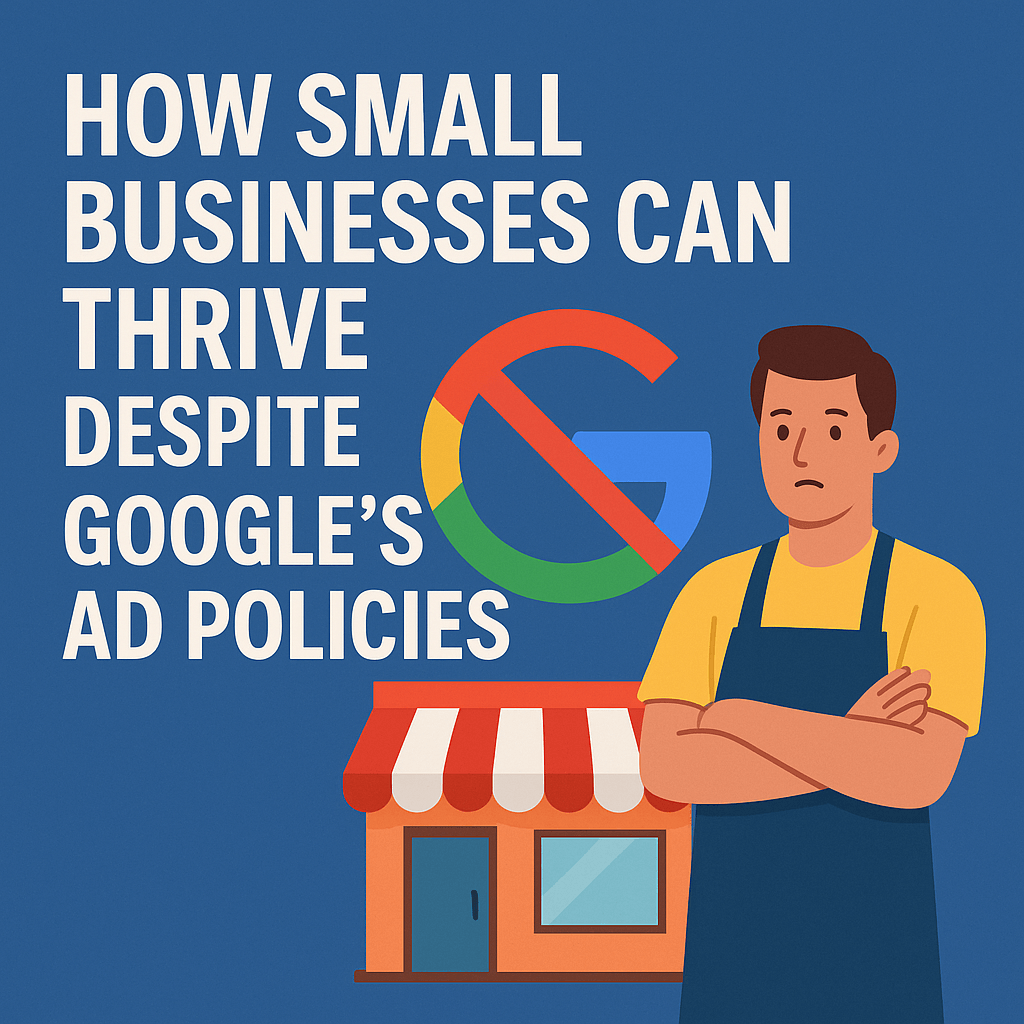
When Sarah launched her handcrafted jewelry business in 2020, she initially allocated 70% of her marketing budget to Google Ads. Six months later, her cost-per-acquisition had tripled, and her ads were being outbid by larger competitors with deeper pockets. “It felt like playing a game where the rules kept changing, and I could never catch up,” she told me. Instead of giving up, Sarah pivoted to community-based marketing strategies—and doubled her revenue within a year, without spending another dollar on Google.
Sarah’s experience isn’t unique. As Google’s advertising ecosystem becomes increasingly competitive and complex, many small businesses find themselves priced out or struggling to navigate ever-changing policies. According to a 2023 survey by the Small Business Association, 62% of small business owners report diminishing returns from Google Ads compared to three years ago, with costs increasing by an average of 27% year-over-year.
But here’s the good news: the digital marketing landscape offers abundant opportunities beyond Google’s walled garden. This article explores proven strategies that successful small businesses are using to thrive without heavy reliance on Google Ads—tactics that often deliver better ROI and more sustainable growth.
Why Google Ads Has Become Challenging for Small Businesses
Before diving into alternatives, let’s understand the current Google Ads landscape:
The Rising Cost Problem
Google’s advertising platform operates as an auction system where advertisers bid for keywords. As more businesses compete for the same keywords, prices inevitably rise. A WordStream study found that average cost-per-click (CPC) rates have increased by 15-25% annually across most industries since 2018.
For small businesses with limited budgets, this means fewer clicks for the same investment—or being priced out entirely. Mike Chen, who runs a local plumbing business in Denver, shared: “Three years ago, I could bid on ’emergency plumber’ and get consistent leads. Now, that same keyword costs four times as much, and national chains dominate the results.”
Policy Changes and Complexity
Google implements hundreds of policy updates annually, many without clear communication. Small businesses without dedicated marketing teams often struggle to keep up with these changes.
Key challenge: When policies change, ads can be disapproved without warning, causing business disruption and requiring time-consuming appeals processes that small business owners can rarely afford.
Increasing complexity: The Google Ads platform has evolved to offer sophisticated targeting options that benefit larger companies with data analysts and specialized marketing teams. Small businesses often lack the expertise to optimize campaigns effectively.
Building a Strong Foundation: Your Owned Marketing Assets
The most successful Google-independent businesses focus first on assets they completely control:
Optimizing Your Website for Conversion (Not Just SEO)
While SEO remains important, focusing exclusively on Google’s algorithm means you’re still playing by their rules. Instead, prioritize conversion optimization:
- Implement heat mapping tools like Hotjar to understand how visitors interact with your site. Jenna Wilson, founder of Natural Home Goods, discovered that visitors were abandoning carts at shipping information: “By simplifying our checkout and adding a shipping calculator earlier in the process, we increased conversions by 32%.”
- Create multiple entry points for lead capture. Instead of a single “Contact Us” form, develop targeted lead magnets relevant to different customer needs. A landscaping company might offer separate downloads for “Drought-Resistant Garden Plans,” “Low-Maintenance Yard Ideas,” and “Seasonal Planting Guides”—each capturing different customer segments.
- Optimize for mobile first. Despite mobile accounting for 63% of all web traffic, many small businesses still design for desktop first. Ensure your mobile experience is seamless, as it’s likely where most customers will find you.
Email Marketing: Your Most Valuable Channel
Email marketing delivers an average ROI of $36 for every $1 spent—far outperforming Google Ads’ average 2:1 return. Yet many small businesses underutilize this channel.
Bookstore owner Marcus Johnson transformed his business by focusing on email: “Instead of competing with Amazon on Google, we built a 15,000-person email list of local readers. Our open rates average 32%, and email drives 40% of our revenue through targeted recommendations and events.”
To build an effective email strategy:
- Segment your list based on customer behavior and preferences
- Create automated sequences for new subscribers, post-purchase follow-ups, and re-engagement
- Provide genuine value in every communication—not just promotions
Case study: Riverdale Nursery increased their average customer value by 67% by implementing a seasonal email program with targeted plant care advice. Their “Plant Parent” email series has a 41% open rate and directly drives 28% of their total revenue.
Community-Based Marketing Strategies
Communities create resilience against algorithm changes and policy updates. They also generate word-of-mouth marketing—still the most trusted form of recommendation.
Building Micro-Communities
Rather than casting a wide net, successful small businesses are creating focused communities around specific interests or needs:
- Facebook Groups: Fitness coach Elena Gonzalez built a 7,000-member Facebook group for “Busy Moms Who Lift” that drives 80% of her online coaching clients. “I spent six months providing free workouts and answering questions before monetizing. Now I don’t spend anything on ads—my community does the marketing for me.”
- Discord or Slack communities: Technical businesses find these platforms particularly effective. Software development consultant Raj Patel created a Slack community for solo developers that became his primary lead source: “Members recommend my services because they’ve seen me provide value consistently in the community.”
- Local in-person events: Don’t underestimate the power of face-to-face connection. A small bakery in Portland hosts monthly bread-making workshops that consistently sell out and create loyal customers who become brand ambassadors.
Strategic Partnerships and Cross-Promotion
Identifying complementary businesses can create powerful marketing synergies without Google’s involvement:
Veterinarian Dr. Lisa Chen partnered with three pet-related businesses (a groomer, a trainer, and a specialty pet food store) to create a “Healthy Pet Alliance.” Each business promotes the others through bag stuffers, joint email features, and shared events. “Our new client acquisition costs dropped by 40%, and we’ve seen better client retention because we’re providing a more complete solution,” Dr. Chen explains.
To implement effective partnerships:
- Identify businesses serving the same customers at different stages
- Start with simple cross-promotions before creating more complex programs
- Track referrals carefully to ensure partnerships remain beneficial
Alternative Digital Advertising Platforms
While reducing dependence on Google Ads is wise, digital advertising still has a place in a diversified strategy. Consider these alternatives:
Pinterest for Visual Businesses
For businesses in home decor, fashion, food, crafts, or design, Pinterest offers significant advantages over Google:
- Longer content lifespan: Unlike Google Ads that stop performing when you stop paying, Pinterest pins can drive traffic for months or years.
- Lower competition: CPCs on Pinterest average 30-40% lower than Google for many visual categories.
- Purchase intent: 85% of Pinterest users report using the platform to plan purchases.
Handmade soap company Pure Suds shifted their advertising budget from Google to Pinterest and saw a 3.5x increase in ROI. “Our customers use Pinterest to find natural skincare ideas, so we meet them where they’re already planning purchases,” explains founder Tanya Williams.
Nextdoor for Local Businesses
Nextdoor offers hyperlocal targeting that even Google can’t match:
Success story: When neighborhood hardware store Johnson’s Tools couldn’t compete with Home Depot’s Google Ads budget, they turned to Nextdoor. By offering exclusive discounts to nearby neighborhoods and highlighting their same-day emergency services, they increased foot traffic by 23% and emergency service calls by 47%.
Nextdoor works particularly well for:
- Home services (plumbers, electricians, landscapers)
- Restaurants and cafes
- Professional services with geographic limitations
- Retail stores seeking to drive foot traffic
Industry-Specific Platforms
Many industries have specialized advertising platforms that deliver better-qualified leads at lower costs:
- Houzz for home renovation professionals
- Thumbtack for service providers
- Booksy for beauty professionals
- BrightLocal for local SEO and directory management
Landscape architect Maria Sanchez found that leads from Houzz converted at 4x the rate of her Google Ads leads: “The people finding me on Houzz are already deep in the planning process and have specific projects in mind. They’re pre-qualified in a way Google leads never were.”
Content Marketing for Long-Term Independence
While paid advertising delivers immediate results, content marketing builds sustainable traffic that doesn’t disappear when ad budgets are cut.
The Pillar Content Approach
Rather than creating random blog posts, successful small businesses focus on comprehensive “pillar” content that thoroughly addresses important customer questions:
Financial advisor James Mitchell created a 5,000-word guide to “Retirement Planning for Self-Employed Professionals” with downloadable calculators and checklists. “Instead of paying $12-18 per click for financial planning keywords on Google, I invested in creating this comprehensive resource. It ranks organically for over 200 keywords and generates 15-20 qualified leads monthly.”
To implement the pillar content approach:
- Identify the 3-5 most important questions your ideal customers have
- Create comprehensive resources (guides, videos, tools) addressing each question
- Break these pillars into smaller supporting content pieces
- Promote through owned channels (email, social media) and partnerships
Video Content Strategy
YouTube remains the second largest search engine after Google, but with different competitive dynamics:
Gardening supply store GreenThumb Nursery created a YouTube series called “5-Minute Garden Solutions” featuring quick, seasonal gardening tips. “We’ve built a subscriber base of 28,000 gardeners who now see us as trusted experts,” says owner David Lee. “Our videos drive more store visits than our Google Ads ever did, at about one-third the cost.”
Key video strategy elements:
- Focus on solving specific problems your customers face
- Maintain consistent publishing schedules
- Create content series rather than one-off videos
- Include clear calls-to-action that drive to owned channels
Measuring Success Beyond Google Analytics
As you diversify beyond Google Ads, you’ll need new measurement approaches:
Attribution Beyond Last Click
Google’s analytics tools naturally emphasize Google’s contribution to conversions. Consider implementing:
- Customer journey mapping: Ask new customers how they found you through post-purchase surveys
- Unique landing pages or offer codes for different marketing channels
- First-party data collection to understand the full customer journey
Clothing boutique Urban Style implemented channel-specific discount codes and discovered that while their email campaigns showed modest direct conversions, recipients were 3.5x more likely to make in-store purchases within two weeks of opening an email. “This completely changed how we valued our email program,” explains owner Jennifer Wu.
Conclusion: Building Resilience Through Diversification
Google’s advertising ecosystem will continue evolving, likely becoming more expensive and complex for small businesses. Rather than fighting an uphill battle, successful small businesses are building marketing ecosystems they control.
The most resilient approach combines:
- Strong owned assets (website, email list)
- Community-building initiatives
- Strategic partnerships
- Selective use of alternative advertising platforms
- Long-term content investments
This diversified approach not only reduces dependency on Google but often delivers better results. As Sarah, our jewelry business owner, reflected: “Breaking up with Google Ads was the best business decision I’ve made. My marketing is now more personal, more effective, and completely under my control.”
The digital marketing landscape offers abundant opportunities for small businesses willing to look beyond Google’s walled garden. The question isn’t whether you can succeed without Google Ads—it’s whether you can afford not to develop these alternative channels before rising costs force your hand.
Where This Insight Came From
This analysis was inspired by real discussions from working professionals who shared their experiences and strategies.
- Share Your Experience: Have similar insights? Tell us your story
At ModernWorkHacks, we turn real conversations into actionable insights.
![[Workflow Included] A simple 5-node Instagram posting workflow for beginners](https://modernworkhacks.com/wp-content/uploads/2026/04/workflow-included-a-simple-5-node-instagram-posting-workflow-for-beginners-1024x675.png)



0 Comments