
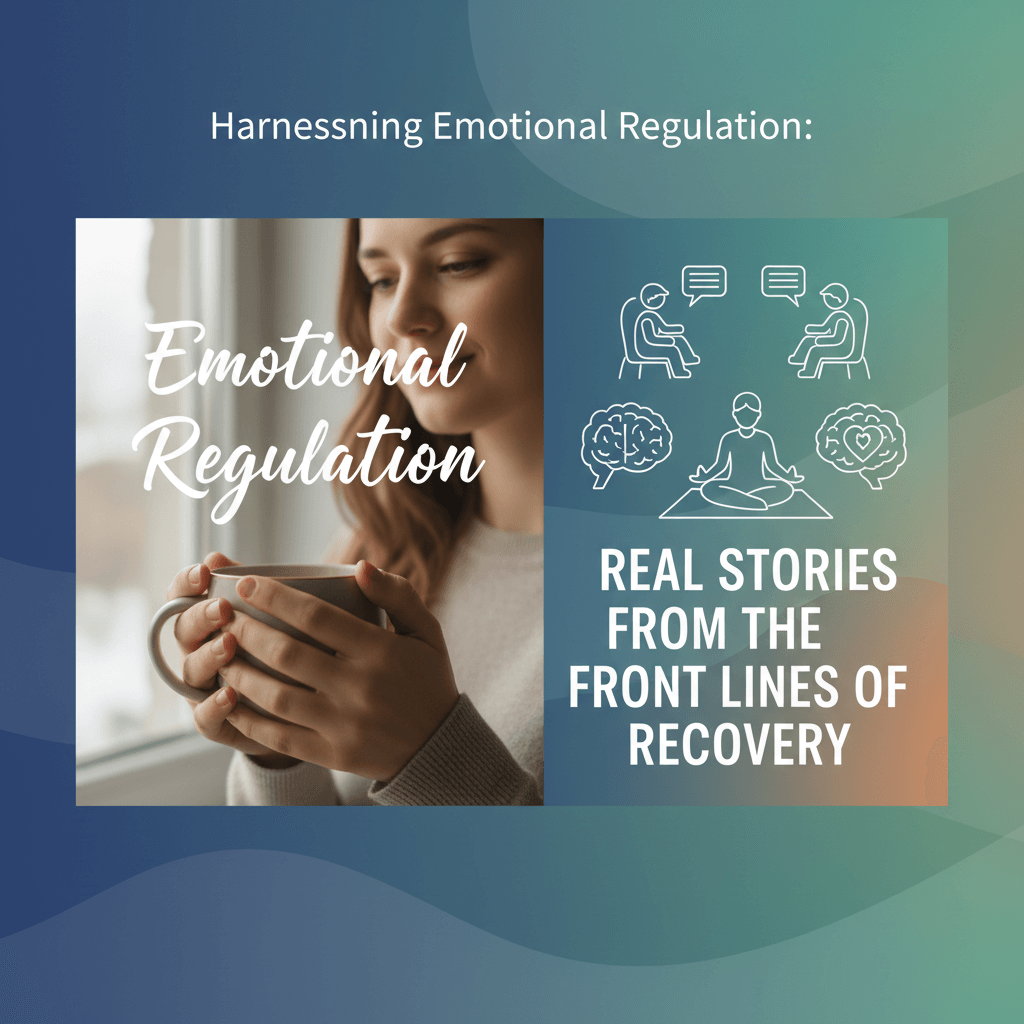
The first time Marcus recognized he was spiraling into anger wasn’t during therapy. It wasn’t while reading a self-help book. It was in the checkout line at a grocery store, holding a six-pack of beer after a brutal workday, when a stranger accidentally bumped his shoulder. “I nearly exploded,” he told me. “But then something clicked—I was hungry, exhausted, and using alcohol to cope. That’s when HALT finally made sense to me.”
Marcus’s story represents countless individuals who have transformed personal struggles into powerful tools for emotional regulation. These aren’t just clinical techniques described in textbooks—they’re hard-won insights from people who’ve walked through emotional fire and emerged stronger. Their journeys reveal how our most painful experiences can become our most valuable teachers in developing emotional resilience.
The Power of HALT: When Personal Crisis Becomes a Universal Tool
HALT—an acronym for Hungry, Angry, Lonely, or Tired—originated in addiction recovery communities but has since become a cornerstone technique for emotional regulation across various mental health contexts. The stories behind this seemingly simple tool reveal its profound impact.
From Rock Bottom to Emotional Awareness
“I discovered HALT in rehab after my third DUI,” shares Elaine, 42, now five years sober. “What makes it powerful isn’t the acronym itself, but the moment you realize you’ve been living your entire life reacting to these basic states without recognizing them.”
Research from the Journal of Substance Abuse Treatment indicates that simple emotional regulation techniques like HALT show a 37% improvement in maintaining recovery when consistently applied. But the statistics only tell part of the story.
For Elaine, the technique became transformative when she began documenting her emotional triggers:
- Track physical sensations that precede emotional reactions (Elaine noticed tension in her jaw before anger)
- Create environment cues as reminders (sticky notes on her bathroom mirror asking “HALT?”)
- Practice body scans during routine activities like brushing teeth or waiting in line
When HALT Saves Relationships
James, a 35-year-old teacher, credits HALT with saving his marriage. “My wife and I were on the brink of divorce. I’d come home exhausted from teaching, she’d ask about my day, and I’d snap at her. Classic ‘tired’ from HALT, but I never made the connection.”
After learning about HALT in couples therapy, James and his wife implemented what they call “the pause button”—a mutual agreement to check their HALT status before difficult conversations. “It sounds so basic,” James admits, “but asking ‘Am I just hungry right now?’ before responding to something that irritates me has completely changed our communication.”
The Body Keeps the Score: Trauma Survivors and Somatic Regulation
For trauma survivors, emotional regulation often begins with reconnecting to the body—a process that can be both terrifying and liberating. Their stories highlight how somatic approaches create pathways to healing that talk therapy alone sometimes can’t reach.
Finding Safety in Sensation
“After my assault, I lived from the neck up,” explains Tara, a sexual trauma survivor. “I couldn’t feel my body without panicking. My therapist introduced me to ‘grounding’ through the 5-4-3-2-1 technique, and it became my lifeline.”
The 5-4-3-2-1 technique—identifying five things you can see, four you can touch, three you can hear, two you can smell, and one you can taste—has shown remarkable efficacy. A 2019 study in the Journal of Traumatic Stress found that regular practice of sensory grounding techniques reduced flashback intensity by 47% among PTSD patients.
Tara’s journey toward embodiment included:
- Starting with brief periods of body awareness (initially just 30 seconds)
- Using weighted blankets to reintroduce safe touch sensations
- Practicing mindful walking, focusing exclusively on the sensation of feet touching the ground
When Breathing Becomes Revolutionary
“People tell you to ‘just breathe’ all the time,” says Miguel, an Iraq war veteran with PTSD. “What they don’t understand is that for some of us, breathing consciously can trigger panic. My breath was shallow for years because deeper breathing made me feel vulnerable.”
Miguel’s breakthrough came through box breathing—a technique where you inhale for four counts, hold for four, exhale for four, and hold for four before repeating. “The counting gave my mind something to focus on besides fear. Eventually, I could breathe deeply again without feeling like I was in danger.”
This experience aligns with research showing that structured breathing exercises can help recalibrate the autonomic nervous system. A study in Frontiers in Psychology demonstrated that regular practice of rhythmic breathing reduced hyperarousal symptoms in combat veterans by 41% after eight weeks.
From Shame to Compassion: The Self-Talk Revolution
Perhaps one of the most profound aspects of emotional regulation involves transforming our internal dialogue. The stories of those who’ve shifted from harsh self-criticism to self-compassion reveal both the challenge and the liberation this process brings.
Breaking the Shame Spiral
“My internal voice was vicious,” recalls Dana, who struggled with an eating disorder for over a decade. “Every mistake was evidence that I was fundamentally flawed. Recovery meant learning to talk to myself like I would talk to a friend.”
Dana’s journey toward self-compassion began with a simple but powerful exercise suggested by her therapist: writing down her self-critical thoughts and then responding to them as if they were coming from a close friend.
“The first time I did it, I cried for an hour. I realized I would never speak to someone I loved the way I routinely spoke to myself.”
Her practice evolved to include:
- Creating a “compassion playlist” of songs that evoke self-acceptance
- Writing compassionate letters to her younger self during difficult moments
- Using physical touch (hand on heart) when negative self-talk emerges
The Third-Person Perspective Shift
Research in Clinical Psychological Science reveals that using third-person self-talk during emotional challenges can create psychological distance and reduce distress by up to 30%. This finding resonates deeply with Alex, who used this technique to manage social anxiety.
“Instead of saying ‘I’m terrified of this presentation,’ I’d say ‘Alex is feeling nervous about the presentation,'” he explains. “That tiny shift helped me see my anxiety as just one part of my experience, not my entire identity.”
Alex found that combining third-person self-talk with evidence-based challenges to negative thoughts created a powerful emotional regulation system. “When I catch myself catastrophizing, I ask ‘What would Alex tell his best friend in this situation?’ It pulls me out of the emotional quicksand almost immediately.”
Community as Regulation: The Shared Journey of Recovery
While many emotional regulation techniques focus on individual practice, countless recovery stories highlight the crucial role of community in sustaining emotional balance.
The Mirror of Recognition
“I couldn’t recognize my own emotions until I saw them reflected in others,” shares Leila, who found healing through group therapy after years of depression. “Hearing someone describe exactly what I was feeling—but couldn’t name—was like finally finding a map when I’d been lost for years.”
This experience aligns with interpersonal neurobiology research showing that emotional co-regulation—the process of calibrating our emotional states through interaction with others—forms the foundation for self-regulation. A longitudinal study from the Journal of Consulting and Clinical Psychology found that participants in group-based emotional regulation training maintained improvements 18 months longer than those in individual treatment alone.
Leila’s community-based regulation strategies included:
- Regular “emotion check-ins” with trusted friends
- Participating in a weekly support group where emotions are named without judgment
- Creating a personal “emotion mentors” list of people who model healthy regulation of specific emotions
Digital Communities as Regulation Resources
For many, online communities provide crucial support when in-person options are limited. Reddit’s r/EmotionalRegulation and r/DBTskills forums have become lifelines for thousands seeking real-time support and validation.
“At 2 AM when I’m spiraling, knowing there are others awake and working through similar struggles helps me remember I’m not alone,” explains Jordan, who credits online recovery communities with providing critical emotional regulation tools during the isolation of the pandemic. “Someone will post exactly what I’m feeling, and another person will respond with what worked for them. It’s like having a 24/7 regulation resource library built from real experiences.”
From Surviving to Thriving: The Ongoing Practice of Emotional Regulation
The most compelling aspect of these recovery stories is their emphasis on emotional regulation not as a destination but as an evolving practice. Those furthest along in their journeys describe moving beyond crisis management to proactive emotional cultivation.
“I used to think emotional regulation was just about not falling apart,” reflects Marcus, whom we met at the beginning of this article. “Now I understand it’s about building a relationship with my emotions that allows me to use their energy constructively.”
Five years after that grocery store moment, Marcus facilitates emotional regulation workshops, sharing his story to help others recognize their own patterns. “The techniques aren’t magic—they’re practice. And the practice never ends. That’s actually the beautiful part.”
The collective wisdom from these front-line stories of recovery offers us all a powerful invitation: our emotional struggles, when approached with curiosity and compassion, can become our greatest teachers. The path to regulation isn’t about eliminating difficult emotions but about developing a more nuanced relationship with our full emotional landscape.
As you reflect on these stories, consider: Which emotion most frequently overwhelms your regulatory capacity? What might that emotion be trying to tell you? And most importantly, how might your own recovery story—whether you’re just beginning or well along the path—eventually become a beacon for someone else still finding their way?
In the words of Tara: “The moment I started sharing my regulation journey with others was the moment my pain transformed from something that isolated me to something that connected me. That’s when I knew I wasn’t just recovering—I was becoming whole.”
Where This Insight Came From
This analysis was inspired by real discussions from working professionals who shared their experiences and strategies.
- Share Your Experience: Have similar insights? Tell us your story
At ModernWorkHacks, we turn real conversations into actionable insights.
![[Workflow Included] A simple 5-node Instagram posting workflow for beginners](https://modernworkhacks.com/wp-content/uploads/2026/04/workflow-included-a-simple-5-node-instagram-posting-workflow-for-beginners-1024x675.png)




0 Comments