
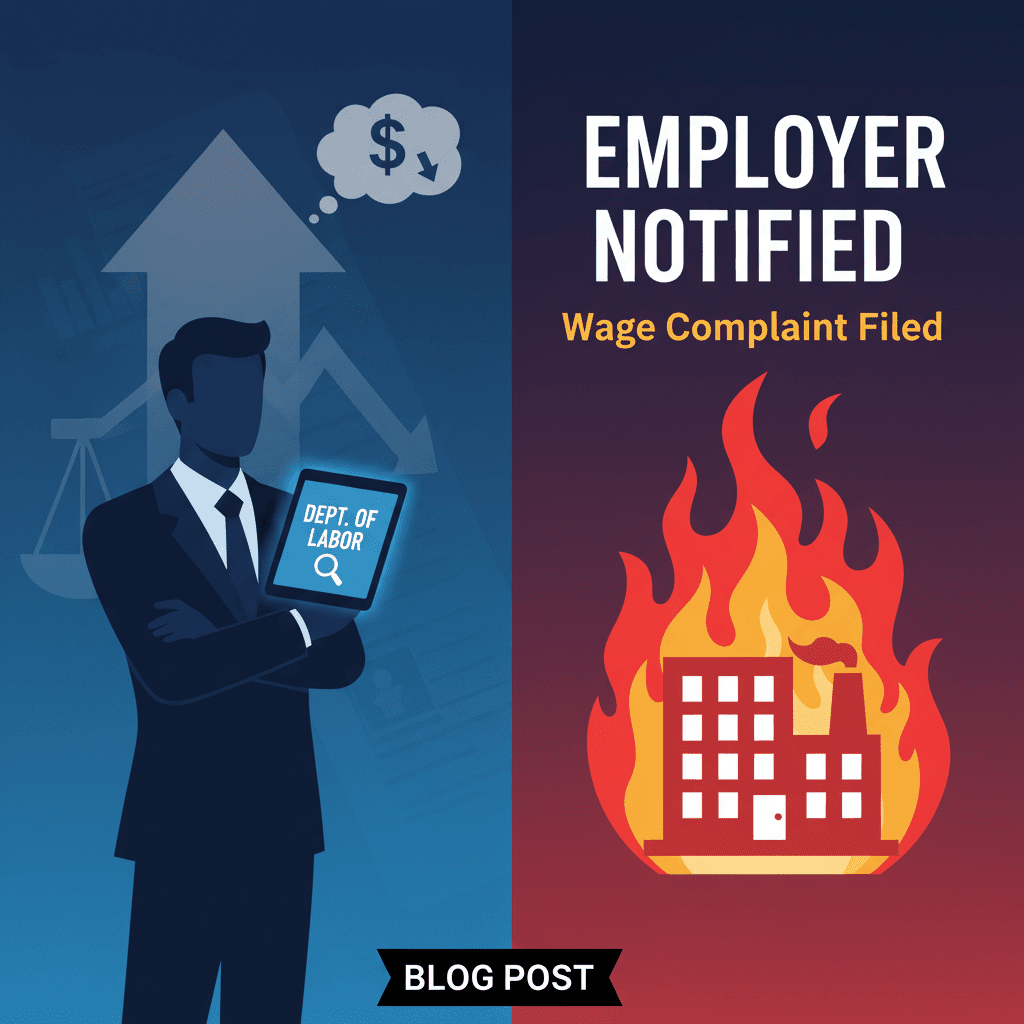
Discover actionable insights from real-world experiences of workers, managers, and HR professionals who have been through wage disputes and Department of Labor (DOL) investigations. If your employer was notified of your wage complaint—or you’re considering filing—this in-depth guide will help you navigate the process with clarity, confidence, and a plan.
What follows is a practical exploration of what actually happens next, what you can do today to protect yourself, and how to stay focused on outcomes that matter. You’ll find not just explanations of the process, but also step-by-step recommendations and key takeaways gathered from those who’ve been in your shoes.
A story that could be yours: The moment everything becomes real
After months of late nights and early mornings, Maya finally decided to file a wage complaint. Her employer had misclassified her as exempt from overtime, even though her duties and schedule suggested otherwise. It wasn’t a rash decision. She had asked HR. She had asked her manager. She had even emailed the payroll team with exact dates and hours she’d worked. Still, nothing changed. With rent due and stress mounting, she contacted the Department of Labor.
Two weeks later, her employer received the notification. That’s when her stomach dropped. The issue was no longer theoretical—it was official. She worried: Would they retaliate? Would they cut her hours? Would they fire her? And how could she prove her case when the timecard system never reflected her after-hours work answering messages and updating reports?
Then something unexpected happened: her manager asked to “talk.” The tone was different—formal, careful, and oddly respectful. The company was suddenly very interested in her documentation. HR wanted details of her role. People who had been too busy to respond now had time. Maya realized the DOL notification changed the dynamic. This wasn’t just about one employee speaking up. An outside inspector was now involved, and the company knew it.
Maya’s story is common. Whether the issue involves minimum wage, overtime, off-the-clock work, unpaid final paycheck, tip credits, meal and rest breaks, or misclassification, the moment your employer is notified is a turning point. It is also the moment where preparation, calm communication, and clarity of your goals can shift outcomes dramatically in your favor.
What happens after the Department of Labor notifies your employer
When the DOL notifies an employer of a wage complaint, the process typically follows a structured path. While specifics vary by region, agency (federal or state), and case complexity, there are predictable stages you can prepare for.
The initial contact and employer response
After you submit a complaint, a DOL investigator may review your claim and decide whether to proceed. If they do, they contact the employer to inform them of the investigation. This may include a request for records, a timeline for response, and questions about classification, hours, pay rates, and policies. Employers often respond quickly because documentation and responsiveness can influence the investigator’s assessment and eventual findings.
Employers usually gather payroll records, timesheets, schedules, job descriptions, and policy documents. They may also interview supervisors or HR personnel to clarify how roles are classified and how hours are tracked. While this can feel intimidating, it also means your case is being evaluated by neutral standards—policies must match reality, and data must stand up to scrutiny.
Your role during the investigative phase
You may be contacted by the investigator for additional details or supporting documentation. Your best move is to provide clear, accurate, dated information that aligns with your narrative. In many wage cases, the consistency of your records—no matter how simple—matters as much as the employer’s systems. Even handwritten logs, calendar entries, email timestamps, or chat histories can be persuasive if they form a coherent timeline.
The investigator’s job is to determine whether the employer complied with wage and hour laws. That assessment includes not just what’s on paper but also how work is actually performed. For example, if timekeeping policies forbid off-the-clock work, but messages and deliverables show late-night activity, that discrepancy matters.
Timelines and outcomes to expect
Timelines vary widely. Some cases resolve in weeks, others take months. Outcomes can include voluntary employer payment, back wages ordered, adjustments to future pay practices, or in some cases, civil penalties. Many employers choose to resolve wage disputes once the DOL is involved. It’s often quicker and less costly than prolonged dispute, and failing to cooperate can lead to more serious consequences.
Keep in mind that the DOL may focus on a specific period, role, or location. If patterns are found, the scope can expand. This is one reason employers often become more careful once notified: the issue can cascade beyond a single employee if systemic problems exist.
Confidentiality and professional communication
While investigators may try to protect worker confidentiality, your employer may infer your identity based on the nature of the complaint. If they approach you, keep communications brief, factual, and professional. Assuming good faith without abandoning your boundaries is the right balance: cooperate with official requests, but do not allow side conversations to replace the formal process.
- Respond in writing where possible to keep a record.
- Ask clarifying questions if you’re unsure what’s being requested.
- Avoid making accusations; stick to facts and dates.
- If you feel pressured or uncomfortable, notify the investigator.
How to prepare now: Documentation, communication, and clarity
The period after an employer is notified is your best opportunity to shape the narrative through evidence and calm, credible communication. You don’t need to be a lawyer to present a clear case; you just need organized records that directly support your claims.
Gather and organize your records
Create a central folder (digital or physical) that includes the following:
- Pay stubs and payroll summaries covering the disputed period.
- Timesheets, clock-in/clock-out data, or screenshots of scheduling apps.
- Emails or messages assigning work outside recorded hours.
- Calendar entries, project trackers, or version history showing late-night/early-morning work.
- Job descriptions, offer letters, or employee handbooks relevant to classification and pay policies.
- Any prior complaints or requests you made about pay or hours, with dates and responses.
Label everything with simple, descriptive file names (e.g., “Timesheet_WeekOf_2023-10-02” or “Email_OvertimeRequest_2023-09-14”). If you can, build a simple timeline that lists dates, hours worked, pay received, and any discrepancies. The easier it is for an investigator to follow, the stronger your position becomes.
Clarify the specific legal theory—but speak in plain terms
You do not need to argue the law. Instead, describe exactly what happened:
- “I was paid a fixed salary and classified as exempt, but I regularly performed non-exempt tasks such as customer service, stocking, and transaction processing. I worked more than 40 hours per week and was not paid overtime.”
- “I worked off the clock because my manager asked me to prep for opening and stay late after closing. Those hours weren’t recorded.”
- “My final paycheck didn’t include earned commissions and my unused PTO that the policy says is paid out.”
When you present specifics clearly, the investigator can map your facts onto the applicable standard (e.g., minimum wage, overtime eligibility, tip credit rules, meal break compliance). That’s their job. Your job is to be accurate, consistent, and complete.
Communicate with professionalism and boundaries
You may receive outreach from your employer—HR, payroll, legal, or your manager. Use this approach:
- Be cooperative, not confrontational. Offer documents, answer factual questions, and keep your responses concise.
- Stay within the process. If someone tries to resolve the issue informally, you can listen—but also let the investigator know. Don’t agree to anything you don’t fully understand.
- Document every interaction. Keep a log of who said what, when, and how, including emails and calls.
- Avoid social media commentary. Public posts can complicate your case.
Anticipate what the employer will emphasize
From real-world conversations with HR teams and managers, employers often focus on:
- Written policies that prohibit off-the-clock work.
- Job descriptions asserting exempt status under overtime rules.
- Signed acknowledgments of handbook policies.
- Timekeeping records that, on paper, show no overtime or breaks taken as scheduled.
Your response is to anchor on reality. If you performed work outside recorded hours, show it. If your duties were primarily non-exempt, describe typical tasks and how time was spent. If you were told to clock out and keep working, note the dates and who instructed you. Policy language matters, but practice matters more. Investigators know the difference.
Employer reactions you might see—and how to respond
When an employer learns the DOL is looking into a wage complaint, reactions vary. Recognizing the patterns can help you handle them calmly and strategically.
Reaction 1: Quick cooperation and resolution attempt
Some employers immediately engage, audit their records, and propose a fix. They may offer back pay or adjust classification going forward. This can happen when a company realizes the evidence is strong or the risk of broader scrutiny is high.
How to respond: Listen, take notes, and ask for everything in writing. Do not sign a release or settlement without understanding the scope: Does it cover all back pay? All affected periods? Future corrections? Consider seeking legal advice before agreeing to anything binding. Inform the investigator of any discussions.
Reaction 2: Defensive posture and policy citations
Other employers lean heavily on policy language. They may claim that off-the-clock work is against the rules or that your role is clearly exempt. They may imply the issue is your “failure to follow procedures.”
How to respond: Keep returning to the facts. If the policy prohibits off-the-clock work but you were asked to do it—or couldn’t complete your job within scheduled hours—document that reality. If the employer cites an exempt classification, describe what you actually did day-to-day. Focus on how your time was spent, not job titles.
Reaction 3: Subtle pressure or cooling toward the employee
Some workers report chilly behavior, reduced hours, changed shifts, reassigned duties, or heightened scrutiny. While not always labeled as retaliation, these changes can have real impact.
How to respond: Track changes meticulously: schedules, assignments, performance reviews, emails. If you believe retaliation is occurring, notify the investigator promptly. Don’t assume you must endure it in silence; retaliation is a serious allegation that investigators take seriously.
Reaction 4: Silence or slow-walking
Occasionally, employers delay. They may take weeks to respond or provide partial records. They may claim data system issues or staff turnover.
How to respond: Follow up with the investigator on timelines and next steps. Provide your own documentation promptly so the process keeps moving. Silence can be a tactic; your consistency is your advantage.
Reaction 5: Offer to resolve privately, fast
In some cases, the employer suggests a quick private settlement with a payment and a release, asking you to withdraw the complaint.
How to respond: Proceed carefully. Fast resolution can be positive, but make sure the amount covers the full scope (including overtime premiums and applicable time periods). Ask for the calculation in writing. Confirm whether taxes are handled properly and whether other employees are affected. Keep the investigator in the loop unless you’ve received independent legal guidance advising otherwise.
Your rights, protections, and the outcomes that matter
Wage and hour laws exist to protect workers from unfair practices—and to create a level playing field for honest employers. Understanding your rights can reduce anxiety and help you make steady, informed choices.
Anti-retaliation protections
Workers who file or participate in wage investigations are generally protected from retaliation. This includes firing, demotion, pay cuts, negative scheduling changes, or harassment because of the complaint. If you suspect retaliation, document specific incidents and notify the investigator. In many cases, retaliation can lead to additional penalties for the employer.
Confidentiality challenges
While investigators often seek to protect your identity, the nature of a claim (e.g., a specific shift, department, or role) can make it obvious who raised the concern. Prepare for this possibility by deciding in advance how you will handle questions. A simple, professional approach works well: “I’ve raised concerns through the appropriate channels and am cooperating with the process.” Avoid debates with coworkers or managers outside formal meetings.
What a successful outcome looks like
Success can take multiple forms. It might be back wages for you, adjustments to timekeeping practices, reclassification with overtime going forward, or policy changes that help an entire team. While it’s natural to focus on personal restitution, consider the broader impact. Many workers who’ve navigated this process say that seeing policy corrected gave them a sense of lasting progress—both for themselves and others.
When legal advice helps
Though many complaints resolve through the administrative process, consulting an employment attorney can be helpful, especially if your case is complex or if a settlement agreement is presented. An attorney can review releases, assess whether the offer covers all owed wages and potential damages, and ensure your rights are preserved.
Remember: You don’t have to choose between cooperation and self-advocacy. You can do both. Being professional and organized is not the opposite of being assertive; it’s how you maximize your credibility and results.
Key takeaways from real discussions—and what you can do today
Across countless conversations, workers and managers report a set of patterns that can guide you through the difficult days after notification. Use these lessons to ground your next move.
Practical patterns that show up again and again
- Documentation can outweigh job titles. What you did matters more than what you were called. Day-to-day tasks are central in determining classification and overtime eligibility.
- Consistency beats volume. A few well-organized records are more persuasive than a flood of chaotic files. Build a clear, dated timeline.
- Employers often pivot once the DOL is involved. Even resistant managers may become responsive when a formal investigation begins. Use that window to surface facts calmly.
- Retaliation concerns are real—but traceable. Keep a log of schedule changes, assignments, and evaluations. Investigators take patterns seriously when documented.
- Fast settlements are tempting, but details matter. Always ask how amounts were calculated. Ensure any agreement covers the full period and applicable premiums.
- Professionalism pays off. Measured communication builds credibility and can speed resolution.
Actionable steps you can take immediately
- Create a master timeline. List dates, hours worked, pay received, and discrepancies. Include references to supporting documents.
- Centralize your evidence. Pay stubs, time records, emails, and messages go into a single folder with clear names.
- Write a concise narrative. In one page or less, explain what happened, when, and how it affected your pay.
- Plan your responses. Draft short, professional replies for common employer questions. Avoid emotional or accusatory language.
- Track interactions. Keep a log of meetings, calls, and messages with HR or management about your case.
- Protect your access. Keep copies of personal evidence outside of company systems and ensure you’re not violating policies by accessing company data.
- Stay aligned with the investigator. Share updates, ask about timelines, and confirm what additional information would be helpful.
Checklist: Before your next conversation
- Do I have my timeline and key documents ready to share?
- Can I describe my day-to-day duties in a way that shows how I actually spent my time?
- Do I have a calm, short summary of my claim prepared?
- Have I planned how to respond if offered a quick settlement?
- If I notice changes in schedule or treatment, am I logging them with dates and details?
Navigating emotions and maintaining momentum
Wage disputes aren’t just administrative—they’re personal. They touch on fairness, identity, and stability. Many people report feeling a mix of fear, relief, anger, and resolve. These feelings are normal. What matters is channeling them into organized action.
Focus on what you can control
When timelines stretch or communication slows, return to your checklist. Updating your timeline, clarifying your narrative, and refining your evidence are within your control. Restate your goals: What outcome matters most—back wages, corrected classification, future schedule changes? Keeping your objectives visible helps you make clearer decisions during discussions.
Seek support without losing privacy
Talk to trusted friends or family for emotional support. If coworkers are also affected, be cautious: their experiences may be helpful, but keep conversations professional and focused. If you’re unsure what to share, default to discretion and refer back to the formal process.
Celebrate small wins
Progress may come in steps: an acknowledgment from HR, a request for more documentation, or the first offer of back pay. Each is a marker that your effort is moving the process forward. Recognize these moments. They help maintain motivation and perspective.
Putting it all together: A path forward you can follow
The moment your employer is notified of your wage complaint can feel overwhelming. But clarity beats chaos. Ground your approach in evidence, communicate with professionalism, and stay connected to the official process. Most cases don’t require heroics—just steady, organized persistence.
Step-by-step plan
- Step 1: Consolidate your records. Gather pay stubs, time records, messages, and policies. Build your timeline and one-page summary.
- Step 2: Align with the investigator. Confirm the scope, what’s needed from you, and likely timelines. Ask clear, concise questions.
- Step 3: Prepare for employer outreach. Draft standard replies, decide what you’ll share, and keep everything in writing when possible.
- Step 4: Document every change. Note any scheduling, duty, or treatment changes. Report retaliation concerns promptly.
- Step 5: Evaluate offers carefully. Request written calculations and scope. Consider independent legal advice before signing releases.
- Step 6: Keep momentum. Follow up respectfully, meet every request for documentation, and update your records as new information appears.
Common pitfalls—and how to avoid them
- Relying on memory alone. Even if you remember clearly, build a record to back it up.
- Arguing law instead of facts. Leave legal interpretation to the investigator; focus on what happened and when.
- Accepting a partial fix. Verify that any resolution covers the full period and all unpaid wages, including overtime premiums where applicable.
- Vent-posting online. Public commentary can undermine your credibility and complicate outcomes.
- Letting delays derail you. Use waiting periods to refine documentation and stay engaged with the process.
A final word—and your next move
Your employer being notified of your wage complaint is a serious moment, but it’s also a chance to correct the record and secure what you’re owed. Real stories show a consistent theme: The workers who succeed aren’t necessarily the loudest; they’re the ones who document well, communicate calmly, and keep showing up with facts. That can be you.
Remember, this guide offers general information and practical strategies. It’s not legal advice. If your situation is complex or you’re presented with a settlement agreement, consider getting advice from a qualified employment attorney.
Call to action: Take 30 minutes today to start a master timeline, gather your top five documents, and draft a one-paragraph summary of your claim. Then, send a brief, professional update to the investigator confirming what you’ve prepared and asking what would be most helpful next. Small, focused steps compound—turning uncertainty into progress.
Where This Insight Came From
This analysis was inspired by real discussions from working professionals who shared their experiences and strategies.
- Source Discussion: Join the original conversation on Reddit
- Share Your Experience: Have similar insights? Tell us your story
At ModernWorkHacks, we turn real conversations into actionable insights.
![[Workflow Included] A simple 5-node Instagram posting workflow for beginners](https://modernworkhacks.com/wp-content/uploads/2026/04/workflow-included-a-simple-5-node-instagram-posting-workflow-for-beginners-1024x675.png)




0 Comments