
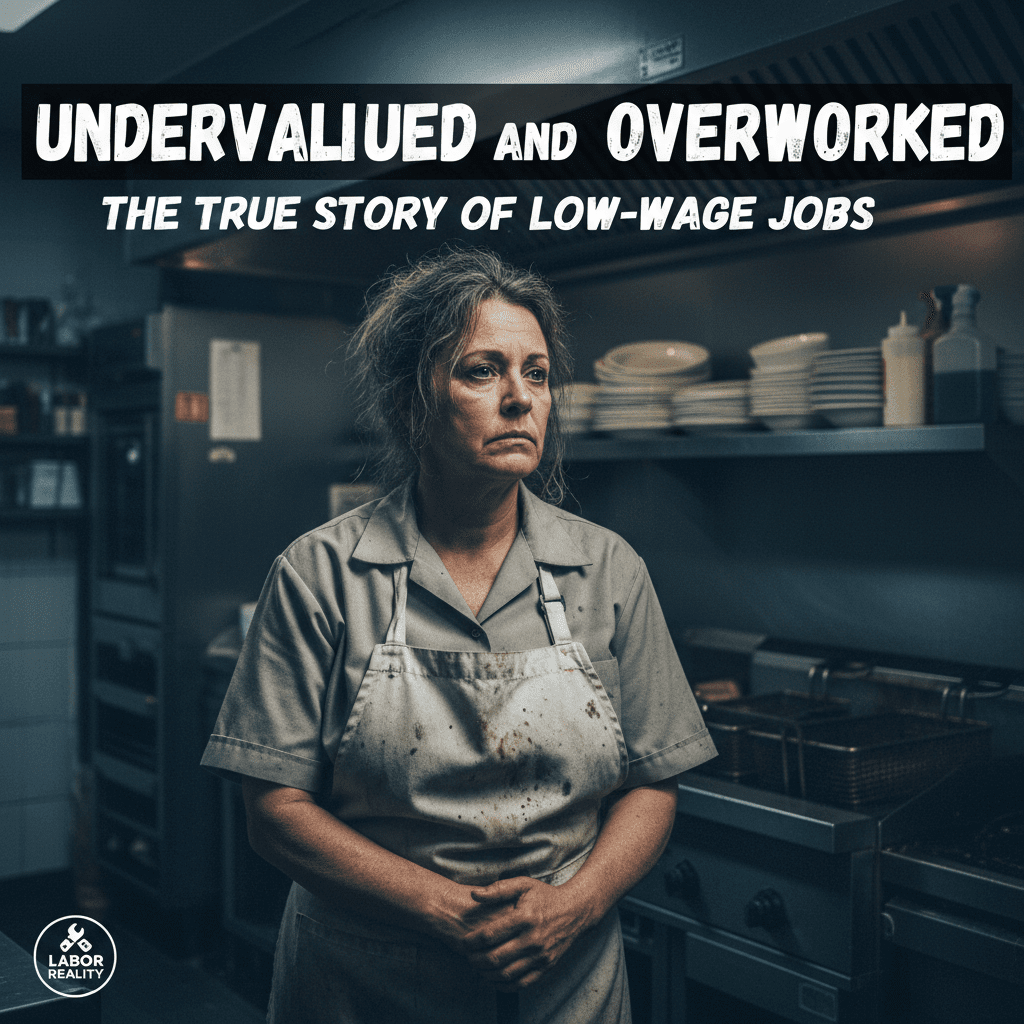
The hardest job I ever worked paid $9.25 an hour. I was on my feet for eight to ten hours a day, lifting boxes heavier than I was, calming angry customers, cleaning messes no one else wanted to touch, and doing it all with a smile because my schedule for next week depended on it. One night, after clocking out past midnight, I overheard a customer say, “Anyone could do that job.” I remember thinking: If that were true, why does it hurt this much?
This experience is not unique. Across the economy, the jobs that demand the most physical effort, emotional labor, and flexibility often pay the least. From warehouses and fast-food kitchens to nursing homes and grocery stores, low-wage workers keep society running while struggling to survive within it. The central question is simple but uncomfortable: Why are the hardest jobs the least rewarded? The answer lies in a mix of historical patterns, power imbalances, and policy choices that continue to undervalue essential labor.
The Reality on the Ground: What Low-Wage Work Actually Looks Like
High Demands, Low Control
Low-wage jobs are often described as “entry-level” or “unskilled,” but that language hides the complexity of the work. These roles typically involve intense multitasking, constant supervision, and little autonomy. Schedules change weekly, shifts extend unexpectedly, and saying no is rarely an option.
According to the U.S. Bureau of Labor Statistics, workers in the bottom wage quartile are significantly more likely to have irregular schedules and mandatory overtime. This lack of control creates chronic stress, making it nearly impossible to plan childcare, education, or even basic rest.
- Track your schedule volatility: If you’re a worker, documenting last-minute changes can help in advocating for fair scheduling policies.
- For managers: Even small increases in schedule predictability can dramatically reduce turnover.
- For policymakers: Fair workweek laws have been shown to improve worker well-being without hurting business performance.
The Physical and Emotional Toll
Low-wage work is often physically demanding, but the emotional labor is just as heavy. Retail workers absorb customer frustration. Care aides manage grief and burnout. Food service workers endure constant pressure to be fast, friendly, and flawless.
A 2023 study published in the American Journal of Industrial Medicine found that low-wage workers experience higher rates of workplace injury and mental health strain than higher-paid counterparts. These costs rarely show up on a balance sheet, but they accumulate in bodies and lives.
- Normalize rest: Workers should not have to justify recovery time after physically demanding shifts.
- Employers can rotate tasks: Reducing repetitive strain lowers injury rates.
- Communities can support: Simple acts of respect from customers make a measurable difference.
Pay Disparities: How We Got Here
The Myth of “Unskilled” Labor
The idea that low-wage jobs require little skill is historically rooted in who performed them. Work dominated by women, immigrants, and people of color has consistently been undervalued. Domestic work, agricultural labor, and service roles were excluded from early labor protections, setting a precedent that lingers today.
In reality, these jobs require situational judgment, interpersonal skills, and physical endurance. They are learned through experience, not formal credentials, which makes them easier to dismiss but not easier to perform.
- Challenge the language: Calling work “low-skill” shapes how it is compensated.
- Highlight competencies: Workers can document skills gained on the job for resumes and negotiations.
- Educators and media: Reframing narratives changes public perception.
Wages That Don’t Match Reality
The federal minimum wage in the United States has remained at $7.25 since 2009. Adjusted for inflation, it has lost over 25% of its purchasing power. Meanwhile, productivity has continued to rise. The gap between what workers produce and what they earn has widened dramatically.
Economic Policy Institute data shows that if minimum wage had kept pace with productivity, it would be over $20 an hour today. This disparity is not accidental; it reflects policy choices that prioritize low consumer prices and corporate margins over worker stability.
- Support wage transparency: Knowing pay ranges reduces inequality.
- Advocate locally: State and city minimum wage increases have tangible impacts.
- Businesses can lead: Voluntary living wage policies improve retention.
Stories from the Front Lines
The Warehouse Worker
Maria, a warehouse picker in California, walks an average of 12 miles per shift. Her productivity is tracked by algorithm, and bathroom breaks count against her metrics. She earns $16 an hour, just enough to disqualify her from assistance programs but not enough to cover rent without roommates.
When I spoke with Maria, she didn’t ask for luxury. She wanted a chair during breaks, a predictable schedule, and wages that reflected the wear on her body. Her story mirrors thousands shared on Reddit forums where workers trade survival tips and vent about being treated as replaceable.
- Listen to worker forums: Online communities reveal patterns statistics miss.
- Audit productivity systems: Metrics should not punish basic human needs.
- Policy insight: Algorithmic management needs oversight.
The Care Worker
James works as a home health aide, assisting elderly clients with bathing, medication, and mobility. His job requires trust, patience, and emotional resilience. He earns $14 an hour, with no paid sick leave.
During the pandemic, care workers were called heroes. Many are still waiting for that praise to translate into pay. The paradox is stark: society depends on this labor, yet compensates it as expendable.
- Value care work: Funding models must reflect its importance.
- Support benefits: Paid sick leave protects workers and clients.
- Consumers can advocate: Demand ethical labor standards from providers.
The Broader Impact on Communities
Economic Instability and Stress
When a large portion of the workforce struggles to meet basic needs, entire communities feel the effects. Housing insecurity, food deserts, and increased reliance on emergency services are not individual failures; they are systemic outcomes.
Research from the Federal Reserve shows that nearly 40% of Americans would struggle to cover a $400 emergency expense. Low wages make financial resilience impossible, turning minor setbacks into crises.
- Community programs matter: Emergency assistance reduces long-term costs.
- Employers benefit: Stable workers are more productive.
- Voters can act: Local elections shape labor policy.
The Ripple Effect on Health and Education
Low wages are linked to poorer health outcomes and lower educational attainment for workers’ children. Chronic stress affects cognitive function, while long hours limit parental involvement in schooling.
Public health researchers estimate that poverty-related stress contributes to billions in healthcare costs annually. Raising wages is not just an economic issue; it is a public health intervention.
- Integrate services: Health, education, and labor policy are interconnected.
- Support school programs: Meal and after-school programs buffer instability.
- Think long-term: Investments in wages pay generational dividends.
Paths Toward Reform and Recognition
Policy Solutions That Work
Evidence from cities that raised minimum wages shows improved earnings without significant job loss. Fair scheduling laws, paid leave mandates, and stronger labor protections have demonstrated positive outcomes.
International comparisons also matter. Countries with higher wage floors and stronger worker protections often report lower poverty rates and higher life satisfaction.
- Support evidence-based policy: Data should guide debate.
- Engage locally: City councils often lead innovation.
- Hold leaders accountable: Track voting records on labor issues.
The Role of Employers and Consumers
Change does not rest solely on government. Employers who invest in workers through fair pay, training, and respect see lower turnover and higher engagement. Consumers, too, wield power through purchasing choices and feedback.
I have seen businesses transform simply by listening to frontline workers. The cost was modest; the impact was profound.
- Ask questions: How are workers treated where you shop?
- Reward good actors: Support businesses that pay living wages.
- Lead by example: Ethical practices set industry standards.
Conclusion: Rewriting the Value of Work
Low-wage workers are not asking for sympathy; they are asking for fairness. The stories shared in online communities, break rooms, and research reports all point to the same truth: our economy depends on labor it refuses to adequately reward.
If we continue to accept a system where the hardest work earns the least, we are making a choice about whose lives matter. The challenge before us is to align compensation with contribution and dignity with labor.
Here is the call to action: Pay attention to the workers around you. Advocate for policies that reflect their value. If you have influence as an employer, consumer, or voter, use it. The true measure of an economy is not how cheaply it can operate, but how well it sustains the people who keep it alive.
Where This Insight Came From
This analysis was inspired by real discussions from working professionals who shared their experiences and strategies.
- Share Your Experience: Have similar insights? Tell us your story
At ModernWorkHacks, we turn real conversations into actionable insights.
![[Workflow Included] A simple 5-node Instagram posting workflow for beginners](https://modernworkhacks.com/wp-content/uploads/2026/04/workflow-included-a-simple-5-node-instagram-posting-workflow-for-beginners-1024x675.png)



0 Comments