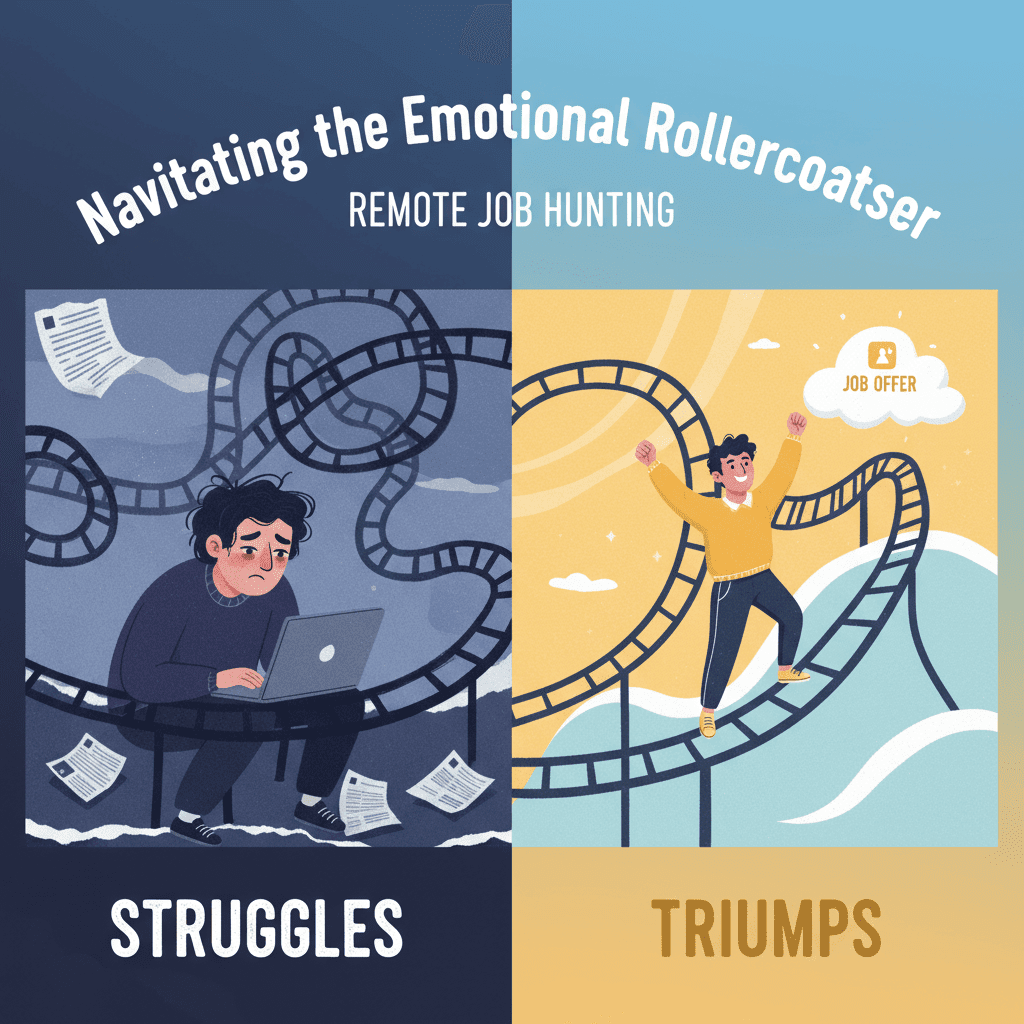
I still remember the moment clearly: sitting at my kitchen table, staring at my laptop screen, a cup of coffee growing cold beside me. It was application number 137—or was it 138? I had lost count. The rejection email that had just arrived was polite but impersonal, like all the others. “We’ve decided to move forward with other candidates who more closely match our current needs.” Ten months into my remote job search, I was beginning to wonder if I’d ever find my place in the digital workforce.
That was me, two years ago. What I didn’t know then was that my experience wasn’t unique. Across Reddit forums, LinkedIn groups, and virtual networking events, thousands of professionals were riding the same emotional rollercoaster—one that would eventually lead to success, but not without significant personal cost.
The shift to remote work has permanently altered the employment landscape. While remote positions offer unprecedented flexibility and work-life balance, securing these coveted roles often involves a journey fraught with unique challenges, extended timelines, and emotional highs and lows that can test even the most resilient job seekers.
The New Reality of Remote Job Hunting
When the pandemic accelerated remote work adoption, many assumed finding a remote position would become easier. The reality proved more complex. According to a 2023 study from FlexJobs, competition for remote positions has increased by 91% since 2019, with some desirable remote roles attracting over 3,000 applications.
The Numbers Behind the Struggle
For many job seekers, these statistics translate into prolonged searches. A survey of 1,500 remote job seekers conducted by Remote Work Institute found:
- 7.2 months – Average time to secure a remote position (compared to 3.8 months for traditional roles)
- 217 applications – Average number submitted before receiving an offer
- 86% of respondents reported experiencing “search fatigue” or burnout during their remote job hunt
Alex Chen, a software developer from Toronto, tracked his 10-month journey meticulously: “I applied to 273 positions, had 41 first-round interviews, 18 technical assessments, and 9 final-round interviews before receiving two offers. The process was far more grueling than when I last job-hunted for in-office roles in 2018.”
Why Remote Hiring Is Different
Remote hiring processes typically involve more stages and higher barriers than traditional hiring. Companies compensate for the lack of in-person interaction by implementing:
- More extensive technical assessments and skills verification
- Multiple interview rounds with various stakeholders
- Trial projects or paid work samples
- Cultural fit evaluations focused on remote work aptitude
These additional steps create a longer, more emotionally taxing process for candidates, especially those transitioning from traditional work environments.
The Emotional Toll of Extended Job Searching
The psychological impact of prolonged job hunting can be severe. Dr. Eliza Montgomery, an organizational psychologist specializing in workplace transitions, explains: “Job searching activates our brain’s threat response. Each rejection can trigger the same neural pathways as physical pain. When this cycle continues for months, it can lead to anxiety, depression, and diminished self-worth.”
Identity Crisis and Self-Doubt
For many professionals, especially those with established careers, extended unemployment challenges their professional identity. Maya Williams, a marketing director who spent 11 months finding a remote position, shared: “Six months in, I started questioning everything about my career. Was my experience valuable? Had the industry moved on without me? The longer the search continued, the more I felt like an impostor when interviewing.”
This experience is common. Research from the Journal of Vocational Behavior indicates that job search self-efficacy—belief in one’s ability to perform job search activities successfully—typically declines after 4-6 months of unsuccessful searching.
Financial Pressure Compounds Emotional Stress
The financial reality of extended job searching creates additional pressure. A Reddit thread with over 3,200 comments revealed concerning patterns:
- 42% of commenters reported depleting their savings during remote job searches
- 37% took temporary or “bridge” jobs below their qualification level
- 29% reported relationship strain due to financial stress
One commenter wrote: “Ten months of searching drained my emergency fund. I started driving for Uber at night while applying during the day. The financial anxiety made each rejection feel catastrophic rather than just disappointing.”
Strategies for Emotional Resilience During the Search
Maintaining emotional equilibrium during an extended job search requires intentional strategies. Those who successfully navigate the process often implement specific approaches to protect their mental health.
Structured Routine and Boundaries
Treating the job search like a job itself—with defined hours and boundaries—helps prevent the all-consuming nature of constant applications. Consider these actionable approaches:
- Time blocking: Dedicate specific hours to job searching activities and protect non-search time
- Application quotas: Set realistic weekly targets rather than applying to every possible opening
- Digital boundaries: Create separate browser profiles or email accounts for job search activities to mentally compartmentalize
James Rivera, who secured a remote product management role after nine months, attributes his success to structure: “I worked on applications from 9-12 each morning, took a mandatory lunch break outside, then used afternoons for networking and skill development. Evenings and weekends were job-search-free zones, which preserved my sanity.”
Community and Support Networks
Isolation compounds job search stress. Building connections with others in similar situations provides emotional support and practical benefits:
- Join industry-specific Slack communities or Discord servers where remote job openings are shared
- Participate in virtual accountability groups where members check in on progress and share leads
- Engage with Reddit communities like r/remotework or r/jobsearchhacks for advice and encouragement
Priya Sharma found her remote marketing position through a connection in a Slack community: “After eight months of searching alone, joining a marketing professionals group changed everything. Not only did I find my job through a member’s referral, but the weekly check-ins with people who understood my struggle kept me motivated when rejections piled up.”
Tactical Approaches That Actually Work
Beyond emotional resilience, successful remote job seekers typically adapt their tactical approach as their search extends. Data from successful searches reveals patterns worth emulating.
Quality Over Quantity
While it’s tempting to apply widely, research from the Remote Work Association shows that focused applications yield better results:
- Applications tailored specifically to the company and role receive 3x more interview invitations
- Job seekers who research company culture and mention specific aspects in cover letters receive 47% more responses
- Applications submitted within 72 hours of a posting have 58% higher success rates
Michael Ortiz, now a remote project manager, shifted his strategy after three months of rejections: “I went from submitting 20+ generic applications weekly to sending 5-7 highly customized ones. I researched each company deeply, connected with current employees on LinkedIn, and specifically addressed how I could solve their problems remotely. My interview rate jumped from 5% to nearly 30%.”
Remote-Specific Skill Development
Companies hiring remote workers look for specific competencies that might not be emphasized in traditional roles. Successful candidates often focus on developing and demonstrating:
- Asynchronous communication: Creating clear documentation and written updates
- Digital collaboration: Proficiency with project management tools like Asana, Monday, or Notion
- Self-management: Evidence of successful independent project completion
Certification programs specifically for remote work, like the Remote Work Professional Certification from SHRM or specialized courses on platforms like Coursera, can provide both skills and credentials that differentiate candidates.
The Breakthrough Moment: When Persistence Pays Off
For most successful remote job seekers, the journey ends not with a dramatic bidding war between employers, but with a single opportunity that finally aligns. The emotional impact of this breakthrough can be profound.
The Psychology of Finally Landing the Role
“When I received my offer after ten months of searching, I didn’t feel immediate elation,” recalls Taylor Washington, now a remote customer success manager. “First came disbelief, then relief so intense I actually cried. The validation that I was still employable, still valuable in the marketplace—that emotional healing took weeks to process.”
This experience mirrors research on unemployment recovery, which shows that professional identity and self-efficacy typically require 3-6 months to fully rebuild after extended job searching, even after securing employment.
Carrying Forward the Lessons
Many successful remote job seekers report that their extended search, while difficult, provided valuable perspective on their careers. Common reflections include:
- Greater appreciation for workplace culture and team dynamics
- Clearer understanding of personal values and non-negotiables
- Enhanced resilience and problem-solving abilities
- Stronger professional networks built during the search process
As Elena Gonzalez, who found a remote data analyst position after nine months, puts it: “The search forced me to articulate what I actually wanted from my career, not just what I thought I should want. I’m more intentional now about the projects I take on and the boundaries I maintain. The struggle clarified my professional identity in ways comfort never could.”
Moving Forward: The Future of Remote Job Hunting
As remote work continues evolving, so too will the hiring landscape. Industry experts predict several developments that may affect future remote job seekers:
- Increased standardization of remote hiring processes across industries
- Greater emphasis on asynchronous interviewing and assessment
- Rise of remote work platforms that verify skills and facilitate better matches
- More transparent salary information as remote work crosses geographic boundaries
For those currently in the trenches of a remote job search, remember that persistence remains the most reliable predictor of success. As one Reddit commenter with over 2,000 upvotes wrote: “Ten months, 200+ applications, countless rejections, and finally one yes. That one yes was all I needed to change my life.”
The remote job search may be longer and more emotionally taxing than traditional job hunting, but for those who persist, the reward—flexibility, autonomy, and work-life integration—provides a return on investment that many find well worth the struggle.
If you’re currently navigating your own remote job search marathon, take heart in knowing you’re not alone. The path may be longer than expected, but with strategic persistence and emotional resilience, your breakthrough opportunity awaits. The question isn’t if you’ll find your remote role, but when—and how the journey will transform you along the way.
Where This Insight Came From
This analysis was inspired by real discussions from working professionals who shared their experiences and strategies.
- Share Your Experience: Have similar insights? Tell us your story
At ModernWorkHacks, we turn real conversations into actionable insights.
![[Workflow Included] A simple 5-node Instagram posting workflow for beginners](https://modernworkhacks.com/wp-content/uploads/2026/04/workflow-included-a-simple-5-node-instagram-posting-workflow-for-beginners-1024x675.png)



0 Comments