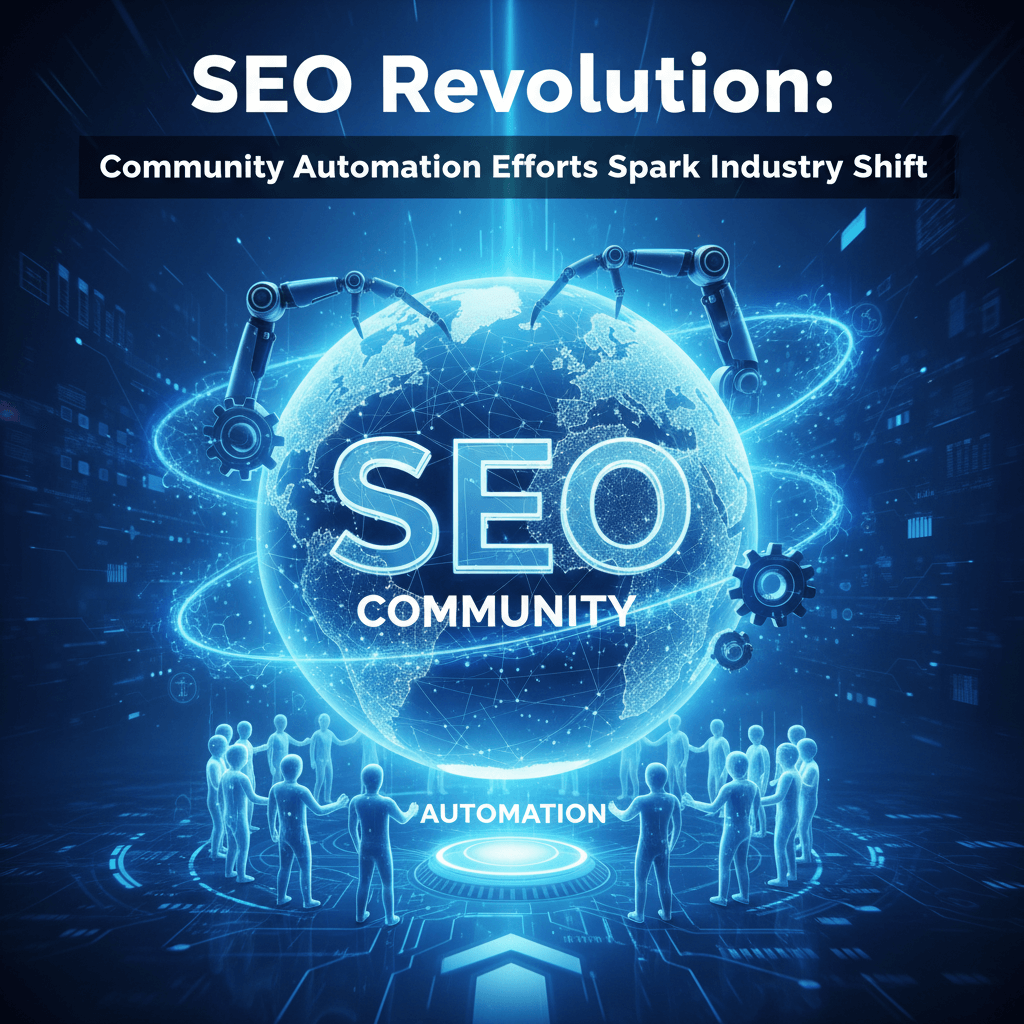
Last month, I watched in real-time as a Reddit thread exploded with activity. SEO professionals from around the world were sharing screenshots of automated workflows that had cut their daily tasks from hours to minutes. One participant, a solo consultant named Jamie, wrote: “I’ve implemented this open-source automation suite for three clients now. What used to take me two full days of keyword research and competitor analysis now runs overnight while I sleep. This isn’t just a time-saver—it’s completely transformed my business model.” This wasn’t just another tool launch; it was evidence of a fundamental shift happening in SEO—one driven not by major corporations, but by a grassroots community of practitioners.
The open-source SEO automation movement has reached a remarkable milestone: 200,000 views of community-developed solutions that are democratizing advanced optimization techniques. This breakthrough represents more than impressive numbers; it signals a fundamental restructuring of how SEO work gets done, who can access sophisticated tools, and ultimately, how websites compete for visibility in an increasingly complex digital landscape.
The Community-Driven SEO Automation Revolution
The story begins where many technical revolutions do—with frustration. Two years ago, a small group of SEO professionals began sharing scripts to automate repetitive tasks in a private Discord channel. What started as simple time-saving hacks evolved into comprehensive workflows as more contributors joined, bringing diverse expertise from technical SEO, data science, and programming.
From Grassroots to Groundswell
The turning point came when these automation solutions were consolidated into a GitHub repository with standardized documentation. Adoption spread rapidly through word-of-mouth on platforms like Reddit’s r/TechSEO and r/bigseo communities. The project hit 50,000 views within six months, 100,000 at the one-year mark, and has now doubled to 200,000—growth that reflects both the quality of the solutions and the urgent need they address.
Key factors driving this community success include:
- Transparent development with all code changes and discussions happening in public forums
- Modular architecture allowing users to implement only the components they need
- Regular contribution sprints where developers collectively tackle specific challenges
Sarah Chen, an enterprise SEO director who became an early contributor, explains: “What makes this movement different is that it’s built by practitioners for practitioners. Every automation addresses a real pain point we face daily, not what a product manager in a software company thinks we need.”
Technical Evolution: What’s New in the Latest Version
The recently released version 3.0 represents a significant leap forward, addressing limitations that previously restricted adoption to more technical users. This evolution demonstrates how community feedback directly shapes development priorities in open-source projects.
Overcoming Previous Barriers
Early versions required command-line knowledge and custom API configurations that created a steep learning curve. The community recognized this limitation was preventing widespread adoption among SEO professionals without technical backgrounds.
Critical improvements in the latest release include:
- A browser-based interface that eliminates command-line requirements
- Pre-configured connections to major SEO data sources
- Templated workflows for common scenarios like technical audits and content gap analysis
Marcus Johnson, who maintains the project documentation, notes: “Our data showed 68% of users would abandon setup if it took more than 30 minutes. We’ve now got that down to under 10 minutes for most users, which has dramatically expanded our community.”
Technical Capabilities That Drive Adoption
Beyond ease of use, the new version introduces capabilities that were previously available only in enterprise-level tools with five-figure annual subscriptions.
- Automated pattern recognition that identifies statistically significant ranking factors specific to each website’s competitive landscape
- Natural language processing modules that evaluate content quality against top-performing pages
- Predictive modeling that estimates the impact of proposed changes before implementation
A case study from an e-commerce site implementing these automated workflows showed a 43% reduction in time-to-implementation for SEO recommendations and a 27% improvement in ranking position changes within 60 days compared to their previous manual process.
The Human-AI Balance: Quality Control in Automation
Perhaps the most sophisticated aspect of this community-driven approach is its nuanced handling of automation boundaries. Unlike commercial tools that often promise “set it and forget it” solutions, this open-source movement explicitly emphasizes the critical partnership between automation and human oversight.
Defining Appropriate Automation Boundaries
The community has developed a framework for determining which tasks benefit from automation and which require human judgment. This framework has evolved through extensive discussion and testing across diverse website types and industries.
Tasks well-suited for automation include:
- Data collection and normalization across multiple sources
- Pattern identification in large datasets (crawl issues, link profiles, competitor strategies)
- Monitoring and alerting for sudden changes in performance metrics
Tasks requiring human oversight:
- Final content quality assessment and brand voice alignment
- Strategic prioritization based on business context
- Relationship-based outreach for link building
Elena Kowalski, who leads SEO for a major publisher, shared her experience: “We implemented the automated content gap analysis workflow across our 12 main categories. The system identified 237 high-potential topics we weren’t covering, but our editors reviewed each one for relevance to our audience. About 40% were perfect matches, 30% needed refinement, and 30% weren’t right for our brand despite the data suggesting otherwise. That human filter is irreplaceable.”
Economic Impact and Democratization
The financial implications of this movement extend far beyond simple time savings. By dramatically reducing the technical and financial barriers to sophisticated SEO, these community-driven tools are reshaping competitive dynamics across the digital landscape.
Leveling the Playing Field
Small businesses and independent practitioners now access capabilities previously available only to large enterprises with dedicated technical teams. A survey of 150 users from the community revealed that 72% represent businesses with fewer than 10 employees, yet they’re now implementing advanced technical SEO tactics previously beyond their reach.
The economic benefits reported include:
- Average time savings of 15-20 hours per week for routine SEO tasks
- Ability to serve 40% more clients without additional staffing
- Reduction in dependency on multiple paid tools, with average savings of $3,600 annually
Carlos Mendez, who runs a three-person agency focusing on local businesses, explains: “Before these automation workflows, we could only afford to do comprehensive technical audits for our highest-paying clients. Now we run them for every client monthly, which has dramatically improved retention. Our average client relationship has extended from 7 months to over 18 months.”
Shifting Industry Economics
The broader economic impact extends to how SEO services are valued and priced. With routine tasks automated, practitioners are shifting toward consultation and strategy work that commands higher rates and delivers more value.
Research from a recent industry survey indicates that agencies utilizing these automation workflows report a 32% increase in average project value despite spending less time on execution. This suggests a fundamental shift from selling hours to selling outcomes—a healthier business model for both providers and clients.
Future Directions and Challenges
While the community celebrates the 200,000-view milestone, conversations are already focused on addressing emerging challenges and expanding capabilities further.
Integration with AI Developments
The next development phase focuses on responsibly integrating generative AI capabilities while maintaining the human-oversight principles that have guided the project.
Priority areas include:
- Automated content briefs that incorporate semantic analysis of top-performing content
- Intelligent categorization of technical issues by potential impact
- Natural language explanations of complex SEO concepts for client education
Development lead Priya Sharma emphasizes: “We’re designing these AI integrations with guardrails. For instance, our content brief generator provides data-driven topic suggestions but explicitly reminds users about the importance of original research and subject matter expertise.”
Sustainability Challenges
The rapid growth presents challenges for the volunteer-led project. Discussions are underway about governance structures that can sustain development while preserving the community-first ethos.
Options being considered include forming a non-profit foundation, implementing a transparent sponsorship model, or creating premium support tiers while keeping core functionality free and open-source. Whatever direction emerges, the community is committed to preventing commercial interests from dictating development priorities.
Conclusion: The New SEO Landscape
The 200,000-view milestone for this community automation effort represents more than impressive numbers—it signals a fundamental restructuring of the SEO industry. As these tools continue to evolve and spread, we can expect further democratization of capabilities that were once exclusive to major players with substantial resources.
For SEO professionals, the message is clear: embrace automation for routine tasks while developing the strategic thinking and creative problem-solving skills that machines cannot replicate. The most successful practitioners will be those who leverage community-built automation to handle the science of SEO while focusing their human expertise on the art.
The next chapter of this revolution depends on continued community engagement. Whether you’re a developer who can contribute code, a practitioner who can identify use cases, or a beginner who can test usability, there’s a role for you in shaping these tools. The repository welcomes new contributors at all skill levels, and the associated Discord channel provides support for implementation questions.
As automation handles more of the technical heavy lifting, the true differentiator in SEO will increasingly become the quality of thinking behind the strategy. The tools are now accessible to almost everyone—what will you build with them?
Where This Insight Came From
This analysis was inspired by real discussions from working professionals who shared their experiences and strategies.
- Share Your Experience: Have similar insights? Tell us your story
At ModernWorkHacks, we turn real conversations into actionable insights.
![[Workflow Included] A simple 5-node Instagram posting workflow for beginners](https://modernworkhacks.com/wp-content/uploads/2026/04/workflow-included-a-simple-5-node-instagram-posting-workflow-for-beginners-1024x675.png)



0 Comments