
Alex stared blankly at her computer screen as another after-hours email from her manager pinged into her inbox. It was 9:30 PM on a Tuesday—the fourth night this week she’d received work communications long after she’d officially clocked out. Six months ago, she would have immediately responded, perhaps even reopening her laptop to address whatever “urgent” matter couldn’t wait until morning. Tonight, though, she simply closed her email app, silenced notifications, and continued reading her novel. She wasn’t being negligent; she was quiet quitting—and her therapist thought it might save her life.
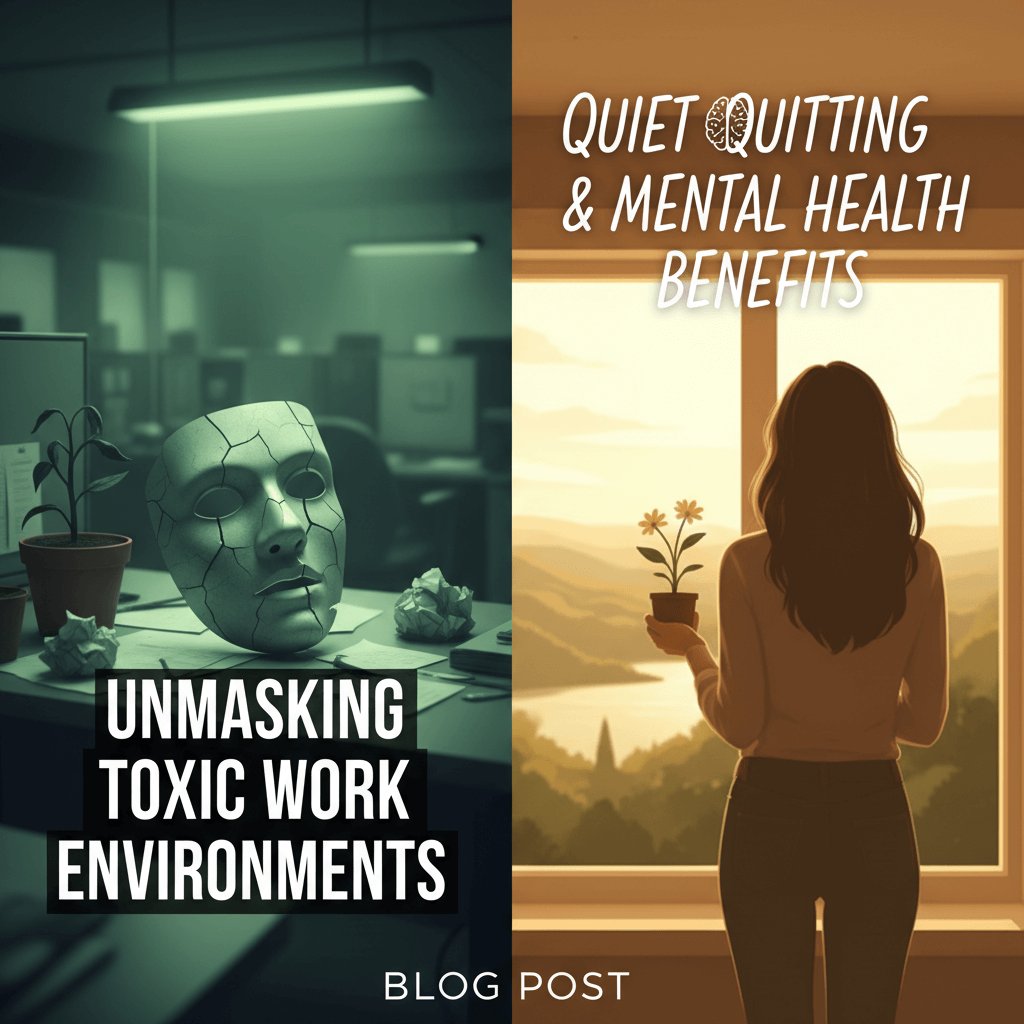
Across workplaces worldwide, employees like Alex are increasingly embracing “quiet quitting”—the practice of doing exactly what your job requires, nothing more and nothing less. It’s not about shirking responsibilities but rather about establishing boundaries in often boundary-less environments. As stories of burnout, exploitation, and workplace toxicity continue to dominate professional discourse, quiet quitting has emerged not just as a trend but as a mental health preservation strategy for many.
The Anatomy of Quiet Quitting: What It Is and Isn’t
Despite its somewhat misleading name, quiet quitting isn’t about quitting at all. It’s about reclaiming agency in environments that often demand more than they give.
Defining the Movement
Quiet quitting represents a conscious decision to perform your contractual job duties adequately while declining to participate in the “hustle culture” extras—the unpaid overtime, the constant availability, the emotional labor of office politics. According to a 2022 Gallup poll, at least 50% of the U.S. workforce consists of quiet quitters, suggesting this isn’t a fringe movement but a significant workplace shift.
What quiet quitting looks like in practice:
- Leaving work on time consistently
- Declining projects beyond your job description
- Not responding to work communications outside business hours
What Quiet Quitting Isn’t
“There’s a profound misunderstanding that quiet quitters are lazy or disengaged,” explains Dr. Maya Thornton, organizational psychologist and author of Workplace Boundaries in the Digital Age. “In reality, most are conscientious professionals who simply refuse to be exploited. They’re still completing their work—they’re just not sacrificing their well-being for it anymore.”
Importantly, quiet quitting differs from “checking out” or performing poorly. Most quiet quitters maintain good performance within their defined roles; they’re simply no longer overperforming without recognition or compensation.
The Toxic Workplace Epidemic
To understand why quiet quitting has resonated so powerfully, we must first acknowledge the widespread nature of workplace toxicity.
Recognizing the Warning Signs
James had been at his marketing firm for three years when the culture began to shift. “First it was the expectation to join ‘optional’ weekend strategy sessions. Then came the subtle shaming of anyone who took their full lunch break. By year four, I was having panic attacks in the bathroom between meetings,” he recalls. James’s experience mirrors findings from a 2021 MIT Sloan Management Review study, which identified toxic culture as the single biggest predictor of employee attrition—10 times more important than compensation.
Common indicators of a toxic work environment include:
- Normalized overwork and burnout
- Lack of boundaries between work and personal time
- Public criticism or humiliation
- Unclear or constantly shifting expectations
- Rewarding unhealthy behaviors (like working while sick)
The Pandemic Perspective Shift
The COVID-19 pandemic served as a catalyst for workplace reevaluation. Remote work revealed that many “essential” office practices were anything but, while simultaneously blurring work-life boundaries for millions. A 2022 APA survey found that 79% of employees had experienced work-related stress in the month before being surveyed, with nearly 3 in 5 reporting negative impacts on their motivation, energy, and effort at work.
“The pandemic forced a collective moment of clarity,” says career coach Eliza Washington. “People watched colleagues die, lost loved ones, or faced serious illness themselves—and many emerged with a fundamentally different perspective on what they’re willing to sacrifice for a paycheck.”
The Mental Health Case for Boundary Setting
For many quiet quitters, the practice isn’t just about professional boundaries—it’s about survival.
From Burnout to Boundaries
Sarah, a software developer at a high-growth startup, describes her pre-quiet quitting experience: “I was working 70+ hours weekly, answering Slack messages at 2 AM, and having stress-induced migraines three times a week. My doctor literally told me I was heading for a breakdown if something didn’t change.”
After implementing quiet quitting principles, Sarah reports her migraines have decreased by 80%, her sleep has improved, and her anxiety levels have significantly reduced. “I still do good work—I just do it between 9 and 5 now.”
Mental health benefits commonly reported by quiet quitters:
- Reduced anxiety and stress levels
- Improved sleep quality
- Decreased incidence of physical stress symptoms (headaches, digestive issues)
- Greater presence and engagement in personal relationships
- Enhanced overall life satisfaction
The Science Behind Setting Limits
Research supports the mental health case for quiet quitting. A 2020 study in the Journal of Occupational Health Psychology found that psychological detachment from work during non-work hours was positively associated with employee well-being and negatively associated with emotional exhaustion.
Dr. Thornton explains: “Our brains aren’t designed for constant engagement with work stressors. Recovery periods aren’t just nice to have—they’re biologically necessary for cognitive function, emotional regulation, and creativity.”
Quiet Quitting as Resistance
Beyond individual health benefits, quiet quitting represents a form of collective resistance against exploitative workplace norms.
The Power Imbalance
“What we’re seeing is a labor movement without the formal organization,” explains labor historian Dr. Carlos Mendez. “When employees can’t safely express dissatisfaction through traditional channels, they find other ways to resist—like withholding the unpaid emotional and physical labor that’s come to be expected.”
For many, quiet quitting feels like the only safe option in environments where speaking up can lead to retaliation. A 2022 survey by workplace research firm Emtrain found that 83% of employees wouldn’t report problematic behaviors if they believed their company wouldn’t take action or might penalize them.
Collective Impact
The quiet quitting movement gains power through its collective nature. When multiple employees begin enforcing boundaries, it becomes harder for organizations to dismiss as individual “attitude problems.”
Mia, an account manager at a PR firm where several team members began quiet quitting simultaneously, observed real change: “After three months of everyone leaving at 5:30 and not responding to weekend emails, management finally acknowledged something was wrong. They conducted a culture survey, implemented no-meeting Fridays, and started discussing workload issues openly. None of that would have happened if we’d all just kept overworking.”
Navigating Consequences and Maximizing Benefits
While quiet quitting can be protective, it’s not without potential drawbacks or complications.
Career Impact Considerations
Career advancement may be affected by quiet quitting, particularly in organizations that still reward overwork. However, many quiet quitters find the tradeoff worthwhile.
“I’m probably not getting promoted this year,” acknowledges Marcus, an analyst at a consulting firm. “But I also haven’t had a panic attack in six months, I’ve reconnected with friends I hadn’t seen in years, and I’ve started therapy. My career might advance more slowly, but I’ll be alive and well to enjoy it.”
Strategies for effective boundary-setting while minimizing career impact:
- Document your accomplishments and contributions within your defined role
- Be exceptional within your boundaries rather than mediocre beyond them
- Communicate boundaries professionally and consistently
- Consider whether your current workplace aligns with your values long-term
When to Quiet Quit vs. Actually Quit
Quiet quitting works best as either a temporary protection mechanism while seeking new employment or as a long-term strategy in environments receptive to reasonable boundaries. In truly toxic workplaces, however, even quiet quitting may not provide sufficient protection.
“If you’re experiencing harassment, discrimination, or severe mental health impacts, quiet quitting may not be enough,” cautions workplace therapist Leanne Chen. “In these cases, developing an exit strategy should take priority.”
The Future of Work: Beyond Quiet Quitting
While quiet quitting offers immediate relief for individuals, the movement points to deeper issues requiring systemic change.
Employer Adaptation
Forward-thinking organizations are beginning to recognize that preventing quiet quitting requires addressing its root causes. Companies like Buffer, Patagonia, and Basecamp have implemented policies that actively discourage overwork, including four-day workweeks, no-meeting days, and strict email curfews.
“The organizations that will thrive in the coming decade are those that treat employee wellbeing as a strategic priority, not a perquisite,” predicts workforce analyst Jordan Michaels. “They understand that sustainable performance requires sustainable practices.”
Individual Agency
For individuals, quiet quitting can be a stepping stone to more fulfilling work arrangements. Many former quiet quitters report using their reclaimed energy to upskill, explore entrepreneurship, or search for workplaces with healthier cultures.
“Quiet quitting gave me the mental space to figure out what I actually wanted from my career,” says former quiet quitter Tanya, who now runs her own graphic design business. “It was never about doing less—it was about creating room to imagine more.”
Conclusion: Reclaiming Work on Human Terms
The quiet quitting movement isn’t merely about doing less—it’s about demanding more: more respect, more sustainability, more humanity in our working lives. As we continue to navigate post-pandemic work realities, the conversation around quiet quitting offers an opportunity to reimagine workplace cultures that support human thriving rather than depleting it.
Whether you’re currently quiet quitting, considering it, or managing a team where it might be happening, the movement invites us all to ask fundamental questions: What kind of work environments truly deserve our energy? What boundaries are essential to our wellbeing? And how might we collectively create workplaces where “quiet quitting” becomes unnecessary because work itself has become sustainable?
The answers to these questions won’t come easily, but in asking them, we’ve already begun the work of transformation.
Where This Insight Came From
This analysis was inspired by real discussions from working professionals who shared their experiences and strategies.
- Share Your Experience: Have similar insights? Tell us your story
At ModernWorkHacks, we turn real conversations into actionable insights.
![[Workflow Included] A simple 5-node Instagram posting workflow for beginners](https://modernworkhacks.com/wp-content/uploads/2026/04/workflow-included-a-simple-5-node-instagram-posting-workflow-for-beginners-1024x675.png)




0 Comments