
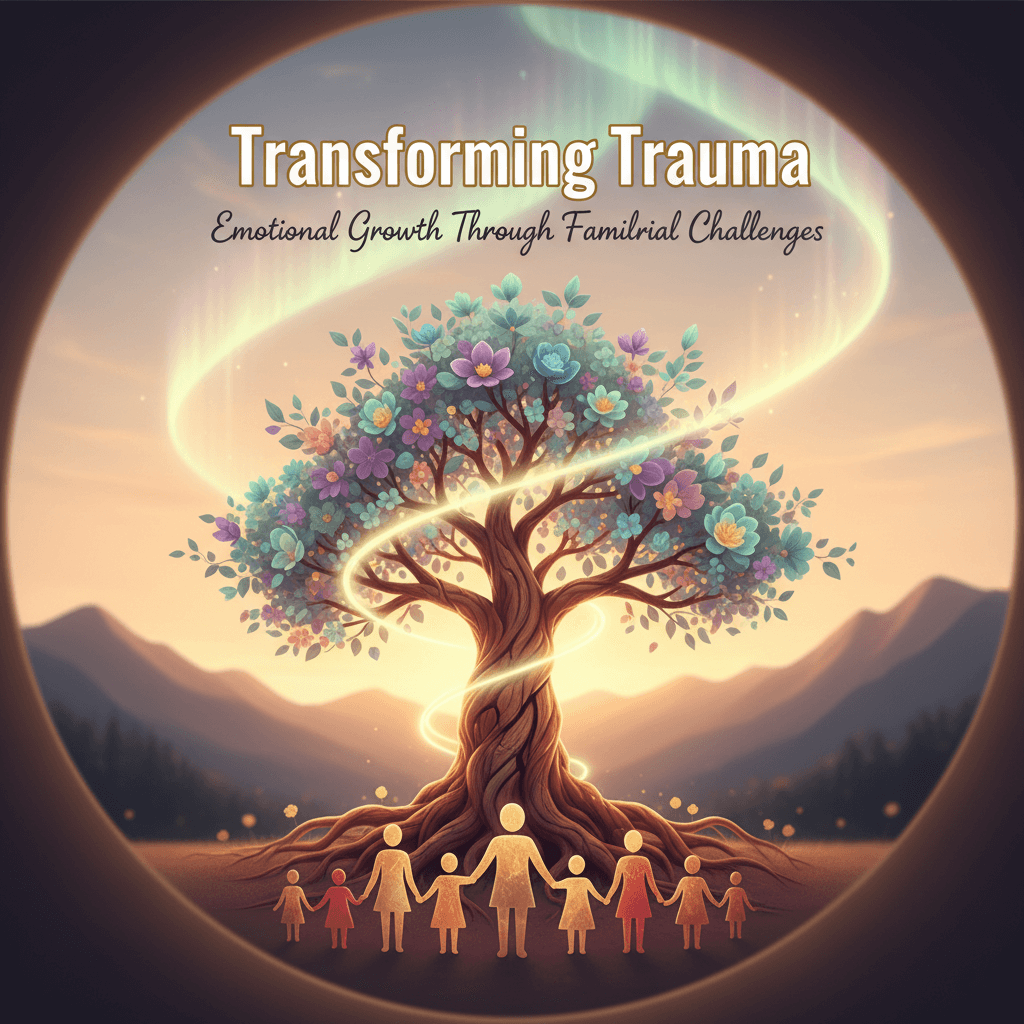
The first time I watched my father lose his temper, I was seven years old. A simple spilled glass of milk triggered an explosion of rage that seemed entirely disproportionate to the offense. As I stood frozen in our kitchen, watching him slam his fist against the counter, I made a silent promise to myself: I would never become that person. What I didn’t realize then was that this moment—and countless others like it—would become the foundation of my journey toward emotional regulation and, eventually, my career as a recovery coach.
When we talk about trauma, particularly familial trauma, we often focus on escaping its grasp. Yet what if these painful experiences could be transformed into something valuable? What if the very challenges that wounded us could become our greatest teachers? This isn’t about toxic positivity or dismissing genuine harm, but rather recognizing that adversity, when processed consciously, can develop extraordinary emotional resilience.
The Unexpected Classroom: Learning Through Observation
My childhood home was an emotional minefield. My father, raised in a household where feelings were suppressed and anger was the only acceptable expression of vulnerability, had never learned to regulate his emotions. My mother, by contrast, was emotionally absent—physically present but psychologically unavailable, having learned to disconnect as her own survival mechanism.
Between these two extremes, I became a student of emotion—not by choice, but by necessity.
The Lessons Hidden in Dysfunction
Children of emotionally dysregulated parents develop a heightened sensitivity to emotional cues. Research from the American Psychological Association shows that by age five, these children can detect subtle shifts in facial expressions and voice tones that their peers often miss. This hypervigilance—while originally a survival mechanism—becomes a powerful tool for emotional intelligence when channeled constructively.
In my case, I learned to:
- Read emotional undercurrents in any room I entered, instinctively mapping the emotional landscape
- Recognize the early warning signs of emotional escalation in others and myself
- Understand that emotions are temporary states, not permanent conditions
At 16, I witnessed my father’s rage dissolve into tears for the first time after a particularly intense argument. It was a pivotal moment that taught me that even the most seemingly rigid emotional patterns could transform. This single instance of vulnerability opened my eyes to the complexity beneath his anger and began my journey toward understanding rather than simply reacting.
Breaking the Cycle: From Reactivity to Response
By my early twenties, despite my determination to be different, I found myself mirroring my father’s reactive patterns. During an argument with my college roommate, I slammed a door so hard the handle broke through the drywall. The look of fear in her eyes—the same fear I had felt as a child—became my wake-up call.
The Neuroscience of Inherited Patterns
According to Dr. Bessel van der Kolk, author of “The Body Keeps the Score,” trauma responses aren’t just psychological—they’re physiological. Our nervous systems become wired for certain reactions based on childhood experiences. A 2019 study from the University of California found that children of dysregulated parents show altered activation in the amygdala, the brain’s emotional processing center.
My journey to rewire these patterns included:
- Learning to identify my emotional triggers through daily journaling and therapy
- Developing a “pause practice” between feeling and reacting, starting with just three conscious breaths
- Creating physical anchors (like pressing my feet firmly into the ground) to return to my body during emotional flooding
The transformation wasn’t immediate. For months, I practiced catching myself mid-reaction. I remember once leaving a heated conversation with my partner, walking outside, and counting backward from 100 until my rational brain came back online. When I returned, I was able to express my frustration without the explosive energy that had characterized my family’s communication style.
The Alchemy of Pain: Transforming Wounds into Wisdom
Three years into my own recovery work, I found myself sitting across from a client—a 42-year-old father terrified that he was damaging his children the way his parents had damaged him. As he described his struggles with emotional regulation, I recognized not just his story, but my father’s story, and my own.
“What if,” I suggested, “your greatest wound becomes your greatest gift to your children?”
From Personal Healing to Collective Transformation
Research from the field of post-traumatic growth suggests that approximately 60-70% of trauma survivors report positive changes as a result of their struggle with highly challenging life circumstances. These aren’t despite their trauma, but because of the internal resources developed through processing it.
The transformation of familial trauma into wisdom includes:
- Developing emotional literacy that can be passed to the next generation
- Cultivating profound empathy for others struggling with similar challenges
- Building authentic resilience through lived experience rather than theoretical knowledge
One client, Sarah, came from a family where emotions were considered weaknesses. After years of working through her own emotional suppression, she created a nightly “feelings circle” with her children where everyone shared one difficult emotion they experienced that day and how they handled it. “I’m giving them what I never had,” she told me, “a safe space to be human.”
The Tools of Transformation: Practical Approaches to Healing
My personal journey and professional experience have shown me that transforming familial trauma requires both intention and methodology. The path isn’t about forgetting or minimizing past wounds, but about metabolizing them into something that serves rather than hinders our growth.
Creating New Neural Pathways
Neuroplasticity—the brain’s ability to reorganize itself by forming new neural connections—offers hope for those looking to break generational patterns. A 2020 study published in the Journal of Cognitive Neuroscience demonstrated that mindfulness practices can create measurable changes in the brain regions responsible for emotional regulation in as little as eight weeks.
Effective tools for transformation include:
- Somatic practices that address trauma stored in the body, such as trauma-sensitive yoga or tension/release exercises
- Narrative restructuring through journaling or therapy to reframe your family story from victim narrative to growth journey
- Intentional exposure to triggering situations in small, manageable doses to build new response patterns
Michael, a 35-year-old client raised by a mother with untreated bipolar disorder, used a combination of these approaches. He began with five-minute daily meditation focused on body sensations, gradually increasing as his tolerance for emotional discomfort grew. Within six months, his relationships showed marked improvement as he learned to stay present rather than dissociating during conflict.
The Intergenerational Gift: Breaking Chains and Building Bridges
Perhaps the most profound aspect of transforming familial trauma is the ripple effect it creates across generations. When we do our own healing work, we don’t just change our lives—we alter the trajectory of our lineage.
From Understanding to Forgiveness
One unexpected outcome of my work with familial trauma has been the evolution of my relationship with my parents. As I developed greater emotional regulation, I gained the capacity to see them not just as the architects of my wounds, but as people who were doing their best with the limited tools they had inherited from their own parents.
This perspective shift allows for:
- Compassion without enabling harmful behaviors to continue
- Setting boundaries with love rather than resentment
- Recognizing the humanity in those who hurt us without excusing the hurt
At my father’s 70th birthday, I watched him interact with my five-year-old nephew. When my nephew accidentally knocked over a glass, I instinctively tensed, preparing for the explosion I’d known in childhood. Instead, my father gently helped clean up the spill, telling my nephew, “Accidents happen.” In that moment, I witnessed not just my own healing, but the possibility of healing across generations.
The Ongoing Journey: From Survival to Thriving
Transforming familial trauma isn’t a destination but a continuing practice. Even now, decades into this work, I encounter moments where old patterns attempt to reassert themselves. The difference is that now I recognize them as visitors rather than my identity.
The journey from survival to thriving includes accepting that:
- Healing isn’t linear—regression during stress is normal and doesn’t erase progress
- Integration takes time—intellectual understanding precedes emotional and physiological change
- Self-compassion accelerates growth—shame about setbacks only reinforces old patterns
As a recovery coach, I now see my family history not as something to overcome or escape, but as the very foundation of my ability to connect with and guide others. The hypervigilance that once protected me now helps me notice subtle shifts in my clients’ emotional states. The sensitivity that made childhood difficult now allows me to create safe spaces for others’ vulnerability.
When adversity becomes your greatest teacher, emotional regulation finds its roots not in perfect childhoods, but in the conscious transformation of pain into purpose.
Your Invitation to Transformation
If you’re carrying the weight of familial trauma, I invite you to consider a new perspective: What if the very experiences that have caused you pain contain the seeds of your greatest strengths? What if your history isn’t just something to heal from, but something that—once processed—becomes the source of your unique wisdom?
Begin by asking yourself: What emotional skills have I developed because of my challenging family dynamics? How might these skills, when refined and directed consciously, serve not just my healing but the healing of others?
The transformation of trauma into growth doesn’t minimize the reality of what happened. Rather, it honors the resilience you’ve developed by refusing to let difficult beginnings dictate your entire story. In this conscious reclamation of your emotional narrative lies not just healing, but the profound possibility of turning wounds into wisdom that serves generations to come.
Where This Insight Came From
This analysis was inspired by real discussions from working professionals who shared their experiences and strategies.
- Share Your Experience: Have similar insights? Tell us your story
At ModernWorkHacks, we turn real conversations into actionable insights.
![[Workflow Included] A simple 5-node Instagram posting workflow for beginners](https://modernworkhacks.com/wp-content/uploads/2026/04/workflow-included-a-simple-5-node-instagram-posting-workflow-for-beginners-1024x675.png)



0 Comments