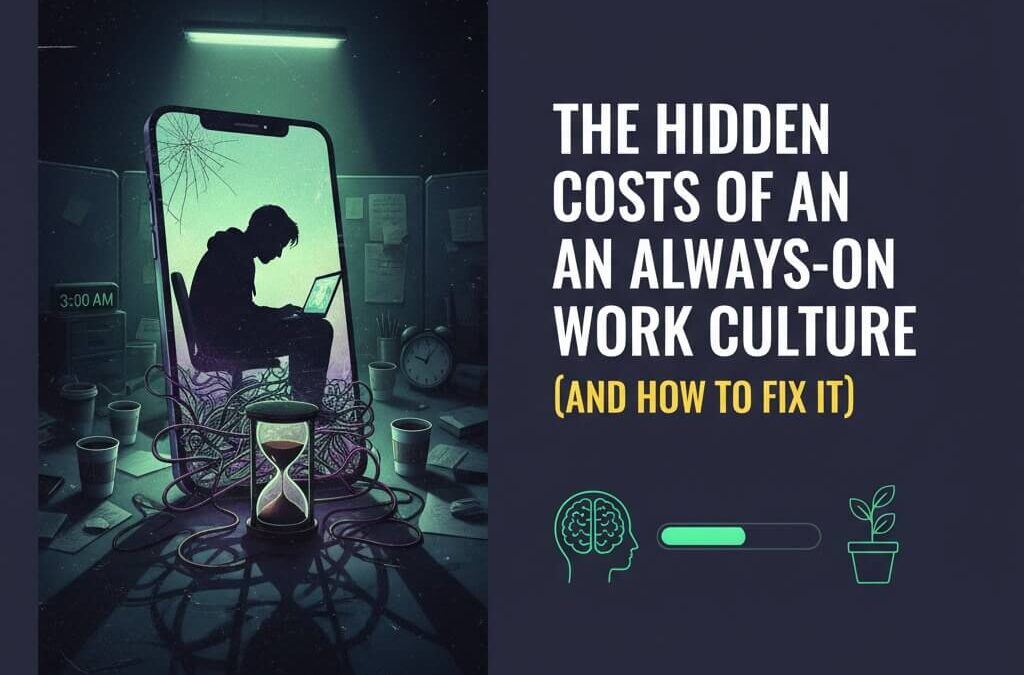
Working past sundown may feel productive, but science tells a different story. Here’s why your nighttime hustle could be sabotaging your success—and what to do instead.
The hustle culture glorifies late nights and early mornings. Entrepreneurs proudly share their 4 AM wake-up calls or midnight work sessions as badges of honor. But what if burning the midnight oil is actually burning out your potential?
Recent research suggests that working late into the evening might be one of the most counterproductive habits in your arsenal. Let’s explore why working after dark is hurting your productivity and how you can build a schedule that actually works.
The Science Behind Night Work and Productivity
Your body operates on a biological clock known as your circadian rhythm. This internal timekeeper regulates everything from hormone production to body temperature—and it has a significant impact on your cognitive abilities throughout the day.
Our brains simply aren’t designed to perform complex tasks after dark. As the sun sets, your body naturally begins producing melatonin, the hormone responsible for making you feel sleepy. Fighting against this natural process creates what scientists call “sleep pressure,” a state where your brain becomes increasingly inefficient at processing information.
Studies from Harvard Medical School have shown that working during your biological nighttime leads to decreased attention spans, impaired decision-making, and reduced creative problem-solving abilities. Even more concerning, research indicates that cognitive impairment from pushing past your natural bedtime can be equivalent to having a blood alcohol level above the legal driving limit.
The Hidden Costs of Late-Night Work
When you work late into the evening, you’re not just borrowing time—you’re taking out a high-interest loan against your future productivity. Here’s what that debt really costs you:
Diminished Cognitive Performance
Late-night work produces lower-quality output that often requires extensive revision the next day. The code you write at 11 PM typically contains more bugs than morning work. The proposal you draft after dinner usually needs substantial editing. You might feel productive in the moment, but you’re creating tomorrow’s problems.
Decision Fatigue Amplification
Your brain’s ability to make good decisions degrades throughout the day—a phenomenon known as decision fatigue. By evening, your decision-making reserves are already depleted. Adding complex work tasks after hours compounds this effect, leading to poorer choices that can have lasting consequences for your business or career.
Creativity Roadblocks
Contrary to the romantic notion of the night-owl creative genius, research shows that true creative breakthroughs typically happen when your brain is rested and alert. Late-night “creativity” often feels revolutionary in the moment but reveals itself as mediocre in the light of day.
Sleep Disruption Cascade
Perhaps most damaging is the impact on your sleep quality. The blue light from screens tells your brain to halt melatonin production, while engaging in work-related thinking activates your sympathetic nervous system—your body’s “fight or flight” response. The result is a perfect storm for insomnia, setting you up for diminished performance the following day.
The Myth of Late-Night Productivity
If working late is so detrimental, why do so many professionals swear by their night owl schedules? The answer lies in a cognitive trap known as “productivity theater”—the illusion of accomplishment without actual results.
Late-night work sessions often feel productive because:
- Fewer interruptions create the sensation of flow
- The quiet environment reduces immediate distractions
- The psychological pressure of “extra effort” creates a false sense of accomplishment
- Working while others sleep feels like gaining a competitive advantage
Yet these perceived benefits rarely outweigh the substantial costs. The quiet focus you experience at night is typically offset by reduced cognitive capacity—you’re bringing less brainpower to tasks that require your best thinking.
“We now know that 24/7 work schedules are the productivity equivalent of eating nothing but candy bars for your nutrition. You might feel energized in the moment, but you’re undermining your long-term performance.” — Dr. Matthew Walker, neuroscientist and sleep researcher
The Chronotype Factor: Are You Really a Night Owl?
Some people genuinely do function better in the evening. Chronotypes—your natural tendency toward morningness or eveningness—are partly genetic. About 10-15% of the population are true night owls, while another 10-15% are natural early birds. The majority fall somewhere in between.
However, many self-proclaimed night owls are actually sleep-deprived individuals whose circadian rhythms have been disrupted by modern life. The real test is how you function on vacation when free from work constraints. Do you naturally stay up late and wake late? Or does your body gradually shift to earlier sleep and wake times?
Even for genuine night owls, there’s a critical difference between being alert in the evening and working through the night. Your optimal window for evening productivity typically closes by 10 PM, after which cognitive decline accelerates regardless of chronotype.
Building a Brain-Friendly Work Schedule
Instead of fighting your biology, the most successful professionals design their work schedules around their natural energy patterns. Here’s how to create a more productive approach:
Identify Your Prime Performance Windows
Track your energy and focus levels throughout the day for a week. When do you naturally feel most alert? When do complex tasks feel easier? Schedule your most demanding work during these periods. For most people, peak cognitive performance occurs in the late morning and again in the late afternoon, with a natural dip after lunch.
Protect Your First Two Hours
The first two hours after you fully wake up (not immediately after opening your eyes) are typically high-performance time. Guard this period jealously and use it for work requiring deep focus, creative thinking, or challenging problem-solving.
Implement a Work Cutoff Time
Establish a firm end to your workday at least 2-3 hours before your target bedtime. This creates a crucial buffer zone that allows your brain to process the day’s events, transition out of work mode, and prepare for restorative sleep.
Design Strategic Evening Routines
If you absolutely must handle work tasks in the evening, reserve this time for low-cognitive activities like clearing your inbox, organizing files, or simple administrative tasks. Save complex thinking for your biological daytime.
Leverage Biological Scheduling
Consider these strategic work blocks based on your body’s natural rhythms:
- Early morning (6-9 AM): Creative work and complex problem-solving
- Mid-morning (9 AM-12 PM): Analytical tasks and focused project work
- Early afternoon (1-3 PM): Administrative tasks and routine work
- Late afternoon (3-6 PM): Collaborative work and planning
- Evening (7-9 PM): Light review, simple organization, or better yet—complete disconnection
When Late Work Is Unavoidable
Sometimes life demands night work despite the productivity costs. During these periods, minimize the damage with these strategies:
- Use blue light blocking glasses after sunset
- Take short breaks every 30-45 minutes
- Keep a notepad for capturing next-day tasks rather than tackling them immediately
- Set a firm cutoff time and stick to it regardless of completion
- Create a 30-minute wind-down routine before sleep
Remember that occasional late work sessions won’t derail your productivity, but making them a regular habit will. The goal isn’t perfectionism but sustainability.
The Competitive Advantage of Work-Life Boundaries
In a business culture that often celebrates overwork, establishing firm boundaries around your work hours can feel counterintuitive. Yet the research is clear: professionals who maintain consistent work schedules with clear endpoints outperform those who work unpredictable, extended hours.
This performance gap widens over time. While night workers might appear productive in short sprints, they typically face declining output quality, increased error rates, and higher burnout over weeks and months.
The most successful entrepreneurs and executives aren’t working around the clock—they’re working at the right times. They understand that strategic rest isn’t a luxury but a competitive necessity.
“The way to get more done may be to spend more time doing less. A paradox, but true.” — Alex Soojung-Kim Pang, author of “Rest: Why You Get More Done When You Work Less”
Making the Transition
If you’ve been a dedicated night worker for years, transitioning to a more aligned schedule requires patience. Your circadian rhythm needs time to adjust. Start by shifting your work cutoff time 30 minutes earlier each week until you reach your target schedule.
The most powerful change you can make is establishing a consistent sleep and wake time—even on weekends. This stability reinforces your body’s natural rhythms and dramatically improves your daytime cognitive performance.
Remember that productivity isn’t about working more hours—it’s about bringing your best mental capacity to the right work at the right time. By aligning your work schedule with your biology rather than fighting against it, you unlock sustainable performance that no amount of late-night hustle can match.
Your most valuable asset isn’t your willingness to work at all hours—it’s your brain operating at its full potential. Protect that asset by giving it the rest it requires, and you’ll discover what true productivity actually feels like.
Real Stories Behind This Advice
We’ve gathered honest experiences from working professionals to bring you strategies that work in practice, not just theory.
- Read more: Get the full details in the original article
- Join in: See what others are saying and share your thoughts in the Reddit discussion (3,050 upvotes, 449 comments)
- Tell your story: Have experience with this? Help others by sharing what worked for you at our Contact Us page
At ModernWorkHacks, it’s practical ideas from real people.



0 Comments