

In a world where your laptop can turn any scenic vista into an office, are vacations still necessary? Yes, and perhaps more than ever. The rise of remote work has blurred the boundaries between personal and professional life, making it harder to truly disconnect—even when you technically can work from that beach in Thailand.
Despite the flexibility to “work from anywhere,” data shows remote workers are taking less time off than before. But this constant connectivity comes at a hidden cost that threatens both wellbeing and long-term productivity.
The Remote Work Vacation Paradox
Remote work was supposed to free us from the constraints of the traditional office. In many ways, it has—eliminating commutes, offering flexibility, and allowing people to design work around their lives rather than the other way around. But a concerning trend has emerged: remote workers are actually taking fewer vacation days than their office-bound counterparts.
According to recent studies, 38% of remote workers report working longer hours than when they were in an office, and a significant percentage admit to taking less time off. The very technology that enables our freedom is keeping us perpetually tethered to work.
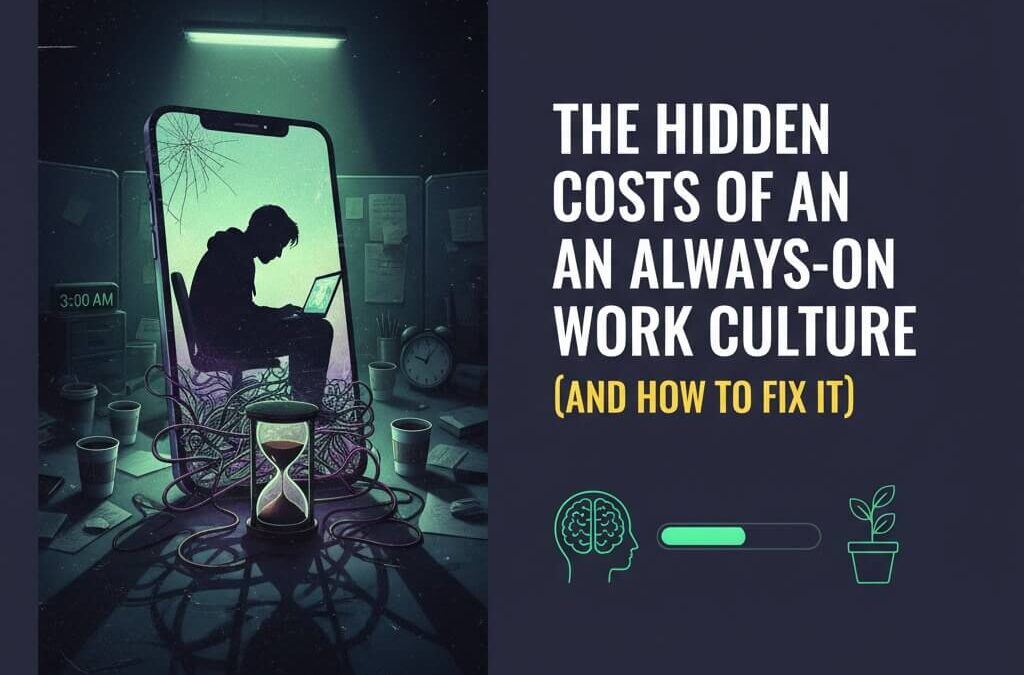
When your living room doubles as your office, and your laptop travels everywhere with you, the line between work and rest becomes dangerously thin. This creates what psychologists call “the always-on culture”—a state where work is never fully out of mind.
Why Remote Workers Struggle to Unplug
Several factors contribute to this vacation resistance among remote workers:
- The visibility trap: Without physical presence in an office, many remote workers feel pressured to demonstrate their productivity through constant availability.
- Guilt complex: The flexibility of remote work can create a sense that you’re already “getting away with something,” making formal time off feel unnecessary or indulgent.
- Workcation confusion: The ability to work from interesting locations creates an illusion that you’re already on “vacation”—even when you’re still putting in full workdays.
- Fear of missing out: Being physically disconnected from teams heightens concerns about falling out of important conversations or opportunities.
- Practical challenges: Remote work can make handoffs and coverage more complicated, creating additional hurdles to taking time off.
For many remote workers, these factors combine to create a scenario where vacation becomes an increasingly rare experience, replaced instead by a blend of work and leisure that satisfies neither need fully.
The Science of Rest: Why True Breaks Matter
Our brains aren’t designed for constant engagement. Neuroscience research shows that cognitive function begins to decline after prolonged periods of focus. Without proper breaks, we experience diminished creativity, impaired decision-making, and increased error rates.
Dr. Sabina Brennan, neuroscientist and author of “100 Days to a Younger Brain,” explains: “The brain requires downtime to consolidate learning and form memories. Without proper rest periods, we not only become less productive, but we actually begin to undo the progress we’ve made.”
“Rest is not a luxury—it’s a biological necessity for peak cognitive performance.”
True vacations—where work genuinely stops—trigger several important processes in our brains:
- Activation of the default mode network, which is crucial for creativity and insight
- Reduction of stress hormones like cortisol that, when chronically elevated, damage brain cells
- Strengthening of memory consolidation that happens primarily during periods of rest
- Enhancement of problem-solving abilities through distance and perspective
Simply put, the brain needs periods of complete disengagement from work to perform at its best. “Workcations” where you’re still checking email or jumping on occasional calls don’t provide the same cognitive reset.
The Business Case for Vacation
Beyond personal wellbeing, there’s a compelling business argument for genuine vacation time. Companies with strong vacation cultures consistently outperform those that foster an always-on environment.
Research from the Harvard Business Review found that for each 10 hours of vacation time employees took, their year-end performance ratings improved by 8%. Additionally, frequent vacationers were significantly more likely to receive raises and bonuses than their office-bound colleagues.
Microsoft Japan experimented with a four-day workweek and found productivity jumped by 40%. The key insight wasn’t just that people worked fewer hours—it was that they had more meaningful recovery time between periods of work.
For remote teams specifically, vacation becomes a strategic tool for:
- Preventing burnout: The top reason for turnover among remote workers
- Improving communication: Well-planned time off forces better documentation and knowledge sharing
- Uncovering process issues: Vacations reveal single points of failure in workflows
- Building trust: Teams that can function while members are away develop stronger collaboration skills
Making Vacation Work for Remote Workers
If you’re a remote worker struggling to take meaningful time off, consider these practical strategies:
Set Structural Boundaries
Unlike office workers who physically leave their workspace, remote employees need to create deliberate separation. Try these approaches:
- Use a dedicated “vacation” auto-responder that clearly states you won’t be checking messages
- Remove work apps from your phone during vacation periods
- Designate a specific colleague as point person for urgent matters
- Schedule vacation during naturally slower business periods
Plan “Unreachable” Time
Consider destinations or activities that make work physically impossible or impractical:
- Camping or hiking in areas with limited connectivity
- International travel where time zones make synchronous communication difficult
- Cruises or resorts with prohibitively expensive internet
- Immersive experiences like retreats or workshops that demand full attention
Practice Vacation Skills
Like any skill, the ability to disconnect requires practice. Start small:
- Take a full weekend completely offline
- Schedule “meeting-free” days where you focus solely on deep work
- Practice a “digital sunset” where devices are put away after a certain hour
- Take a “staycation” day midweek where you avoid work entirely
The more you practice these smaller disconnections, the more comfortable you’ll become with longer periods away from work.
For Leaders: Creating a Healthy Vacation Culture
If you lead a remote team, you have special responsibility for modeling and encouraging healthy vacation habits:
- Lead by example: Take your own visible, unplugged vacation time
- Create vacation minimums: Consider policies that require employees to take at least a certain number of days fully off
- Recognize vacation planning: Acknowledge team members who properly prepare for their time off
- Discourage vacation contact: Make it clear that interrupting someone’s vacation is a rare exception, not the norm
- Monitor vacation usage: Track whether team members are actually taking their allocated time
“The most powerful message comes from leaders who not only take vacation but talk about its value to their work and wellbeing.”
The Future of Work Requires Better Rest
As remote and flexible work arrangements become the norm rather than the exception, we need to reimagine what healthy work-rest cycles look like. The industrial-era model of continuous work punctuated by brief vacations is increasingly incompatible with knowledge work that demands creativity and complex problem-solving.
Forward-thinking companies are already experimenting with more nuanced approaches: sabbaticals, four-day workweeks, “recharge days,” and seasonal work schedules that align with natural energy cycles. These innovations recognize that peak performance requires meaningful recovery.
For individual remote workers, the message is clear: your ability to work from anywhere doesn’t diminish your need for vacation—it amplifies it. The very freedom that makes remote work attractive requires greater intentionality around rest.
True vacation isn’t a luxury or an escape from work. It’s an essential investment in your cognitive capacity, creativity, and long-term performance. In a working world increasingly defined by mental output rather than physical presence, regular, genuine disconnection isn’t optional—it’s a competitive advantage.
The next time you’re tempted to bring your laptop on vacation “just in case,” remember that the most valuable thing you can do for your work might be to leave it behind entirely.
Real Stories Behind This Advice
We’ve gathered honest experiences from working professionals to bring you strategies that work in practice, not just theory.
- Read more: Get the full details in the original article
- Join in: See what others are saying and share your thoughts in the Reddit discussion
- Tell your story: Have experience with this? Help others by sharing what worked for you at our Contact Us page
At ModernWorkHacks, it’s practical ideas from real people.



0 Comments