On a rainy Tuesday morning, I found myself back on a packed commuter train for the first time in two years. The person next to me was scrolling through Slack on their phone, replying to messages from teammates who were—ironically—still working from home. As we lurched toward downtown, an announcement echoed over the intercom: “Please be patient. We’re experiencing delays.” I remember thinking, Is this really what ‘collaboration’ looks like?
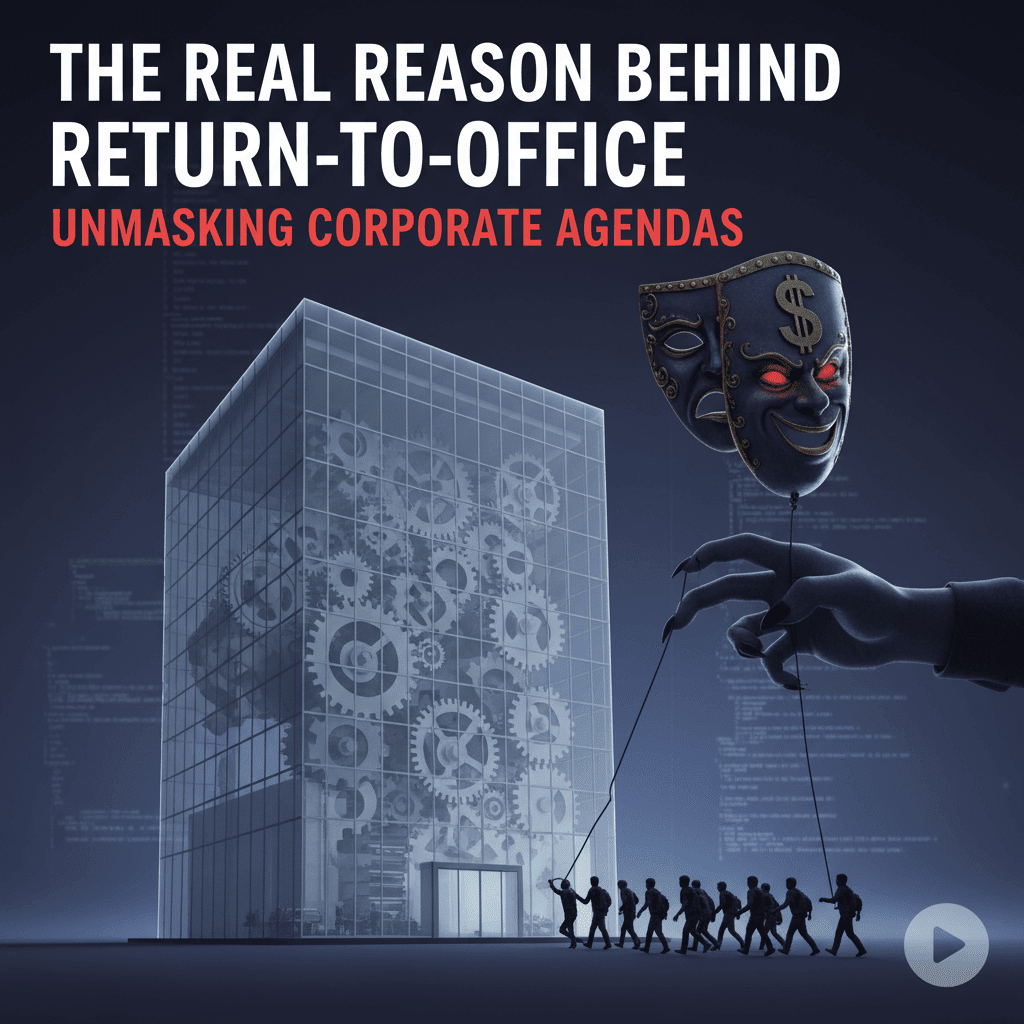
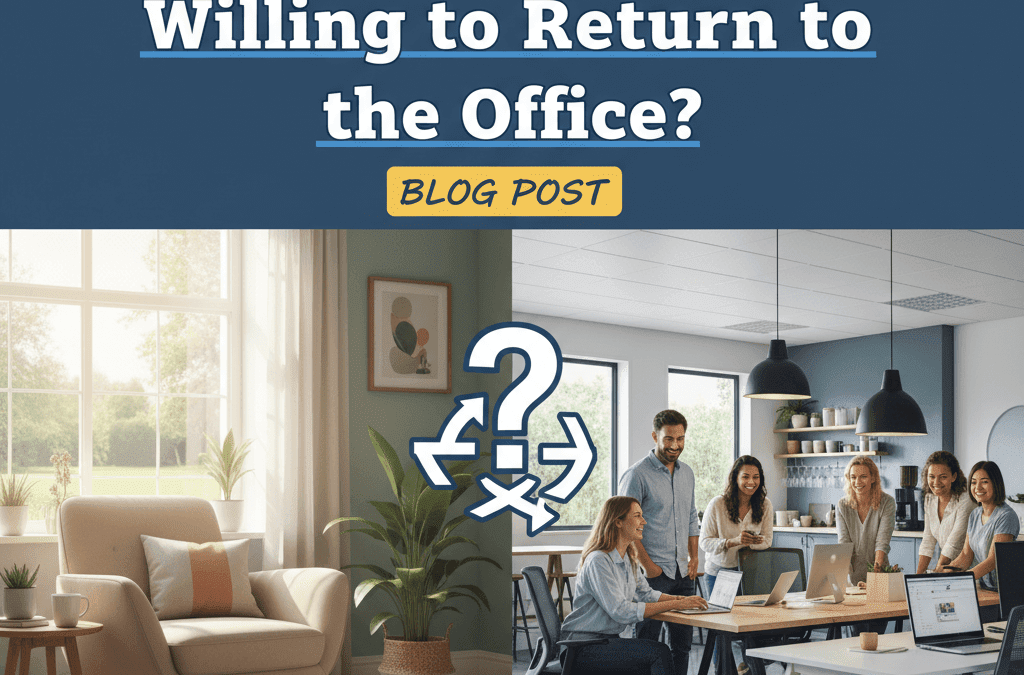
That moment crystallized a question many employees are quietly, and sometimes loudly, asking: Is the return-to-office (RTO) push genuinely about productivity and teamwork, or is something else driving it? Companies insist that in-person work sparks creativity, strengthens culture, and boosts performance. Yet across Reddit, internal Slack channels, and exit interviews, employees tell a different story—one centered on control, trust, and power.
This article explores the real reasons behind RTO mandates, drawing on employee sentiment, research, and real-world examples. My thesis is simple but uncomfortable: for many organizations, RTO is less about collaboration and more about reclaiming authority in a world where work has fundamentally changed.
The Official Narrative: Collaboration, Culture, and Creativity
Most RTO announcements follow a familiar script. Leadership emails talk about “serendipitous hallway conversations,” “rebuilding culture,” and “unlocking innovation.” On the surface, these arguments sound reasonable—and in some cases, they are.
What Companies Say They’re Solving
Executives often point to three core issues:
- Collaboration gaps: The belief that brainstorming and problem-solving suffer on Zoom.
- Cultural erosion: Fear that new hires won’t absorb values without in-person exposure.
- Productivity concerns: A suspicion—sometimes backed by selective data—that remote work lowers output.
For example, Jamie Dimon of JPMorgan Chase has publicly criticized remote work, arguing it weakens learning and mentorship. Similar sentiments have come from leaders at Amazon, Disney, and Goldman Sachs.
What the Research Actually Says
The data, however, is far more nuanced. A 2022 study by Stanford economist Nicholas Bloom found that hybrid workers were just as productive as fully in-office employees, with higher retention and job satisfaction. Microsoft’s own internal research showed productivity initially spiked during remote work, though collaboration patterns changed.
The significance: The evidence doesn’t clearly support blanket RTO mandates. It suggests that work design, not physical location alone, drives results.
Actionable Takeaways
- Ask for clarity: If leadership claims collaboration is suffering, request specific examples or metrics.
- Propose experiments: Suggest pilot programs—like designated in-office collaboration days—rather than full mandates.
- Document outcomes: Track your own productivity and collaboration to counter vague narratives.
The Employee Perspective: Distrust Beneath the Surface
Scroll through Reddit threads like r/antiwork or r/ExperiencedDevs, and you’ll find thousands of comments expressing frustration, skepticism, and even betrayal. Many employees don’t buy the official story.
What Workers Are Really Saying
A recurring theme in online discussions is distrust. Employees describe RTO as:
- A way to justify expensive real estate leases.
- A soft layoff strategy, hoping people quit rather than comply.
- An attempt to reassert managerial control over time and behavior.
One Reddit user wrote, “If this were about collaboration, they wouldn’t force us to sit on Zoom calls from cubicles.” That comment alone received tens of thousands of upvotes—a signal of how widely shared this sentiment is.
The Psychological Contract Has Changed
During the pandemic, employees proved they could deliver results remotely. In doing so, they renegotiated the unspoken contract between employer and worker. RTO mandates feel, to many, like a breach of that agreement.
This matters because: Trust is a core driver of engagement. When employees feel manipulated, morale and loyalty erode—even if they comply.
Actionable Takeaways
- Voice concerns constructively: Frame objections around outcomes, not convenience.
- Seek allies: Collective feedback carries more weight than individual complaints.
- Know your leverage: In high-demand roles, talent still has bargaining power.
Power, Control, and the Managerial Identity Crisis
Here’s the uncomfortable truth few executives say out loud: remote work challenges traditional management models. For decades, visibility equaled productivity. If I can see you, I know you’re working—or so the thinking went.
When Presence Replaces Performance
Many managers were promoted for their ability to supervise people in person, not to manage outcomes asynchronously. Remote work exposes skill gaps in:
- Setting clear goals.
- Measuring results objectively.
- Communicating without constant check-ins.
RTO, in this context, becomes a coping mechanism—a way to restore familiar structures rather than adapt to new realities.
Case Study: The Mid-Sized Tech Firm
I consulted with a 600-person SaaS company that mandated three days a week in-office. Leadership cited “alignment issues.” Privately, several managers admitted they felt lost managing remote teams. After investing in management training and redefining KPIs, the company reversed course, moving to optional hybrid work. Productivity didn’t drop—but manager confidence improved.
Actionable Takeaways
- Shift the conversation: Emphasize results, not hours or location.
- Upskill managers: Advocate for training in remote leadership.
- Redefine visibility: Use dashboards, milestones, and deliverables to make work visible without physical presence.
The Money Trail: Real Estate, Tax Incentives, and Sunk Costs
Follow the money, and RTO starts to make more sense. Corporate offices are expensive, and empty buildings represent a visible, painful reminder of sunk costs.
Real Estate as a Hidden Driver
Commercial real estate leases often span 10–20 years. Companies that signed pre-pandemic are stuck paying for space they’re not using. In some cities, local governments also pressure major employers to bring workers back to support downtown economies.
For example, San Francisco officials openly urged tech companies to return workers to revive struggling businesses. While understandable from a civic perspective, it blurs the line between corporate need and public policy.
Why This Matters to Employees
Employees bear the cost—longer commutes, higher expenses, and less flexibility—while the financial benefits accrue elsewhere.
Actionable Takeaways
- Ask who benefits: When RTO is announced, consider the financial incentives at play.
- Negotiate trade-offs: If presence is required, ask for flexibility, stipends, or compressed workweeks.
- Factor it into career choices: Companies doubling down on office-centric models signal their long-term priorities.
Productivity vs. Compliance: What RTO Really Optimizes
One of the most telling patterns I’ve seen is how success is measured post-RTO. Often, metrics shift subtly from output to attendance.
The Compliance Trap
Badge swipes, desk occupancy, and “face time” become proxies for performance. This is easier to measure—but not necessarily meaningful.
A Gallup study found that engaged employees are 17% more productive, regardless of location. Engagement, not proximity, is the real lever.
Authentic Example: The Call Center Experiment
A large insurance company tested mandatory RTO for its call center. Attendance improved, but customer satisfaction scores dropped. Agents were more stressed and less focused. After reverting to hybrid work, satisfaction rebounded within three months.
Actionable Takeaways
- Align metrics with value: Push for KPIs tied to outcomes, not presence.
- Watch for quiet disengagement: Compliance doesn’t equal commitment.
- Protect your energy: Design personal workflows that sustain focus, even in-office.
Where Do We Go From Here?
The return-to-office debate isn’t really about buildings. It’s about trust, power, and how we define work in the modern era. Employees have tasted autonomy, and many aren’t willing to give it up without a fight—or at least a frank conversation.
I believe the future belongs to organizations willing to be honest about their motives and flexible in their approaches. Hybrid models, when designed thoughtfully, can balance collaboration with autonomy. But that requires letting go of control as a default management strategy.
My challenge to you: Whether you’re a leader or an individual contributor, question the narratives you’re given. Ask what problem is truly being solved—and who pays the price. Then decide, consciously, what kind of work culture you’re willing to support.The commute I took that rainy Tuesday wasn’t just a return to an office. It was a reminder that the fight over where we work is really a fight over how much our time, trust, and autonomy are valued. And that’s a conversation worth having—out loud.
Where This Insight Came From
This analysis was inspired by real discussions from working professionals who shared their experiences and strategies.
- Share Your Experience: Have similar insights? Tell us your story
At ModernWorkHacks, we turn real conversations into actionable insights.



0 Comments