
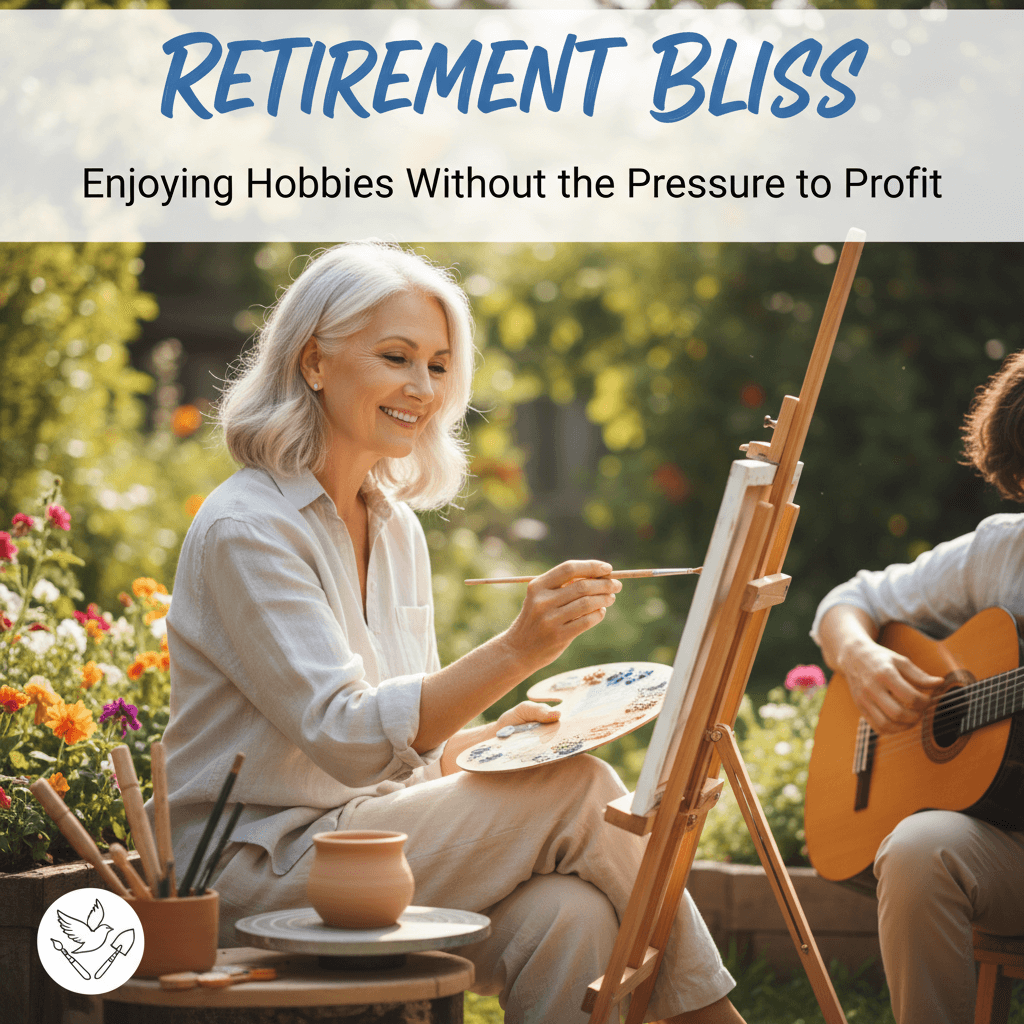
At 58, Richard finally achieved his dream of early retirement after decades in corporate finance. He’d meticulously followed the FIRE (Financial Independence, Retire Early) principles, built a substantial nest egg, and was ready to dedicate his days to woodworking—a passion he’d only explored during stolen weekend hours. Six months into retirement, at a neighborhood barbecue, the inevitable question arose: “So, are you selling your pieces online yet? You could make a killing on Etsy!” Richard smiled politely but felt a familiar weight settle on his shoulders. Why wasn’t enjoying woodworking for its own sake enough anymore?
This scenario plays out countless times in today’s retirement landscape, where the line between passion and profit has become increasingly blurred. In our hustle culture, the freedom to simply enjoy activities without monetizing them has become a radical act—particularly for retirees who have spent decades defining themselves through productive work.
The Monetization Trap: When Hobbies Become “Should-Be” Side Hustles
The pressure to monetize hobbies in retirement isn’t just anecdotal. A 2022 survey by the American Association of Retired Persons (AARP) found that 54% of retirees reported feeling social pressure to earn money from their recreational activities, with the number jumping to 67% among those who retired before age 65.
The Cultural Shift Behind the Pressure
This phenomenon stems from several converging cultural forces:
- Social media’s influence: Platforms showcase “retirement success stories” of seniors turning hobbies into thriving businesses, creating unrealistic expectations.
- Economic uncertainty: With retirement security concerns, many view continued income generation as prudent, even necessary.
- Identity transition challenges: After decades of productivity-based self-worth, many retirees struggle to embrace activities without tangible outcomes.
“We’ve created a culture where ‘leisure’ has become almost a dirty word,” explains Dr. Melissa Cohen, retirement psychologist and author of Beyond Productivity: Finding Meaning in Retirement. “Many of my clients feel guilty about engaging in activities solely for pleasure, as if they’re wasting time if they’re not somehow monetizing their skills.”
Take Margaret, a 63-year-old former marketing executive who discovered a talent for watercolor painting after retiring. “Every time I showed my work to friends, they’d immediately say, ‘You should sell these!’ or ‘Have you thought about teaching classes?’ It made me question whether I was somehow failing at retirement by not turning this into a business. Eventually, I tried selling at local craft fairs, but the deadlines and customer expectations drained all the joy from painting. I was essentially working again—just for much less money.”
The Science of Pure Leisure: Why Hobby Monetization Can Backfire
Research consistently demonstrates that transforming intrinsically motivated activities into income sources often diminishes enjoyment. A longitudinal study from the Journal of Personality and Social Psychology found that when extrinsic motivators (like money) were introduced to previously enjoyable activities, participants reported a 27% decrease in intrinsic motivation over time.
The Psychological Impact of Monetizing Passions
When we monetize hobbies, several psychological shifts occur:
- The introduction of external evaluation creates performance anxiety
- Deadlines and customer demands replace self-directed pacing
- The freedom to experiment and fail without consequences diminishes
“There’s a fundamental difference between doing something because you want to versus doing it because others expect something from you,” says neuropsychologist Dr. James Thornton. “When we monetize hobbies, we activate the brain’s reward and stress pathways simultaneously, which can transform a relaxing activity into one that triggers cortisol spikes.”
This was precisely the experience of Robert, a 67-year-old retired engineer who began crafting custom fishing lures. “At first, making lures was my escape. Then my son-in-law built me a website as a ‘gift,’ and suddenly I was getting orders. I’d find myself in my workshop at 11 PM, not because I wanted to be there, but because I had promised someone their order by Friday. I realized I’d inadvertently created a job for myself—one that paid about $3 an hour when I calculated the time invested.”
Reclaiming Leisure: Strategies for Protecting Your Retirement Passions
Preserving the joy in retirement hobbies requires intentional boundaries and mindset shifts. The following approaches can help maintain the sanctity of your leisure activities:
Developing Clear Personal Boundaries
- Prepare your “why” statement: Craft a confident response about why you choose not to monetize your hobby. For example: “Painting is my meditation space—keeping it separate from business preserves its special role in my life.”
- Practice polite deflection: When someone suggests monetizing your hobby, try responding with, “I appreciate your vote of confidence, but I’ve deliberately chosen to keep this as my joy space rather than a business venture.”
- Separate sharing from selling: Find ways to share your passion without pressure. Join hobby groups focused on enjoyment rather than entrepreneurship, or display work without price tags.
Carol, a 71-year-old retired teacher and avid quilter, found her solution through community service. “When people started suggesting I sell my quilts, I instead began donating them to the local children’s hospital. This gave me a meaningful purpose that wasn’t tied to income, and it actually silenced the monetization suggestions because no one wants to question charitable work.”
Finding Community Support for Non-Monetized Hobbies
Surrounding yourself with like-minded hobbyists can provide valuable reinforcement for your choice to keep leisure as leisure:
- Seek out hobby groups that explicitly focus on enjoyment rather than business development
- Connect with other FIRE adherents who prioritize time freedom over continued income
- Consider creating a “hobby sanctuary” with friends who share your philosophy
“Our monthly ‘Creation Without Compensation’ meetup has become my sanctuary,” shares Thomas, a 60-year-old early retiree who enjoys photography. “We’re eight retirees who gather to share our creative projects with the explicit understanding that we’re doing them purely for joy. It’s remarkable how validating it feels to be in a space where no one asks about your marketing strategy.”
The Financial Reality: When You Truly Don’t Need the Money
For those who have achieved financial independence, the freedom to engage in unprofitable activities is actually the ultimate luxury—one that deserves to be celebrated rather than questioned.
Reframing the Value Proposition
Financial advisor Maria Gonzalez, who specializes in retirement planning, encourages her clients to calculate the “joy return on investment” for their activities. “I ask them to consider what they’d pay for the mental health benefits, stress reduction, and fulfillment their hobbies provide. When viewed through this lens, many realize their unprofitable passions actually deliver tremendous value.”
This perspective resonated with David, a 64-year-old former software developer who now spends hours cultivating bonsai trees. “When I calculated what I’d pay for therapy, stress management, and the sense of accomplishment my bonsai practice gives me, I realized I’m getting an incredible return on the time I invest—just not in dollars.”
Research supports this view. A 2021 study published in the Journal of Happiness Studies found that retirees who engaged in regular hobby activities reported 43% higher life satisfaction scores than those who didn’t, regardless of whether those hobbies generated income.
Balancing Passion and Purpose in Retirement
While pure leisure is valuable, many retirees still seek meaning and purpose—which doesn’t necessarily require monetization.
Alternative Ways to Find Purpose Through Hobbies
- Teaching and mentoring: Share your skills through volunteer teaching at community centers, schools, or retirement communities
- Community contribution: Use your talents to support causes you care about without financial compensation
- Legacy projects: Create works specifically intended as gifts for family members or future generations
Janet, a 69-year-old retired accountant and amateur potter, found her perfect balance: “I teach a free pottery class at the senior center once a month, which gives me the satisfaction of sharing my knowledge. The rest of the time, I create whatever brings me joy, with no pressure to produce sellable items. This combination gives me both purpose and freedom.”
Dr. Cohen emphasizes that purpose doesn’t require payment: “Humans need meaning, not monetization. The key is finding ways your passions can connect you to others or contribute to something beyond yourself—which can happen entirely outside the marketplace.”
Embracing the Revolutionary Act of Purposeless Joy
In a world obsessed with productivity and profit, choosing to engage in activities solely because they bring you happiness is quietly revolutionary. As we navigate retirement in a hustle-oriented culture, perhaps the most radical act is reclaiming our right to unmonetized joy.
The next time someone asks when you’re going to start selling your woodworking, paintings, knitting, or baked goods, consider responding with confident clarity: “Never. This is my joy, not my job—and that’s exactly how I want it.”
After all, isn’t the freedom to pursue passions without financial pressure one of the greatest rewards of a well-planned retirement? In a world that constantly asks “what’s the ROI?”, sometimes the most powerful answer is simply “happiness.”
As you move forward in your retirement journey, I challenge you to identify at least one activity you’ll protect as a pure pleasure zone—a space where the only currency is joy, and the only metric for success is your own satisfaction. In doing so, you might just discover the truest form of retirement bliss.
Where This Insight Came From
This analysis was inspired by real discussions from working professionals who shared their experiences and strategies.
- Share Your Experience: Have similar insights? Tell us your story
At ModernWorkHacks, we turn real conversations into actionable insights.



0 Comments