
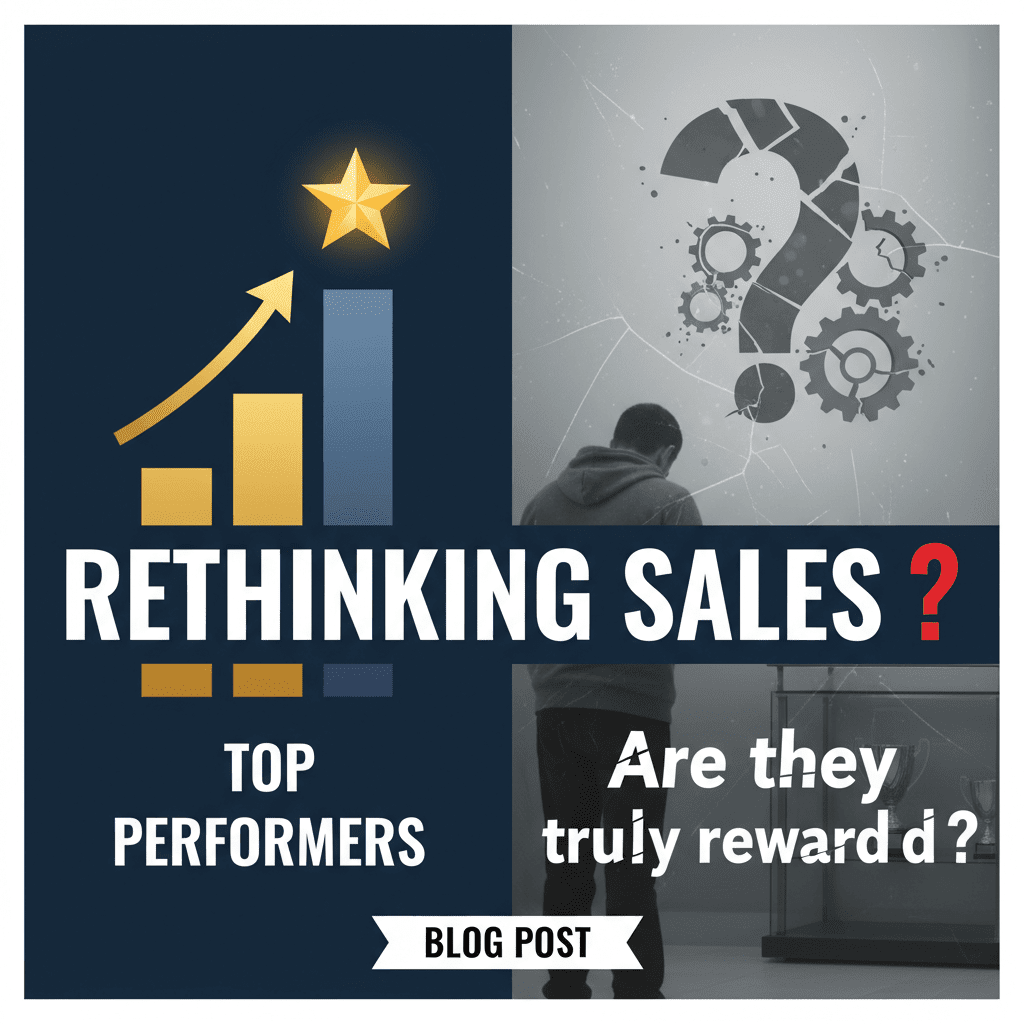
I still remember a conversation with a friend—let’s call her Maria—who consistently finished at the top of her sales leaderboard. One quarter, she closed 180% of her quota. Instead of a celebration, she got a calendar invite. The subject line read: “Territory Expansion & Mentorship.” Translation? More accounts, more internal meetings, and onboarding two struggling reps. Her commission barely changed. She laughed when she told me, but there was an edge to it. “It feels like being good at my job is a punishment,” she said.
Maria’s experience isn’t rare. Scroll through Reddit threads in sales communities and you’ll find thousands of similar stories: high achievers rewarded with extra work, higher quotas, and shrinking upside. The thesis of this article is simple but uncomfortable: many modern sales compensation systems unintentionally penalize top performers, and the emotional and financial costs are far higher than most organizations realize. It’s time to rethink how we reward excellence—before we burn it out.
The Hidden Penalty of Being Great at Sales
When quota becomes a moving target
One of the most common complaints I hear is about quota inflation. A rep hits 120% one year, and suddenly that number becomes the new baseline. On paper, this looks like growth. In practice, it often feels like the finish line keeps moving.
According to research from the Sales Management Association, nearly 60% of sales reps report that their quotas increase faster than market demand. That gap matters. When quotas rise without corresponding increases in territory quality, pricing power, or brand strength, top performers feel trapped in a treadmill of ever-increasing expectations.
Actionable takeaways:
- For sales professionals: Track your performance relative to market conditions, not just internal targets. Bring data—industry growth rates, win-rate benchmarks—into quota conversations.
- For leaders: Audit quota changes annually against external market data. If the market grew 5%, a 20% quota increase deserves scrutiny.
- For both: Separate “stretch goals” from compensation-triggering quotas so ambition doesn’t feel like punishment.
The workload creep nobody talks about
Top performers are often asked to do more than sell. They mentor new hires, rescue failing deals, and represent the team in cross-functional projects. While these tasks are valuable, they’re rarely compensated.
I once worked with a SaaS company where the top 10% of reps spent nearly 30% less time selling than the middle of the pack—because they were pulled into internal responsibilities. Ironically, leadership then questioned why their growth plateaued.
Actionable takeaways:
- Document non-selling responsibilities and estimate the revenue opportunity cost.
- Push for formal recognition or compensation for mentorship and enablement work.
- Leaders should rotate “extra duties” instead of defaulting to top performers.
Compensation Structures: Incentives or Disincentives?
The commission cap problem
Commission caps are one of the fastest ways to demotivate elite sellers. While often justified as a way to manage budget risk, caps send a clear message: exceptional performance is inconvenient.
A study by Xactly found that organizations with uncapped commissions saw 12–15% higher revenue growth than those with caps. The reason is intuitive. When upside is unlimited, effort tends to follow.
Actionable takeaways:
- If you’re a rep, clarify whether caps exist before signing an offer—and get it in writing.
- Companies should model worst-case commission scenarios instead of defaulting to caps.
- Consider accelerators instead of caps to reward outsized performance sustainably.
Complex plans that erode trust
Another quiet morale killer is overcomplicated compensation plans. When reps can’t easily calculate what they’ve earned, suspicion grows. Was the payout wrong, or am I missing something?
In one enterprise organization I advised, the average rep needed a spreadsheet and a 90-minute call with finance to understand their commission statement. Not surprisingly, trust scores in engagement surveys were low.
Actionable takeaways:
- Sales professionals should ask for plain-language explanations of comp plans.
- Leaders should test plans by asking: “Can a rep explain this in under two minutes?”
- Simpler plans often outperform complex ones in both motivation and results.
The Emotional Toll of Feeling Undervalued
Burnout isn’t just about hours
Burnout in sales is often framed as a workload issue, but emotional exhaustion plays an equally powerful role. Feeling taken advantage of—especially when performance is high—creates cynicism.
Gallup research shows that employees who feel recognized are 2.7 times more likely to be highly engaged. Conversely, high performers who feel overlooked disengage faster because the gap between effort and reward feels personal.
Actionable takeaways:
- Regularly assess not just performance, but sentiment among top reps.
- Normalize conversations about fairness, not just results.
- Use recognition that is timely, specific, and public.
The identity cost of “always being the go-to”
Top sellers often become the “fixers.” Over time, this identity can crowd out growth. Instead of learning new skills or pursuing strategic accounts, they’re constantly solving yesterday’s problems.
I’ve seen reps leave six-figure roles not because of money, but because they felt stuck in a loop where excellence meant stagnation.
Actionable takeaways:
- Reps should advocate for development opportunities, not just higher quotas.
- Managers should protect top performers’ time as aggressively as they protect pipeline.
- Create advancement paths that don’t require sacrificing selling time.
What Reddit and Online Communities Are Really Saying
A grassroots audit of sales culture
Sales subreddits and forums function like an unfiltered focus group. Themes recur: shrinking territories, inflated quotas, and leadership disconnected from frontline reality.
One Reddit thread with over 3,000 upvotes described a rep who doubled revenue in a struggling region, only to have the territory split the following year—with no adjustment to quota. The comments weren’t shocked; they were resigned.
Actionable takeaways:
- Leaders should treat online sentiment as early warning signals.
- Reps can use these communities to benchmark what’s “normal” versus exploitative.
- Organizations should proactively address issues before they become public grievances.
The trust gap between leadership and sellers
What stands out most in these discussions isn’t anger—it’s distrust. Many reps assume compensation changes are designed to claw back earnings, not reward growth.
That perception alone can undo the motivational intent of any incentive plan.
Actionable takeaways:
- Explain the “why” behind comp changes, not just the math.
- Invite top reps into pilot programs or feedback loops.
- Transparency isn’t optional; it’s foundational.
Building a Fairer, More Motivating Sales Environment
Rethinking what “reward” really means
Reward isn’t just money—though money matters. Autonomy, growth, and respect are equally powerful. The best sales cultures I’ve seen treat top performers as partners, not resources to be maximized.
In one mid-market firm, leadership gave top reps first choice of territories and input into product roadmap discussions. Attrition dropped by 40% in a year.
Actionable takeaways:
- Expand rewards beyond cash to include influence and flexibility.
- Use non-monetary perks strategically, not as substitutes for fair pay.
- Design rewards with input from those they’re meant to motivate.
Aligning growth with sustainability
Short-term revenue spikes mean little if top talent leaves. Sustainable growth requires compensation systems that scale without eroding trust.
That means fewer surprises, clearer math, and genuine appreciation for those who carry the number.
Actionable takeaways:
- Stress-test comp plans against best-case performance scenarios.
- Review plans annually with an eye toward fairness, not just cost.
- Measure success by retention of top performers, not just revenue.
The Real Question: What Kind of Sales Culture Do We Want?
Rethinking sales isn’t about coddling high performers. It’s about recognizing that excellence is fragile. When the people who drive growth feel penalized, the system is broken—even if the numbers look good for a while.
I challenge sales leaders to ask a simple question: If I were my top rep, would I feel genuinely rewarded here? And I challenge sales professionals to advocate—not just for higher pay, but for fair systems that respect their contribution.
The conversations happening on Reddit aren’t noise; they’re signals. Ignore them, and the cost will show up in attrition, disengagement, and lost momentum. Listen, and there’s an opportunity to rebuild sales cultures where winning actually feels like winning.
The future of sales depends on it.
Where This Insight Came From
This analysis was inspired by real discussions from working professionals who shared their experiences and strategies.
- Share Your Experience: Have similar insights? Tell us your story
At ModernWorkHacks, we turn real conversations into actionable insights.




0 Comments