The first time I felt it, it was subtle. I opened my notes app to capture a half-formed idea—something about a client project I couldn’t afford to leak—and realized I didn’t even glance at the design. I didn’t care about fonts, animations, or color palettes. What mattered was this: Where is this data stored? Who can see it? And what happens if this app disappears tomorrow?
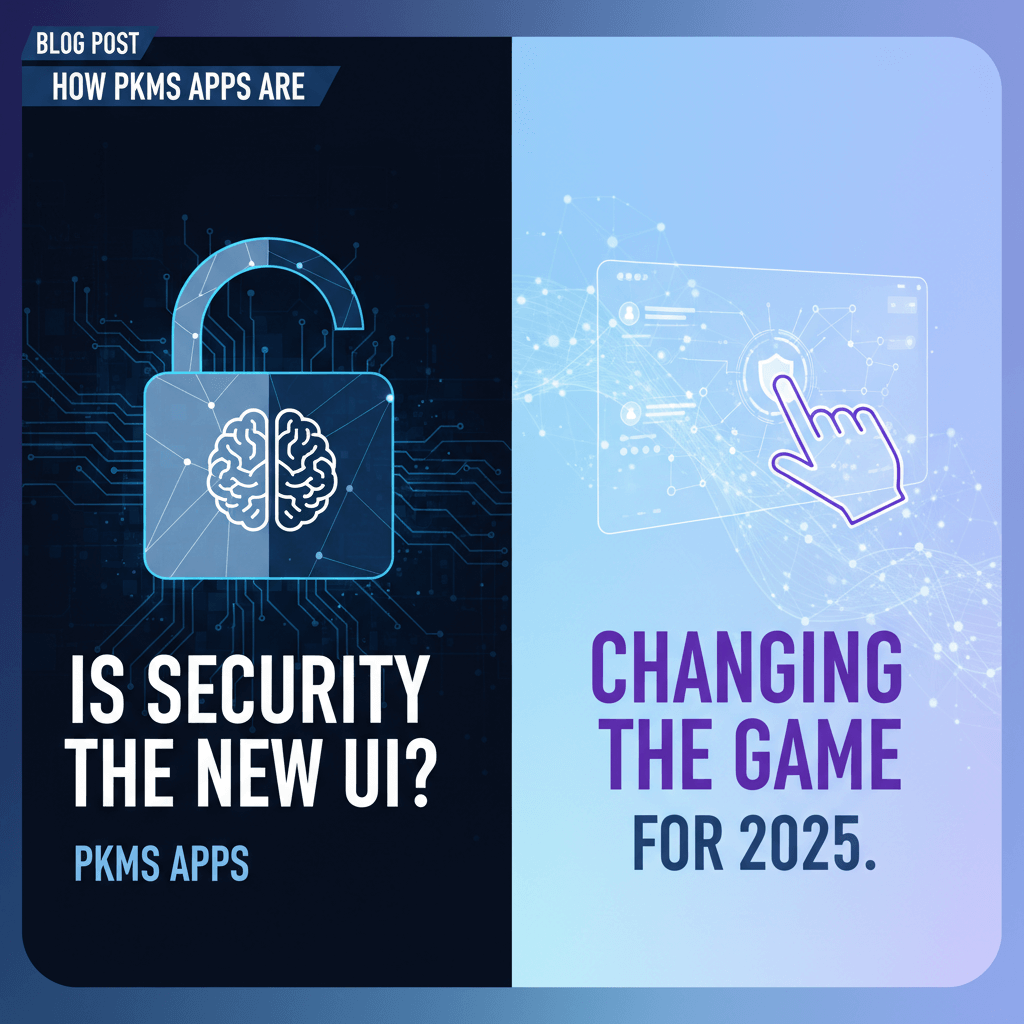
That moment crystallized a shift many of us are experiencing but rarely articulate. Security isn’t just a background feature anymore. For a growing number of users—especially those living inside personal knowledge management systems (PKMS)—security itself has become the user interface.
As we move into 2025, tools like Anytype and Obsidian are redefining what “good UX” means. Clean visuals still matter, but trust, data ownership, and local-first design are now the real differentiators. Fueled by intense Reddit discussions and an increasingly security-conscious user base, PKMS apps are leading a quiet but profound transformation in how software earns loyalty.
The Moment UX Took a Back Seat to Trust
From Delight to Dependence
Traditional UX design has always focused on delight: smooth onboarding, minimal clicks, beautiful interfaces. But PKMS tools aren’t casual apps. They become extensions of our thinking. We store years of notes, research, private reflections, and intellectual property inside them.
Once an app crosses that threshold—from convenience to cognitive infrastructure—our priorities change. A 2023 Pew Research study found that 81% of U.S. adults feel they have little or no control over data collected about them. That anxiety doesn’t disappear when we open a productivity app; it intensifies.
In Reddit communities like r/PKMS and r/ObsidianMD, highly upvoted threads often focus less on features and more on questions like encryption, sync models, and long-term data portability. The interface users are evaluating isn’t visual—it’s architectural.
Actionable Takeaways
- Audit your trust stack: Ask which apps hold your most sensitive thinking and whether you actually trust their data model.
- Read the fine print: Terms of service and privacy policies are now part of the UX. Skimming them is a design failure, not a user failure.
- Notice emotional friction: If you feel uneasy storing certain notes, that’s a signal your current tool’s “UI” is broken.
PKMS Apps and the Rise of Security-First Design
Why PKMS Is Different From Other Productivity Tools
Personal knowledge management systems sit at a unique intersection. They’re not just task managers or document editors. They’re long-term memory systems, idea incubators, and sometimes private journals.
Because PKMS apps accumulate value over time, the cost of failure is enormous. Losing a to-do list hurts. Losing ten years of interconnected notes can be devastating. This asymmetry is why PKMS users are unusually vocal about security.
According to a 2024 Stack Overflow Developer Survey, nearly 60% of developers now prefer tools that allow local data storage and offline access. That preference has spilled into non-technical communities, driven by high-profile cloud breaches and sudden app shutdowns.
Actionable Takeaways
- Choose longevity over novelty: A slightly clunky app with open formats often outlives a sleek but closed platform.
- Prioritize offline-first workflows: If your thinking stops when the internet drops, your PKMS isn’t resilient.
- Value boring architecture: Proven standards like Markdown and plain text are features, not limitations.
Anytype: When Privacy Becomes the Product
A Case Study in Radical Ownership
Anytype has become a lightning rod in PKMS discussions, largely because of its uncompromising stance on privacy. The app markets itself as local-first, end-to-end encrypted, and eventually fully decentralized.
What’s fascinating is how much complexity Anytype exposes—and how willing users are to accept it. Sync keys, recovery phrases, and explicit device authorization would be considered UX sins in most consumer apps. In Anytype, they are reassurance.
In one widely shared Reddit post from late 2024, a user described spending an hour setting up Anytype’s security model and called it “the most confidence I’ve ever felt in a notes app.” That sentence would have been unthinkable five years ago.
Actionable Takeaways
- Don’t fear setup friction: A little effort upfront can buy years of peace of mind.
- Learn the mental model: Understanding how your app syncs and encrypts data is now part of effective use.
- Back up independently: Even secure apps benefit from redundant, user-controlled backups.
Obsidian: Security Through Simplicity and Transparency
The Power of Local-First Defaults
Obsidian takes a different approach. Instead of building a complex security narrative, it quietly defaults to local storage. Your notes are just files on your machine, written in Markdown, readable by any text editor.
This simplicity is Obsidian’s greatest security feature. There’s no mandatory cloud, no proprietary database, and no lock-in. Users can opt into Obsidian Sync, but it’s framed as an add-on, not a requirement.
As of 2025, Obsidian reports millions of users, many of whom explicitly cite data ownership as their reason for switching. In Reddit AMAs, the founders consistently emphasize that users should be able to leave at any time. That promise has become part of the app’s interface.
Actionable Takeaways
- Prefer open formats: Markdown ensures your knowledge survives app trends.
- Design your own security layers: Disk encryption and OS-level security complement PKMS tools.
- Resist feature bloat: Plugins are powerful, but each one expands your attack surface.
Reddit as the New Product Strategy Lab
Community Discourse as UX Feedback
One of the most striking aspects of the PKMS security shift is where it’s happening. Not in glossy launch events or marketing blogs, but in Reddit threads hundreds of comments long.
On r/PKMS, posts dissect threat models, debate encryption standards, and compare sync architectures with a level of rigor once reserved for enterprise software. High engagement signals something important: users want to participate in the design of trust.
From a product perspective, this is gold. Companies like Obsidian actively monitor Reddit, incorporating feedback that would never surface in traditional usability tests. Security concerns are no longer edge cases; they’re mainstream UX requirements.
Actionable Takeaways
- Lurk before you commit: Reading community discussions reveals real-world pain points.
- Contribute thoughtfully: Asking good questions improves not just your setup, but the ecosystem.
- Track sentiment shifts: When security threads dominate, it’s a sign priorities are changing.
When Security Becomes the Interface
Redefining What “Easy to Use” Means
In classic UX thinking, good design hides complexity. But PKMS apps are proving a counterpoint: sometimes, exposing complexity builds trust.
Seeing where files live, how sync works, and what happens during conflicts makes users feel in control. That sense of control is the new ease of use. A 2024 Nielsen Norman Group report noted that user trust is now a top predictor of long-term engagement, even outweighing initial usability scores.
Security as UI doesn’t mean ugly design. It means legible systems. Users want to understand the rules of the game they’re playing.
Actionable Takeaways
- Seek clarity over polish: A clear system beats a pretty mystery.
- Document your workflows: Knowing how your PKMS works is part of mastery.
- Challenge default assumptions: Ask why an app needs the permissions it requests.
The Bigger Picture: What This Means for Software in 2025
From Convenience Economy to Trust Economy
What’s happening in PKMS apps is a preview of a broader shift. As AI, cloud services, and automation become ubiquitous, users are reevaluating the trade-offs they’ve made for convenience.
Security-first PKMS tools suggest a future where users accept more responsibility in exchange for autonomy. This doesn’t mean mass adoption of complex tools overnight, but it does signal rising expectations.
If security is the new UI, then designers, developers, and founders need to rethink success metrics. Retention won’t come from dopamine hits, but from years of quiet reliability.
Actionable Takeaways
- Invest in learning: Digital literacy is becoming as important as digital speed.
- Support ethical products: Your subscription dollars shape the market.
- Prepare for hybrid UX: The future blends usability with explicit control.
Conclusion: Your Knowledge Deserves Better Interfaces
Security isn’t just a checkbox anymore. For PKMS users, it’s the lens through which every interaction is judged. Apps like Anytype and Obsidian aren’t perfect, but they’re responding to a deep, collective intuition: our thoughts are too valuable to be trapped behind glossy interfaces we don’t understand.
As we head into 2025, the real question isn’t whether security is the new user interface. It’s whether we, as users, are ready to accept that responsibility—and demand it from the tools we rely on.
My challenge to you: open your PKMS today and ask not how it looks, but how it protects you. If the answer is unclear, that’s your signal. The next generation of interfaces isn’t brighter or faster. It’s more honest.
Where This Insight Came From
This analysis was inspired by real discussions from working professionals who shared their experiences and strategies.
- Share Your Experience: Have similar insights? Tell us your story
At ModernWorkHacks, we turn real conversations into actionable insights.



0 Comments