For years, I’d been chasing the wrong thing – working myself to exhaustion trying to create a “real business.” Maybe you can relate. The constant hustle, the late nights, the feeling that if you’re not working 60+ hours a week, you’re somehow falling behind.
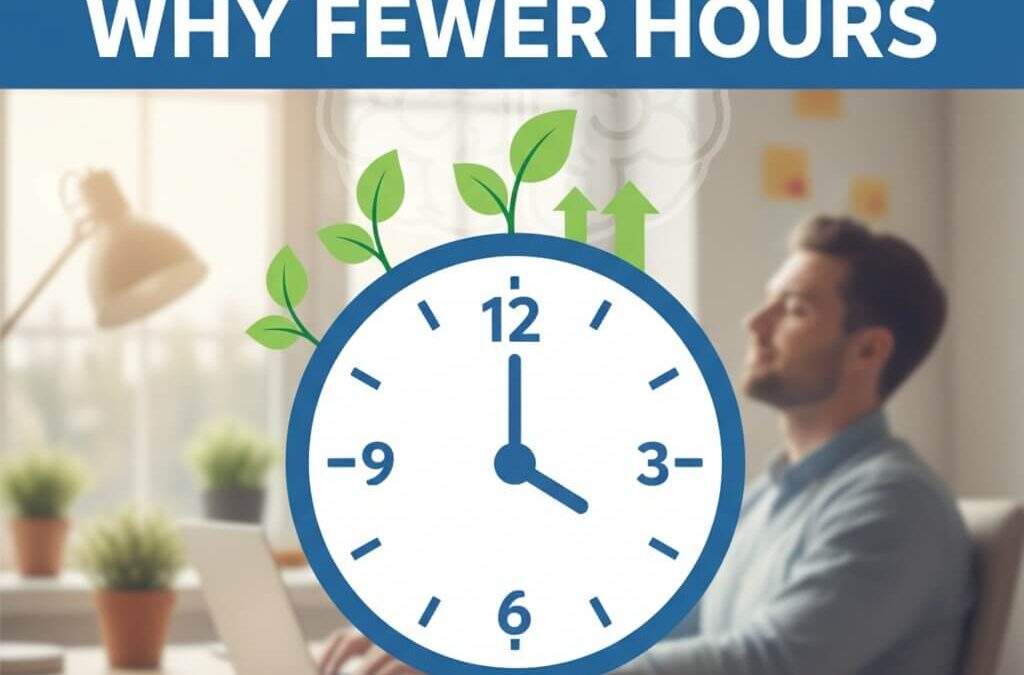
Then I stumbled upon a radical idea: what if I limited myself to just one hour per day on my side project? It seemed impossible. How could anyone build something meaningful in such a small window of time?
But that constraint became my greatest advantage. Here’s the story of how I built a sustainable business working just one hour daily – and the surprising lessons it taught me about productivity, focus, and what actually matters in business.
The Traditional Hustle Culture Isn’t Working
Let’s face it – we’ve been fed a dangerous myth about entrepreneurship. The idea that success requires sacrificing everything: your health, relationships, and any semblance of balance. This “hustle porn” has become so normalized that we barely question it anymore.
I fell into this trap too. For years, I believed that more hours equaled more progress. I’d work until exhaustion, telling myself this was the price of success. But the results rarely matched the effort I was putting in.
The reality? Working longer hours often leads to:
- Diminishing returns on productivity
- Burnout and mental health struggles
- Strained personal relationships
- Decision fatigue and poor strategic choices
Something had to change. Not just for my sanity, but because this approach simply wasn’t delivering the results I wanted.
The One-Hour Experiment
The idea came from necessity. With a demanding day job and family commitments, I simply couldn’t dedicate 20+ hours a week to a side business anymore. Instead of abandoning my entrepreneurial dreams, I decided to experiment: What if I committed to just one focused hour per day?
The rules were simple:
- Work on the business for exactly one hour each day
- No exceptions, no banking hours for later
- Focus only on high-leverage activities
- Accept that progress would be slower than traditional approaches
What started as a compromise quickly revealed itself as something more powerful – a sustainability hack that forced me to rethink everything I thought I knew about building a business.
The Surprising Benefits of Extreme Constraints
The one-hour limit wasn’t just a schedule change – it completely transformed my approach to business. When you only have 60 minutes, you become ruthlessly selective about how you spend that time.
Clarity Through Constraint
With unlimited time, it’s easy to pursue multiple directions simultaneously. But with just one hour, I had to be crystal clear about what mattered most. This forced me to define exactly what kind of business I wanted to build and what success meant to me.
I settled on three core criteria for my business:
- It had to be genuinely helpful to others
- It needed to generate consistent income without consuming my life
- It should leverage my existing skills rather than requiring me to build entirely new ones
This clarity eliminated countless distractions and “shiny objects” that would have otherwise consumed my limited time.
The Death of Busywork
Perhaps the most profound shift was how it eliminated busywork from my routine. When faced with just 60 minutes, you quickly realize how many “essential” business tasks are actually low-value activities that feel productive but don’t move the needle.
I found myself asking a simple question before every task: “Is this worth spending a significant percentage of today’s business time on?” This mental framing instantly killed my tendency to:
- Endlessly tweak website designs
- Overthink product decisions
- Get lost in email or administrative tasks
- Consume business content without implementing anything
The one-hour constraint doesn’t just change how much you work – it transforms what you work on and why.
Focus On Systems, Not Hours
With such a tight time constraint, I couldn’t rely on brute-force effort anymore. Instead, I needed to build systems that would work for me even when I wasn’t actively working.
Creating Leverage Through Automation
I became obsessed with asking: “How can I set this up once and have it continue working for me?” This mindset led me to invest my limited time in:
- Setting up automated email sequences that nurtured prospects without my daily involvement
- Creating templates for common tasks that saved me from starting from scratch
- Building content that could be repurposed across multiple channels
- Developing simple processes that eliminated decision fatigue
The goal wasn’t to work as little as possible – it was to ensure that every minute of work created outsized results through leverage and systems thinking.
The Power of Small, Consistent Actions
The daily one-hour commitment taught me something profound: consistency trumps intensity. Rather than occasional marathon work sessions, I showed up every day for a focused hour.
This approach created remarkable momentum. Even on days when I didn’t feel motivated, the time commitment was small enough that I could push through. And those small daily actions accumulated in ways I never expected.
After six months, I had:
- Built a small but growing email list of engaged subscribers
- Developed and launched a digital product that generated its first sales
- Established systems that would continue working even on days when I couldn’t
- Created a sustainable routine that didn’t leave me exhausted
The Unexpected Business Advantages
Beyond personal sustainability, this approach created distinct business advantages I hadn’t anticipated.
Better Decision Making
With limited time, I couldn’t afford to chase every opportunity. This forced me to develop clear criteria for evaluating options quickly. When a potential partnership or new feature idea emerged, I’d ask:
- Does this directly serve my ideal customer?
- Can this be implemented within my time constraints?
- Will this create ongoing value without requiring constant maintenance?
This framework prevented the “feature creep” and scattered focus that kills many businesses before they gain traction.
Finding My Unique Advantage
The time constraint also revealed an unexpected truth: my limitations became my competitive advantage. In a world where entrepreneurs are trying to do everything, I had to specialize and find my unique angle.
I couldn’t compete with full-time founders on volume or speed, so I focused instead on depth and quality in a narrow niche. This positioning actually helped me stand out in a crowded market.
Sustainable Customer Relationships
Perhaps most importantly, the pace at which I built the business created sustainable customer relationships. I wasn’t acquiring customers faster than I could serve them. Each new client or customer got my full attention, even within the one-hour constraint.
This led to higher satisfaction, better retention, and more referrals – creating a virtuous cycle that sustained growth without requiring more hours.
How to Apply the One-Hour Approach
If you’re intrigued by this approach, here’s how to adapt it to your own circumstances:
Start With Brutal Honesty
First, be honest about how much focused time you can realistically commit each day. It might not be exactly one hour – perhaps it’s 30 minutes or 90 minutes. The specific amount matters less than your ability to consistently show up.
What’s critical is that you choose a time limit that’s:
- Small enough to fit into your current life without major disruption
- Large enough to make meaningful progress when focused
- Sustainable over the long term, not just for a few weeks
Design Your Environment for Focus
With such limited time, you can’t afford to spend 20 minutes “getting into the zone.” I found it essential to create environmental triggers that immediately signal to my brain it’s time to work:
- A dedicated physical space used only for business work
- A simple pre-work ritual (in my case, brewing a specific tea)
- All notifications turned off and potential distractions eliminated
- A clear task already defined before the timer starts
Track Your Results, Not Your Time
The one-hour approach works best when you focus on outcomes rather than input. At the end of each week, I assess what I’ve actually accomplished rather than just congratulating myself for putting in the time.
This results-oriented mindset prevents the self-deception that often happens with traditional approaches (“I worked 50 hours this week so I must be making progress!”).
Is This Approach Right For You?
Let me be clear: the one-hour approach isn’t for every business or every entrepreneur. It works best when:
- You’re building a side business while maintaining other commitments
- Your business model doesn’t require real-time customer service
- You’re willing to accept slower but more sustainable growth
- You have the discipline to focus intensely during your limited time
If you’re well-funded or working on a business with a limited market window, the traditional approach of going all-in might make more sense. There’s no one-size-fits-all solution to entrepreneurship.
The Bigger Lesson: Redefining Success
Beyond the practical benefits, this experiment taught me something more profound: we need to redefine what business success looks like.
True success isn’t just about revenue milestones or growth metrics. It’s about building something meaningful that enhances your life rather than consuming it. It’s about creating value for others while maintaining your own wellbeing.
The one-hour approach forced me to ask: What’s the point of building a “successful” business if it destroys everything else I value in life?
A truly successful business isn’t just profitable – it’s sustainable for both the entrepreneur and their customers over the long term.
One year into this experiment, my business hasn’t made me a millionaire. It hasn’t disrupted an industry or attracted venture capital. But it generates consistent income, serves people I care about, and fits harmoniously into my life rather than dominating it.
And perhaps most importantly, I’ve fallen back in love with entrepreneurship – not as a punishing grind, but as a sustainable creative pursuit that adds to my life rather than subtracting from it.
What could you build with just one focused hour a day? The answer might surprise you.
This article analyzes trending workplace discussions. Share your thoughts with our community.



0 Comments