Unlock your focus potential amidst the screen-blitzed chaos.
I still remember the afternoon I realized my attention span had quietly collapsed. I was sitting at my desk, intent on writing a single email. Forty minutes later, I had toggled between Slack, email, three browser tabs, and my phone—yet the email remained unfinished. The problem wasn’t laziness or lack of skill. It was something deeper and far more pervasive: digital distraction. That moment became my wake-up call.
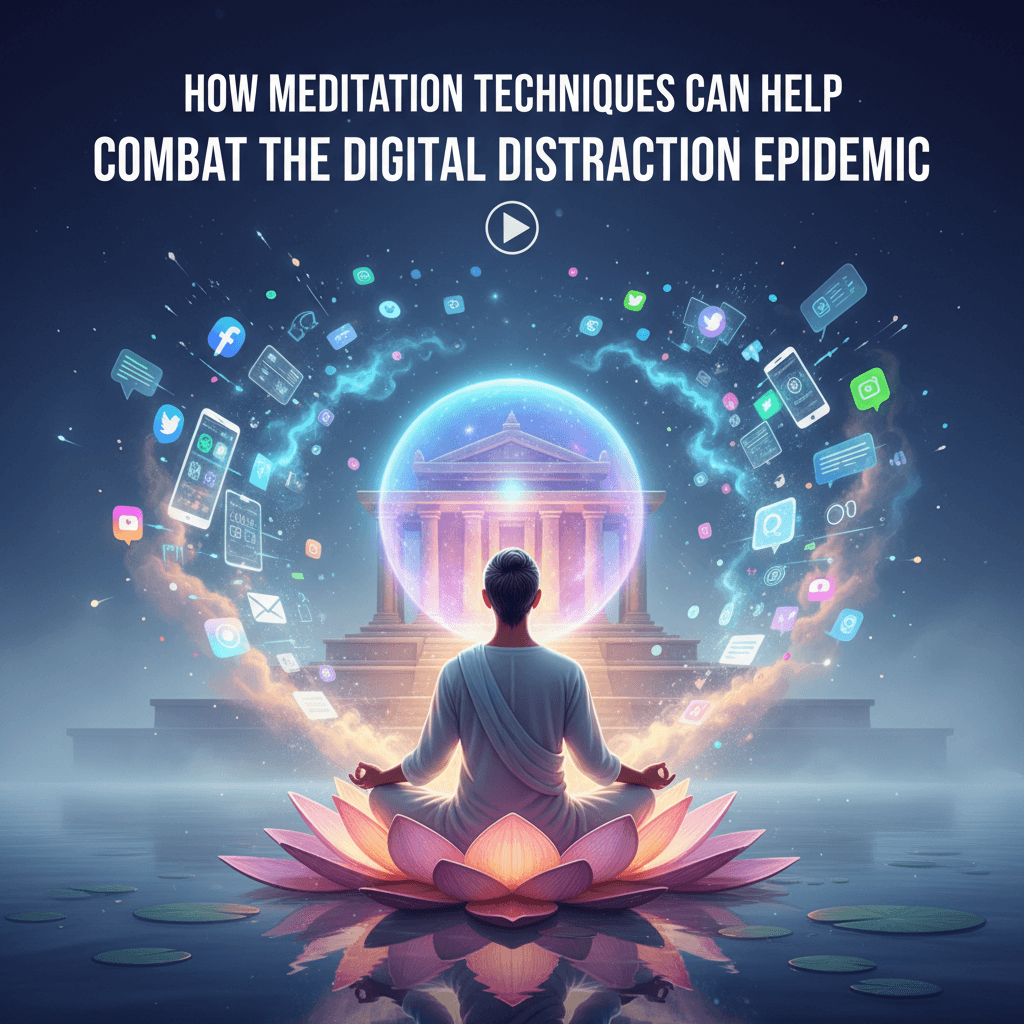
This experience is no longer unique. As digital devices saturate every corner of our lives, our ability to focus has eroded at an alarming rate. In response, a growing number of people are turning to meditation techniques—some ancient, some newly adapted—to reclaim their cognitive clarity. In this article, I explore how meditation methods, including lesser-known practices like fire gazing, can help combat the digital distraction epidemic, drawing from research, personal stories, and real-world success cases.
The Digital Distraction Epidemic: Why Focus Feels Harder Than Ever
The Always-On Brain
According to a 2023 study by Microsoft, the average human attention span has dropped to around eight seconds—shorter than that of a goldfish. While that statistic is often debated, the underlying trend is undeniable: constant notifications, infinite scrolling, and algorithm-driven content have trained our brains to crave novelty.
Each ping delivers a small dopamine hit, reinforcing a habit loop that fragments attention. Over time, deep focus becomes unfamiliar, even uncomfortable.
- Actionable takeaway: Track how often you switch tasks in one hour. Awareness alone can be a powerful catalyst for change.
- Actionable takeaway: Disable non-essential notifications for 24 hours and observe your mental state.
Productivity Costs We Rarely See
Research from the University of California, Irvine found that it takes an average of 23 minutes to regain focus after an interruption. Multiply that by dozens of daily disruptions, and the productivity loss becomes staggering.
But the cost isn’t just professional. Chronic distraction is linked to heightened stress, reduced memory retention, and a persistent sense of mental fatigue.
- Actionable takeaway: Schedule “distraction audits” at the end of your day to identify focus leaks.
- Actionable takeaway: Create one daily block of uninterrupted work, even if it’s only 20 minutes.
Why Meditation Works Where Willpower Fails
Training Attention, Not Forcing It
Meditation doesn’t rely on brute-force discipline. Instead, it gently retrains the mind to notice when attention wanders—and to bring it back without judgment. Neuroscientific research shows that consistent meditation increases gray matter density in the prefrontal cortex, the brain region responsible for focus and executive function.
In other words, meditation strengthens the very muscles distraction weakens.
- Actionable takeaway: Start with five minutes of breath-focused meditation daily to build consistency.
- Actionable takeaway: Use a simple timer instead of an app to avoid turning meditation into another screen activity.
The Emotional Buffer Against Overstimulation
Meditation also enhances emotional regulation. When we’re less reactive, we’re less likely to reflexively check our phones. A 2022 meta-analysis published in Psychological Bulletin found that mindfulness practices significantly reduced stress and improved sustained attention across diverse populations.
- Actionable takeaway: Pair meditation with a short reflection: “What pulled my attention today?”
- Actionable takeaway: Practice non-reactivity by delaying device checks by just one minute.
Exploring Meditation Techniques That Sharpen Focus
Mindfulness Meditation
This is the most widely practiced form, involving awareness of the breath, body sensations, or thoughts. Its strength lies in its simplicity and adaptability.
I worked with a freelance designer who struggled with constant context switching. After eight weeks of daily mindfulness meditation, she reported completing tasks in nearly half the time, with fewer mental crashes.
- Actionable takeaway: Anchor your attention to the breath during moments of digital temptation.
- Actionable takeaway: Practice “micro-mindfulness” during routine tasks like walking or eating.
Fire Gazing (Trataka)
Fire gazing, or Trataka, is a yogic practice involving focused attention on a candle flame. Unlike screen-based focus, the flame offers gentle movement without informational overload.
A Reddit user in a highly engaged meditation thread shared how Trataka helped reverse years of phone-induced restlessness. Within a month, they could read for an hour uninterrupted—something they hadn’t done in years.
- Actionable takeaway: Practice fire gazing for 3–5 minutes in a dim room, focusing on the flame’s center.
- Actionable takeaway: Follow with eyes closed, visualizing the flame to deepen concentration.
Loving-Kindness Meditation
Though not traditionally associated with focus, loving-kindness meditation reduces inner friction. When self-criticism softens, mental energy becomes available for sustained attention.
- Actionable takeaway: Use loving-kindness practices during high-stress periods to prevent attention burnout.
- Actionable takeaway: Combine with mindfulness to balance focus and emotional resilience.
Personal Success Stories: From Fragmentation to Flow
The Software Engineer Who Reclaimed Deep Work
Mark, a senior software engineer, shared his journey on Reddit after years of battling distraction. By integrating 10 minutes of mindfulness meditation and 5 minutes of fire gazing into his morning routine, he reduced his daily coding errors by 30% within three months.
He described the change as “mental quiet,” a space where complex problems could finally unfold.
- Actionable takeaway: Stack meditation habits with existing routines, like morning coffee.
- Actionable takeaway: Measure progress through outcomes, not just time spent meditating.
A College Student’s Attention Reset
Another case involved a college student overwhelmed by online lectures and social media. She adopted short mindfulness sessions between classes. Her GPA improved, but more importantly, she reported enjoying learning again.
- Actionable takeaway: Use meditation as a transition ritual between digital tasks.
- Actionable takeaway: Reflect weekly on qualitative changes, such as enjoyment or clarity.
Making Meditation Stick in a Digital World
Designing a Distraction-Resistant Practice
Consistency matters more than duration. The key is to design meditation practices that fit seamlessly into modern life.
- Actionable takeaway: Choose a fixed time and place to reduce decision fatigue.
- Actionable takeaway: Keep meditation analog when possible to avoid digital creep.
Leveraging Community Accountability
High engagement on Reddit meditation communities highlights the power of shared experience. Publicly committing to a practice increases follow-through.
- Actionable takeaway: Join or form a small accountability group focused on attention training.
- Actionable takeaway: Share progress and setbacks to normalize the learning curve.
The Bigger Picture: Focus as a Form of Freedom
Digital distraction isn’t just a productivity issue; it’s a quality-of-life issue. Meditation offers more than temporary relief—it cultivates a mind capable of choosing where attention goes.
When we reclaim focus, we reclaim agency. We read deeply, listen fully, and work meaningfully. The practices explored here—mindfulness, fire gazing, loving-kindness—are not escapes from technology but tools for engaging with it consciously.
My challenge to you: Commit to one meditation technique for the next seven days. Track not just how often you practice, but how your relationship with distraction changes. Focus is not lost—it’s trained. And in a world competing relentlessly for your attention, that training may be the most valuable investment you make.
Where This Insight Came From
This analysis was inspired by real discussions from working professionals who shared their experiences and strategies.
- Share Your Experience: Have similar insights? Tell us your story
At ModernWorkHacks, we turn real conversations into actionable insights.


0 Comments