Last week, I found myself staring at a job posting that listed “Prompt Engineering Wizard” as the title. My first reaction was to chuckle—was this a Harry Potter-themed tech startup? But as I read the description, I realized this role involved sophisticated AI system design that simply didn’t exist three years ago. The whimsical title wasn’t just clever marketing; it represented an entirely new professional category born from our rapidly evolving relationship with artificial intelligence.
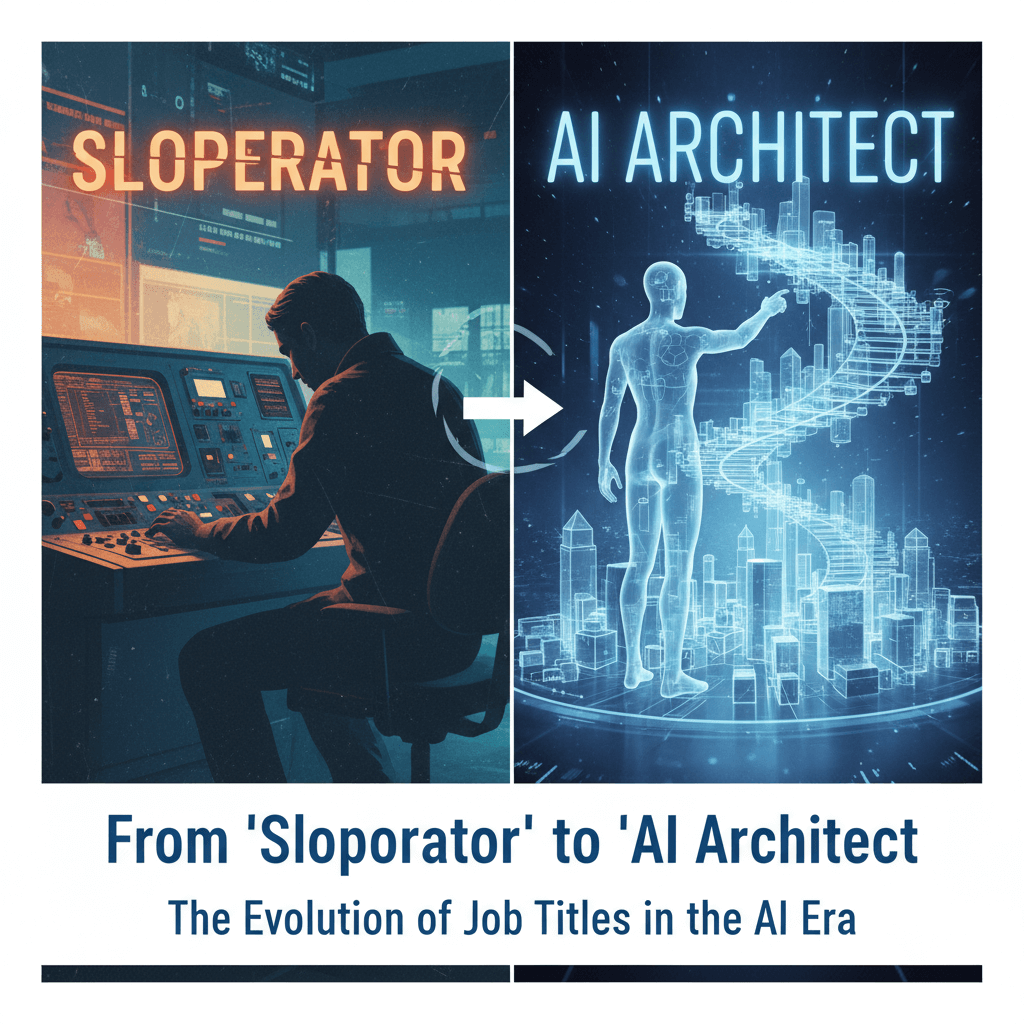
Across industries, we’re witnessing an explosion of novel, sometimes eyebrow-raising job titles. From “Sloperator” (a slope operations specialist who manages AI learning curves) to “Digital Empathy Designer,” these designations aren’t just linguistic oddities—they’re signposts pointing toward the future of work. As AI reshapes our professional landscape, the very language we use to describe our roles is transforming alongside it.
The Great Job Title Renaissance
Remember when “Social Media Manager” sounded cutting-edge? Today’s emerging AI-focused job titles make that seem as traditional as “Accountant.” A recent LinkedIn analysis revealed a 395% increase in AI-related job postings since 2016, with over 60% featuring titles that didn’t exist five years ago.
Why Titles Are Changing So Dramatically
This nomenclature revolution stems from three key factors:
- Technological necessity: New capabilities require new specializations. When a company needs someone to fine-tune large language models, “Software Developer” no longer sufficiently describes the expertise required.
- Market differentiation: Organizations use creative titles to stand out in competitive talent markets. A “Machine Learning Evangelist” might attract different candidates than a traditional “Data Scientist.”
- Cultural signaling: Forward-thinking titles telegraph a company’s innovative mindset to clients, partners, and potential employees.
Consider Anthropic, the AI safety company, which recently advertised for a “Constitutional AI Researcher”—a role focused on aligning AI systems with human values and ethical principles. This title efficiently communicates both technical requirements and philosophical underpinnings that would be impossible to capture in conventional job terminology.
From Buzzword to Boardroom
What begins as industry jargon often evolves into standardized professional language. Deloitte’s 2023 Human Capital Trends report found that 72% of executives believe AI-specialized roles will become mainstream within their organizations by 2025. The progression typically follows this pattern:
- Emergence: Novel titles appear at tech-forward companies and startups
- Validation: Industry conferences and professional associations begin recognizing the specialization
- Standardization: Educational programs develop around the discipline
- Mainstream adoption: Traditional companies incorporate the role
The Taxonomy of AI Job Titles
Today’s AI job landscape resembles a rapidly evolving ecosystem. Let’s examine the major categories emerging:
The Technical Specialists
These roles focus on building and optimizing AI systems:
- Prompt Engineer: Designs inputs that elicit optimal outputs from large language models
- Machine Learning Operations (MLOps) Engineer: Manages the infrastructure for deploying AI models at scale
- Neural Network Architect: Designs the structure of complex AI systems
At Google DeepMind, “Reinforcement Learning Specialists” work on systems that learn through trial and error—a title that would have been incomprehensible to most HR departments a decade ago but now commands salaries averaging $175,000 according to Glassdoor data.
The Human-AI Interface Roles
These positions bridge technical capabilities with human needs:
- AI Ethics Officer: Ensures AI systems align with organizational and societal values
- Augmented Intelligence Strategist: Focuses on how humans and AI can work together effectively
- Human-in-the-Loop Designer: Creates systems where human judgment complements AI capabilities
Microsoft recently created a team of “AI Behavior Analysts” who study how users interact with their AI tools and identify potential misuse patterns. This interdisciplinary role combines psychology, data science, and ethics in ways traditional job categories couldn’t accommodate.
The Business Transformation Specialists
These professionals help organizations adapt to AI capabilities:
- AI Implementation Consultant: Guides businesses through AI adoption
- Workflow Automation Architect: Redesigns business processes around AI capabilities
- Digital Transformation Officer: Leads organizational change for AI integration
When Job Titles Become Punchlines
Not all new titles are received with equal seriousness. The Reddit thread that sparked this article featured genuine amusement at titles like “Sloperator” and “AI Whisperer.” This skepticism isn’t entirely unwarranted.
The Fine Line Between Innovation and Absurdity
According to a 2023 survey by Gartner, 65% of professionals believe some AI job titles are primarily marketing gimmicks rather than accurate role descriptors. The most effective titles balance novelty with clarity—they communicate specialized skills without resorting to unnecessary jargon or hyperbole.
For job seekers, navigating this landscape requires discernment:
- Research the company culture to understand if creative titles reflect genuine innovation or empty posturing
- Look beyond the title to the actual responsibilities and required skills
- Consider how a non-traditional title might transfer to future roles at different organizations
When Spotify advertised for a “Prompt Engineering Specialist” in 2022, many industry observers scoffed. Today, prompt engineering is recognized as a legitimate discipline with dedicated academic research. Sometimes today’s punchline becomes tomorrow’s profession.
The Skills Behind the Titles
Regardless of what we call these roles, they represent real shifts in valuable professional capabilities.
Technical Fluency vs. Technical Mastery
The World Economic Forum’s Future of Jobs Report 2023 indicates that AI fluency—the ability to effectively utilize AI tools—will be required for 85% of jobs by 2030, while AI mastery—the ability to create and customize AI systems—will remain specialized but highly valued.
This bifurcation creates three tiers of AI-related professionals:
- AI-augmented traditional roles: Accountants who use AI to analyze financial data, marketers who leverage generative AI for content creation
- AI specialists: Dedicated professionals who focus on implementing and optimizing AI systems
- AI architects: High-level experts who design novel AI approaches and systems
Each category requires different skills and training paths. Harvard Business Review reports that 78% of executives are prioritizing AI literacy training for existing staff while simultaneously recruiting for specialized AI roles—suggesting these categories will continue to evolve in parallel.
The Human Skills That Matter More Than Ever
Paradoxically, as AI capabilities expand, certain distinctly human skills become more valuable:
- Critical thinking: The ability to evaluate AI outputs and identify limitations
- Ethical reasoning: Making value judgments about appropriate AI applications
- Creative problem-solving: Identifying novel use cases for AI capabilities
IBM’s Institute for Business Value found that companies prioritizing these “human” skills alongside technical AI knowledge reported 37% higher revenue growth than those focusing solely on technical capabilities.
Preparing for Your AI-Enhanced Career
Whether you’re a student planning your first career or a professional navigating mid-career transitions, adapting to the AI-transformed job market requires strategic thinking.
Education and Credential Considerations
Traditional degree programs are racing to catch up with industry needs. In the meantime:
- Look for specialized certificates from recognized technology companies and platforms
- Build a portfolio of AI-related projects that demonstrate practical capabilities
- Join professional communities where emerging best practices are shared
Carnegie Mellon University recently launched an “AI Engineering” degree program—a title that didn’t exist five years ago but now represents a distinct educational pathway with specific learning outcomes.
Identifying Your AI Career Path
Rather than chasing trendy job titles, focus on identifying where your skills and interests intersect with emerging needs:
- If you’re analytically minded with programming skills, technical AI roles might be appropriate
- If you excel at communication and problem-solving, consider human-AI interface positions
- If you understand organizational dynamics, business transformation roles could be ideal
The most successful professionals in the AI era will likely be those who combine domain expertise with AI literacy—healthcare professionals who understand medical AI applications, legal experts who can navigate AI implications in contracts, educators who can effectively integrate AI into learning environments.
Beyond the Buzzwords: The Future of Work
As we laugh at “Sloperator” and wonder about “Prompt Engineering Wizards,” we’re actually participating in a profound conversation about how work itself is changing. These evolving job titles reflect genuine shifts in how value is created and how human talent is deployed.
The World Economic Forum predicts that by 2025, the division of labor between humans and machines will displace 85 million jobs while creating 97 million new ones. Many of these new roles will require titles we haven’t yet imagined.
What matters isn’t whether we call ourselves “AI Architects” or “Digital Transformation Specialists” or even “Sloperators.” What matters is developing the adaptability, curiosity, and learning mindset to thrive as these categories continue to evolve. The future belongs not to those who can predict exactly what jobs will exist, but to those who can continuously reinvent themselves as the landscape shifts.
So the next time you encounter a job title that makes you raise an eyebrow, remember: you might be glimpsing the future of work. And someday soon, your own business card might feature a title that doesn’t yet exist.
Where This Insight Came From
This analysis was inspired by real discussions from working professionals who shared their experiences and strategies.
- Share Your Experience: Have similar insights? Tell us your story
At ModernWorkHacks, we turn real conversations into actionable insights.





0 Comments