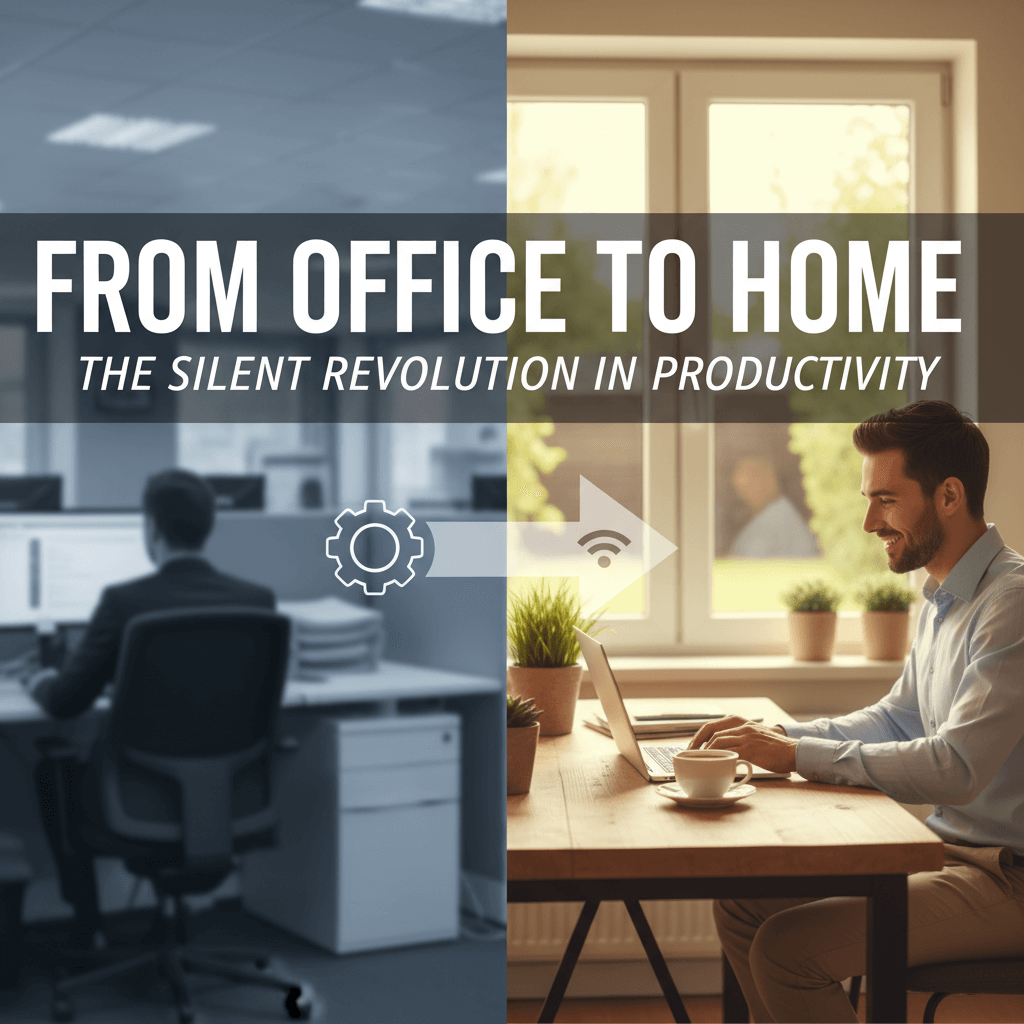
At 7:42 a.m., I used to be wedged into a subway car, laptop bag digging into my shoulder, mentally rehearsing meetings I hadn’t yet had time to prepare for. One morning during the pandemic, that routine vanished. Instead, I made coffee, opened my laptop at the kitchen table, and by 8:00 a.m. I was deep into focused work. No commute. No small talk. No fluorescent lights. What surprised me most wasn’t the comfort—it was the output. By noon, I had completed more meaningful work than I often managed in an entire office day.
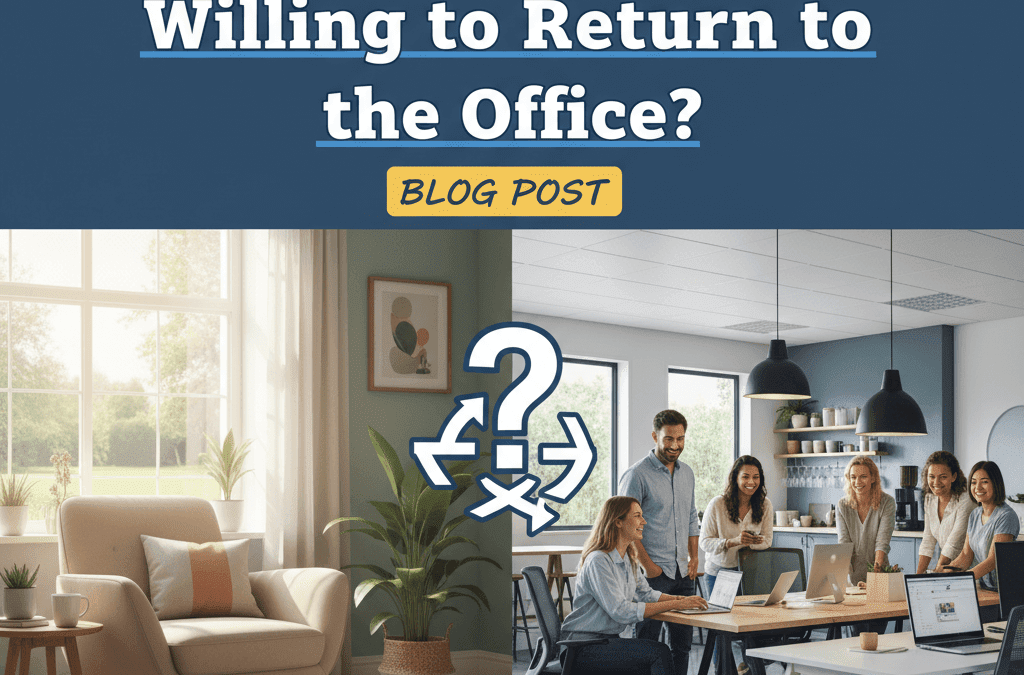
That experience isn’t unique. It’s part of a broader, quieter transformation reshaping how work gets done. Remote work isn’t just a trend; it’s a productivity revolution. And yet, despite mounting evidence, many organizations are pushing people back into offices. This article explores how remote work has redefined productivity, why it challenges long-held beliefs about control and performance, and what the ongoing tug-of-war over Return-to-Office (RTO) policies reveals about the future of work.
The Office Productivity Myth: How We Got Here
For over a century, productivity was synonymous with presence. If you could see employees at their desks, you assumed work was happening. This belief shaped everything from office design to management hierarchies.
Presence vs. Performance
In traditional offices, visibility often mattered more than outcomes. Long hours, full calendars, and constant availability became proxies for productivity. Research from the Harvard Business Review has long shown that “busyness” is frequently mistaken for effectiveness, yet the cultural bias persists.
The pandemic disrupted this assumption overnight. Managers lost visual oversight, and workers gained autonomy. What many expected to be a productivity collapse became, instead, an unexpected experiment.
- Actionable takeaway: Audit how your organization measures productivity. Are you tracking hours or outcomes?
- Actionable takeaway: Replace “time spent” metrics with clear deliverables and deadlines.
The Commute Tax
Before remote work, the average U.S. worker spent nearly an hour a day commuting, according to the Census Bureau. That’s five hours a week of lost energy and focus. When offices closed, that time didn’t disappear—it was redistributed.
Many workers reinvested those hours into deep work, exercise, or rest, all of which are linked to cognitive performance. The result? A workforce that, paradoxically, had more to give.
- Actionable takeaway: If you manage a team, consider commute time as part of total workload.
- Actionable takeaway: Encourage employees to use reclaimed time intentionally, not just to work more.
The Data Behind the Productivity Revolution
Personal stories are compelling, but data is harder to ignore. Over the past five years, researchers have been racing to understand what remote work actually does to productivity.
What the Research Says
A 2022 study by Stanford economist Nicholas Bloom found that remote workers were, on average, 13% more productive than their in-office counterparts. Later studies refined this number, suggesting that productivity gains depend heavily on role design and management quality.
Microsoft’s Work Trend Index revealed another insight: while total hours worked increased during remote periods, focused work blocks also grew. Fewer interruptions led to deeper concentration.
- Actionable takeaway: Design roles with uninterrupted focus time baked in.
- Actionable takeaway: Use asynchronous tools to reduce meeting overload.
Quality Over Quantity
One under-discussed benefit of remote work is quality. Developers report writing cleaner code. Writers produce more polished drafts. Analysts spend more time thinking and less time reacting.
In a Reddit thread with tens of thousands of upvotes, one software engineer described delivering features in half the time once office distractions were removed. These stories echo across industries.
- Actionable takeaway: Track error rates and rework, not just output volume.
- Actionable takeaway: Ask employees where interruptions most affect their work.
Control, Trust, and the Real Reason Behind RTO Policies
If productivity is holding steady—or even improving—why the push to return to offices? The answer often has less to do with performance and more to do with control.
Management Anxiety in a Distributed World
Many leaders were promoted in environments where supervision was physical. Remote work requires a different skill set: trust, clarity, and communication. For some, that shift is deeply uncomfortable.
Studies from Gallup show that managers who struggle with remote leadership are more likely to advocate for RTO, regardless of team performance.
- Actionable takeaway: Invest in training managers for remote leadership skills.
- Actionable takeaway: Separate leadership discomfort from employee performance data.
The Economics of Empty Offices
There’s also a financial reality. Companies with long-term leases or owned real estate face pressure to justify those costs. Empty offices feel like failure, even if productivity remains high.
Some executives have openly admitted that RTO mandates help protect commercial real estate values. This creates tension between organizational economics and individual efficiency.
- Actionable takeaway: Evaluate real estate decisions independently from productivity policy.
- Actionable takeaway: Consider downsizing or flexible space models.
Reddit, Resistance, and the New Worker Narrative
Few places capture employee sentiment as vividly as Reddit. Threads discussing RTO policies regularly hit the front page, revealing a powerful collective voice.
What Workers Are Really Saying
Across subreddits like r/antiwork and r/remotework, themes repeat: increased focus at home, better mental health, and frustration with policies that ignore data.
One viral post described a team meeting productivity goals for two years remotely, only to be ordered back “for collaboration.” Within months, turnover spiked.
- Actionable takeaway: Monitor anonymous feedback channels to understand real sentiment.
- Actionable takeaway: Treat engagement data as seriously as financial metrics.
The Cost of Ignoring the Conversation
High performers have options. LinkedIn data shows that job listings offering remote or hybrid options receive significantly more applicants. Companies enforcing rigid RTO policies risk losing institutional knowledge.
- Actionable takeaway: Benchmark your flexibility policies against competitors.
- Actionable takeaway: Calculate the true cost of attrition versus flexibility.
Designing Productivity Beyond the Office
The most forward-thinking organizations aren’t debating office versus home. They’re redesigning work itself.
Hybrid as a Strategy, Not a Compromise
Successful hybrid models are intentional. They define which tasks benefit from co-location and which thrive remotely. Atlassian’s “Team Anywhere” model is a notable example, emphasizing outcomes over location.
- Actionable takeaway: Map tasks to environments where they perform best.
- Actionable takeaway: Make office days purposeful, not mandatory by default.
Tools, Rituals, and Boundaries
Remote productivity depends on more than Wi-Fi. Clear documentation, shared norms, and respect for boundaries are essential. Companies that excel remotely often over-communicate expectations and under-schedule meetings.
- Actionable takeaway: Document processes instead of relying on hallway conversations.
- Actionable takeaway: Normalize offline time to prevent burnout.
The Human Side of the Revolution
Productivity isn’t just about output; it’s about sustainability. Remote work has changed how people experience their lives.
Energy, Autonomy, and Identity
When people control their environments, they often manage energy better. Parents attend school events. Caregivers stay in the workforce. Introverts thrive.
These changes don’t just improve morale—they expand the talent pool.
- Actionable takeaway: Recognize flexibility as a diversity and inclusion lever.
- Actionable takeaway: Measure well-being alongside performance.
Where We Go From Here
The silent revolution in productivity isn’t about abandoning offices. It’s about abandoning outdated assumptions. We now know that productivity is less about where we work and more about how work is designed, measured, and led.
The challenge for leaders is clear: will you cling to visibility, or will you embrace trust? Will you optimize for buildings, or for people?
My challenge to you—whether you’re a manager, founder, or individual contributor—is to question inherited norms. Run your own experiments. Share your data. And most importantly, listen to the lived experiences of the people doing the work.
The future of productivity is already here. The only question is who’s willing to see it.
Where This Insight Came From
This analysis was inspired by real discussions from working professionals who shared their experiences and strategies.
- Share Your Experience: Have similar insights? Tell us your story
At ModernWorkHacks, we turn real conversations into actionable insights.



0 Comments