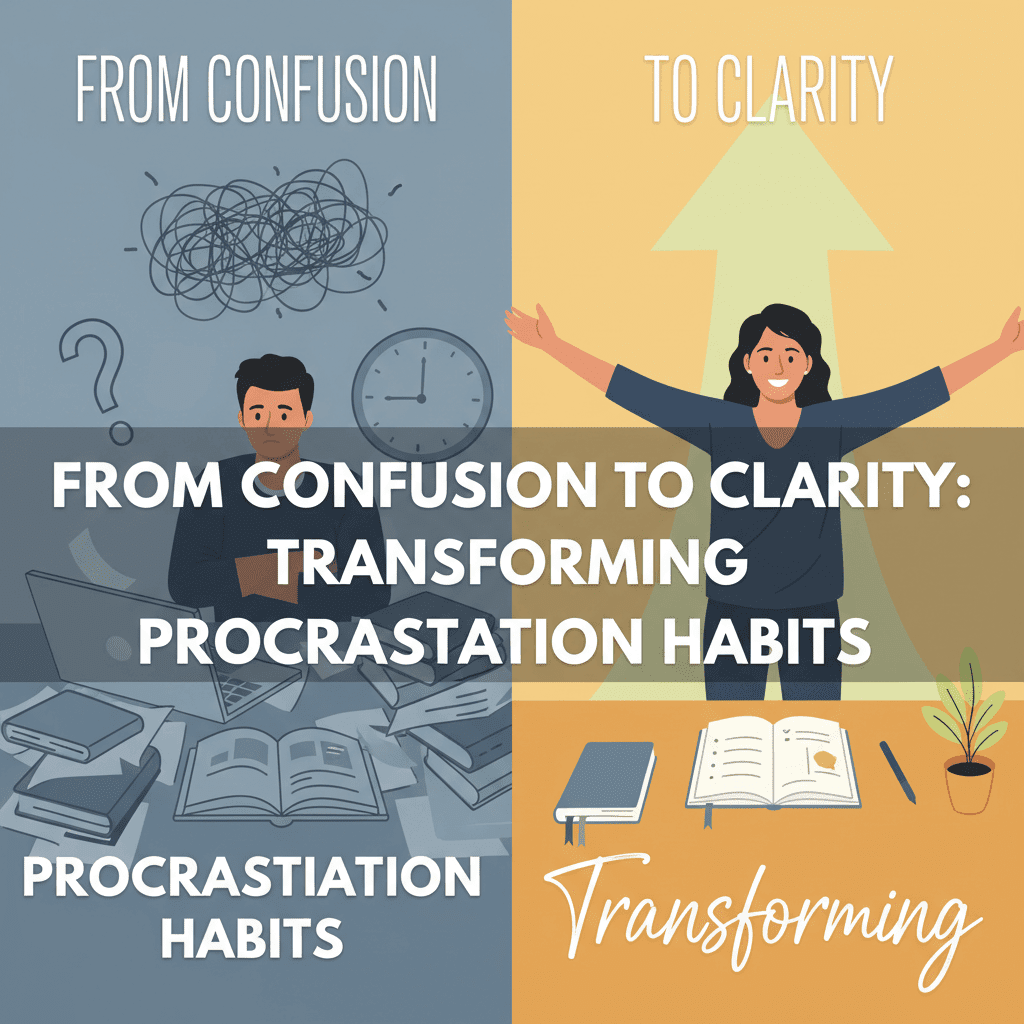
I stared at my computer screen, the blinking cursor mocking me as the deadline loomed just hours away. The project wasn’t particularly difficult, but something kept me from starting. I’d organized my desk, answered emails, even cleaned my apartment—anything to avoid the task at hand. It wasn’t until years later that I realized what was happening: I wasn’t lazy; I was confused. And that confusion was masquerading as procrastination.
This revelation changed everything for me. What if procrastination isn’t about poor time management or lack of discipline, but rather a signal that we’re facing uncertainty? What if embracing confusion—rather than avoiding it—could be the key to unlocking productivity?
Research increasingly suggests that procrastination is an emotional regulation problem, not a time management issue. We delay tasks that make us feel uncomfortable, and few things create more discomfort than confusion. By understanding this connection and developing strategies to work through confusion rather than avoid it, we can transform our relationship with procrastination and achieve greater clarity in our work and lives.
The Confusion-Procrastination Connection
Dr. Timothy Pychyl, a psychology professor at Carleton University who has studied procrastination for over 20 years, explains that “procrastination is an emotion regulation problem, not a time management problem.” When faced with tasks that evoke negative emotions—including confusion—we instinctively avoid them to feel better in the short term.
James, a software developer I interviewed, described his experience: “I would put off starting complex coding projects, telling myself I needed to ‘think about them more.’ But really, I was avoiding the discomfort of not knowing exactly how to approach the problem. Once I recognized this pattern, I could address the real issue—my discomfort with uncertainty.”
Recognizing Confusion-Based Procrastination
How do you know if confusion is driving your procrastination? Look for these signs:
- Task avoidance despite adequate time – You have the time but still find reasons not to begin
- Excessive planning – You spend more time organizing how you’ll do something than actually doing it
- Seeking more information indefinitely – You’re caught in a loop of “research” without moving forward
A 2020 study in the Journal of Personality and Social Psychology found that tasks with ambiguous instructions or unclear outcomes triggered procrastination in 78% of participants, compared to just 42% for tasks with clear parameters—even when both required equal effort.
The Paradox of Perfectionism
Perfectionism often masquerades as high standards, but it frequently stems from confusion about what “good enough” looks like. Sarah, a graphic designer, shared: “I would spend hours tweaking minor details because I wasn’t sure when the project was actually complete. Setting clear criteria for completion beforehand completely changed my workflow and eliminated my tendency to procrastinate in the final stages.”
To break this cycle:
- Define “done” before you begin
- Create rubrics or checklists for quality standards
- Set time limits for revision phases
Embracing Confusion as a Productive State
What if confusion isn’t an obstacle to productivity but a necessary part of the creative process? Renowned psychologist Mihaly Csikszentmihalyi, known for his work on “flow states,” suggests that cognitive tension—the discomfort of not knowing—is essential for breakthrough thinking.
I experienced this firsthand when writing my first book. The days when I felt most confused and uncertain often preceded my most productive writing sessions. By learning to sit with that discomfort rather than escaping it, I discovered that confusion was actually my mind reorganizing information and preparing for insight.
The Clarity Paradox
Research from Stanford’s Design School highlights what they call “the clarity paradox”—the phenomenon where embracing confusion actually leads to greater clarity faster than attempting to eliminate confusion before beginning.
Try these approaches to work with confusion rather than against it:
- Time-boxing confusion: Allow yourself 10-15 minutes to simply experience confusion without trying to solve it
- Confusion journaling: Write down what specifically confuses you about a task
- Start anywhere: Begin with any aspect of the task, even if you’re uncertain about the overall approach
Dr. Ellen Langer, Harvard psychologist and author of “Mindfulness,” explains: “Uncertainty is the fertile ground of pure creativity and freedom. Once we realize this, we understand that uncertainty is really an illusion, that each moment is complete in and of itself.”
Breaking Down the Confusion Barrier
When confusion feels overwhelming, breaking it down into smaller components can transform paralysis into progress. This technique, often called “chunking,” has neurological benefits: it reduces cognitive load and activates the brain’s reward system with each small completion.
Consider the experience of Marcus, a PhD student who struggled with his dissertation: “I couldn’t start writing because the whole project seemed too complex. My advisor suggested I stop thinking about ‘writing a dissertation’ and instead focus on answering one specific question each day. That shift from a confusing whole to clear, manageable parts eliminated my procrastination almost immediately.”
The Minimum Viable Effort Approach
When confusion leads to procrastination, commit to what I call the “Minimum Viable Effort” (MVE):
- Identify the smallest possible step you could take
- Make it ridiculously easy—something you can complete in 5 minutes or less
- Focus only on beginning, not completing the entire task
A 2019 study in the Journal of Consumer Research found that participants who broke confusing tasks into smaller components experienced a 32% reduction in procrastination and reported significantly lower levels of task-related anxiety.
Creating Clarity Through Constraints
Counterintuitively, imposing limitations can reduce confusion and procrastination. When faced with too many options or approaches, we often freeze—a phenomenon psychologists call “choice overload.”
Try these constraint-based approaches:
- Time constraints: Use the Pomodoro Technique (25 minutes of focused work)
- Resource constraints: Limit yourself to using only certain tools or materials
- Scope constraints: Define exactly what the current iteration will and won’t include
Creative director Elena shared: “When client projects were vague, I’d procrastinate endlessly. Now I create artificial constraints—like limiting my color palette or choosing one conceptual direction to explore first. These self-imposed limitations actually free me from confusion and get me moving.”
The Social Dimension of Confusion
Confusion often intensifies when we keep it to ourselves. Research from the University of California found that verbally processing confusion with others reduces both its intensity and duration. Yet many of us hide our confusion, fearing it signals incompetence.
Tech entrepreneur Wei described how this affected his startup: “I delayed crucial decisions because I was confused about our market strategy, but didn’t want my team to know. When I finally admitted my uncertainty in a meeting, I discovered others shared the same questions. Together, we clarified our approach in hours, ending weeks of procrastination.”
Building a Confusion-Friendly Environment
Whether you lead a team or work independently, creating space for confusion can transform productivity:
- Normalize “I don’t know yet” as a productive statement
- Schedule “confusion sessions” where the goal is to articulate questions, not find immediate answers
- Reward clarity-seeking behaviors rather than just solutions
Professor Amy Edmondson of Harvard Business School calls this “psychological safety”—an environment where people feel safe to express uncertainty. Her research shows that teams with high psychological safety are not only more innovative but also complete projects faster by addressing confusion early rather than procrastinating due to unaddressed uncertainty.
From Confusion to Clarity: A Daily Practice
Transforming our relationship with confusion isn’t a one-time fix but a daily practice. Over time, I’ve developed a routine that has dramatically reduced my confusion-based procrastination:
The Clarity Routine
- Morning confusion mapping: I spend 5 minutes writing down what feels unclear about my most important task
- Confusion timeboxing: For complex projects, I allocate 20 minutes specifically for exploring confusion without attempting to resolve it
- End-of-day clarity reflection: I note what became clearer today and what confusion I’ll carry into tomorrow
Psychologist Dr. Russ Harris, proponent of Acceptance and Commitment Therapy, explains why this works: “The goal isn’t to eliminate confusion but to change your relationship with it. When we accept confusion as part of the process rather than an obstacle to it, we can move forward despite uncertainty.”
This approach has scientific backing: A longitudinal study from the University of Pennsylvania found that individuals who practiced “confusion tolerance” completed complex projects an average of 41% faster than those who tried to eliminate all uncertainty before beginning.
Conclusion: Confusion as a Compass
What if we viewed confusion not as something to avoid but as a compass pointing us toward growth? Every significant advancement in human knowledge began with confusion—someone noticing what didn’t make sense and leaning into that discomfort rather than away from it.
My journey from chronic procrastinator to productive creator wasn’t about eliminating confusion but embracing it. The tasks I once avoided because they confused me are now the ones I’m most drawn to, recognizing that initial uncertainty often signals an opportunity for meaningful work.
As writer and philosopher Alain de Botton observes, “Confusion is the welcome mat at the door of creativity.” By recognizing procrastination as a signal of confusion rather than a character flaw, we can transform our relationship with difficult tasks and access deeper levels of clarity and productivity.
I challenge you to experiment with one confusion-embracing technique from this article this week. Notice what happens when, instead of waiting for confusion to clear before you begin, you use confusion itself as your starting point. The clarity you seek may be waiting on the other side of the very confusion you’ve been avoiding.
Remember: Confusion isn’t the opposite of clarity—it’s the pathway to it.
Where This Insight Came From
This analysis was inspired by real discussions from working professionals who shared their experiences and strategies.
- Share Your Experience: Have similar insights? Tell us your story
At ModernWorkHacks, we turn real conversations into actionable insights.






0 Comments