
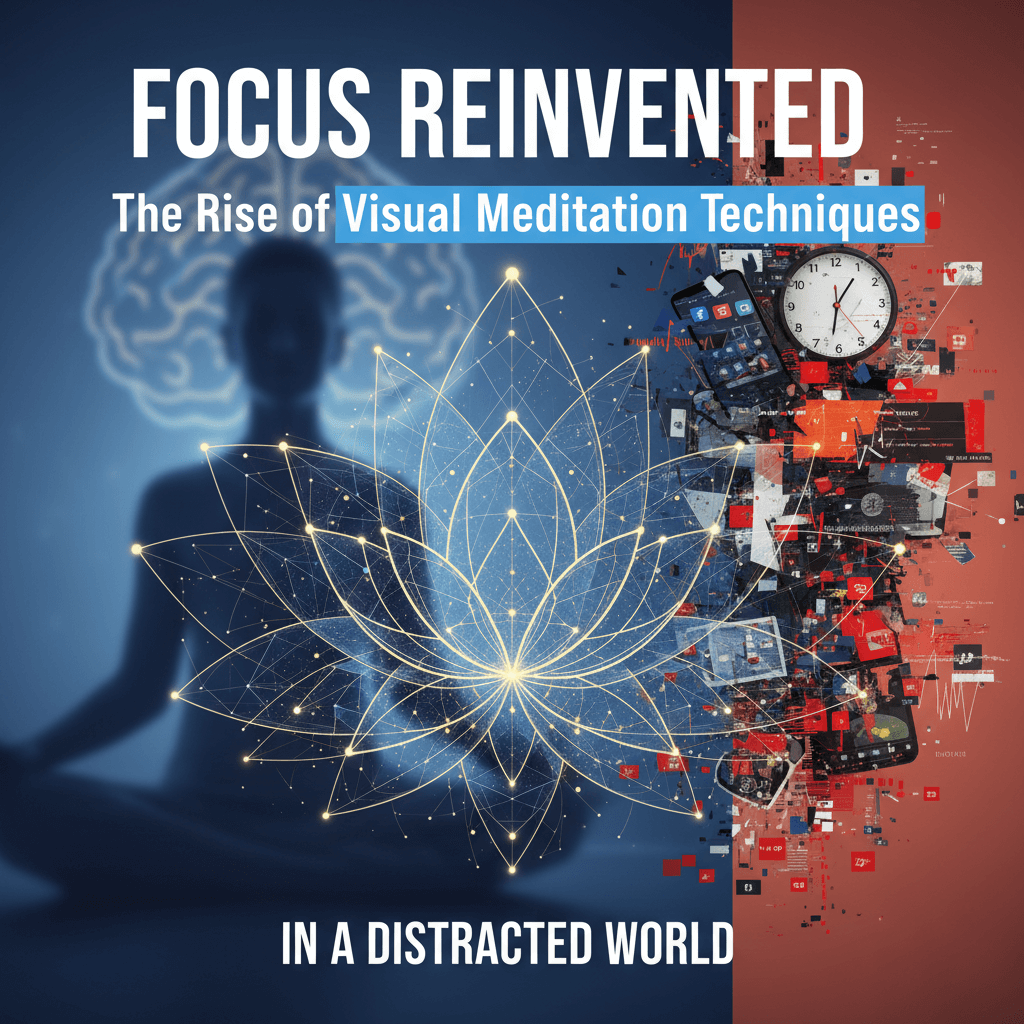
The first time I tried fire gazing meditation, it wasn’t in a serene retreat or candlelit studio. It was on a Tuesday night, laptop open, phone buzzing beside me, tabs multiplying faster than my attention could keep up. On a whim—prompted by a Reddit thread filled with oddly passionate testimonials—I lit a small candle, sat back, and stared into the flame for two minutes. No app. No timer. Just the flicker. When I looked away, something surprised me: the mental noise had softened. My breathing slowed. And for the next half hour, I worked without reaching for my phone.
That experience captures a growing movement. Visual meditation techniques—especially fire gazing—are emerging as powerful, modern tools for reclaiming focus in a tech-saturated world. As distractions intensify and attention becomes a scarce resource, many people are rediscovering ancient practices through a contemporary lens. This isn’t nostalgia; it’s adaptation. And as we step into a new year, the rise of visual meditation may signal a meaningful shift in how we train our minds to concentrate.
The Attention Crisis We’re All Living Through
Why Focus Feels Harder Than Ever
We don’t need another think piece telling us we’re distracted. We feel it in our bodies: the twitch to check notifications, the inability to read long-form content without skimming, the constant sense of mental fragmentation. Research from Microsoft suggests the average human attention span dropped from 12 seconds in 2000 to about 8 seconds today. While the exact number is debated, the lived experience is not.
Our brains evolved to notice change. In a digital environment optimized for novelty—alerts, feeds, autoplay—our attention is perpetually hijacked. Traditional productivity advice often focuses on willpower or time management, but those tools struggle against systems designed to capture and monetize attention.
Actionable Takeaways
- Audit your attention triggers: Notice when and why you reach for your phone. Awareness is the first intervention.
- Separate focus from force: Instead of “trying harder,” experiment with practices that naturally anchor attention.
- Redefine productivity: Sustained focus for 30 minutes may outperform scattered effort across three hours.
What Is Visual Meditation—and Why Is It Different?
From Breath to Sight
When most people hear “meditation,” they think of closed eyes and breath awareness. Visual meditation flips that script. It uses a stable visual object—a flame, mandala, yantra, or even a simple dot—as the focal point. Fire gazing meditation, known as Trataka in yogic traditions, is one of the oldest examples.
Instead of turning inward, visual meditation gently harnesses the brain’s natural attraction to light and movement. A candle flame is dynamic enough to hold interest, yet predictable enough to calm the nervous system. This balance is crucial in a world where boredom and overstimulation coexist.
Why Fire Gazing Is Gaining Momentum
Fire gazing has surged in online communities, particularly on Reddit, where threads in subreddits like r/Meditation and r/Productivity feature thousands of comments. Users report improved concentration, reduced anxiety, and even better sleep. What’s notable is the diversity: software engineers, students, creatives, and parents all experimenting with the same simple tool.
Actionable Takeaways
- Start small: One to three minutes of visual meditation can be effective for beginners.
- Use minimal tools: A candle or stable light source is enough—avoid apps at first.
- Pair with work sessions: Try fire gazing immediately before deep work to prime focus.
The Neuroscience Behind Visual Focus
How the Brain Responds to Visual Anchors
Neuroscientific research helps explain why visual meditation works. Focusing on a single object reduces activity in the brain’s default mode network (DMN), which is associated with mind-wandering and self-referential thinking. A 2011 study published in Proceedings of the National Academy of Sciences found that meditation practices—especially those involving focused attention—decrease DMN activity.
Visual anchors may also engage the occipital lobe and stabilize eye movements, indirectly calming the nervous system. Fire, in particular, emits light wavelengths that are less harsh than screens, reducing cognitive strain.
From Ancient Practice to Modern Application
Trataka was traditionally used to improve concentration and eyesight. Today, its relevance lies in contrast: unlike screens that demand reactive attention, a flame invites receptive attention. This distinction matters. Receptive attention restores mental energy rather than depleting it.
Actionable Takeaways
- Practice with intention: Keep your gaze soft; avoid straining the eyes.
- Notice aftereffects: Pay attention to how your mind feels post-practice, not during.
- Integrate with breaks: Replace scrolling with visual meditation during short breaks.
Fire Gazing as a Productivity Tool
Case Study: The Overstimulated Knowledge Worker
Consider Maya, a UX designer juggling deadlines and constant Slack notifications. After reading a Reddit post about fire gazing, she experimented with a five-minute session before her morning work block. Within a week, she reported fewer context switches and a noticeable improvement in creative flow. “It’s like my brain settles into the task instead of fighting it,” she explained.
Maya’s experience aligns with a broader trend: people aren’t using visual meditation to escape work—they’re using it to work better.
Why This Works Better Than Traditional Breaks
Many breaks today involve more stimulation: social media, videos, news. These don’t reset attention; they redirect it. Visual meditation, by contrast, is low-input and high-return. It acts as a palate cleanser for the mind.
Actionable Takeaways
- Schedule focus rituals: Use fire gazing as a consistent pre-work cue.
- Measure impact: Track output or perceived focus before and after adopting the practice.
- Protect the ritual: Treat it as non-negotiable, like brushing your teeth.
Community, Culture, and the Reddit Effect
Why Online Communities Are Driving Adoption
One reason visual meditation is spreading rapidly is community validation. Reddit discussions often include detailed how-tos, troubleshooting tips, and candid reports of failure. This transparency builds trust. When hundreds of users independently describe similar benefits, skepticism softens.
High engagement also reflects a hunger for alternatives. Many users express frustration with mindfulness apps that feel gamified or commercialized. Fire gazing feels refreshingly analog.
From Niche Practice to Cultural Signal
The resurgence of visual meditation signals a broader cultural shift: a move away from optimization for speed and toward depth. As more people question the cost of constant connectivity, practices that restore agency over attention gain appeal.
Actionable Takeaways
- Learn socially: Explore community discussions for nuanced insights.
- Share responsibly: If you benefit, contribute your experience to help others.
- Stay critical: Not every trend fits everyone—experiment, don’t idolize.
Getting Started: A Practical Guide to Fire Gazing
A Simple, Safe Setup
Fire gazing doesn’t require ceremony, but it does require mindfulness. Choose a quiet space, place a candle at eye level about an arm’s length away, and ensure safety—no flammable objects nearby.
Sit comfortably, keep your spine upright, and soften your gaze. Allow the flame to occupy your attention without forcing concentration. If your eyes water, gently close them and observe the afterimage.
Common Mistakes to Avoid
Overdoing it is the most frequent error. More time doesn’t equal more benefit. Straining the eyes or turning the practice into a performance undermines its purpose.
Actionable Takeaways
- Limit duration: One to five minutes is sufficient for most people.
- Listen to your body: Discomfort is a signal to stop.
- Anchor it to habit: Pair the practice with an existing routine, like starting work.
Focus Reinvented: Where We Go From Here
As we enter a new year, many of us are searching for ways to work better without burning out. Visual meditation—and fire gazing in particular—offers a compelling answer. It doesn’t reject technology; it counterbalances it. It doesn’t demand hours of practice; it respects modern constraints.
The rise of these techniques reflects a deeper truth: focus isn’t something we force—it’s something we cultivate. By engaging the senses thoughtfully, we can reclaim attention in ways that feel natural and sustainable.
My challenge to you is simple: for the next seven days, replace one habitual distraction with a minute of visual meditation. Light a candle. Watch the flame. Notice what changes. In a world competing for every second of your attention, this small act might be the most radical productivity decision you make.
Where This Insight Came From
This analysis was inspired by real discussions from working professionals who shared their experiences and strategies.
- Share Your Experience: Have similar insights? Tell us your story
At ModernWorkHacks, we turn real conversations into actionable insights.





0 Comments