
Discover actionable insights.
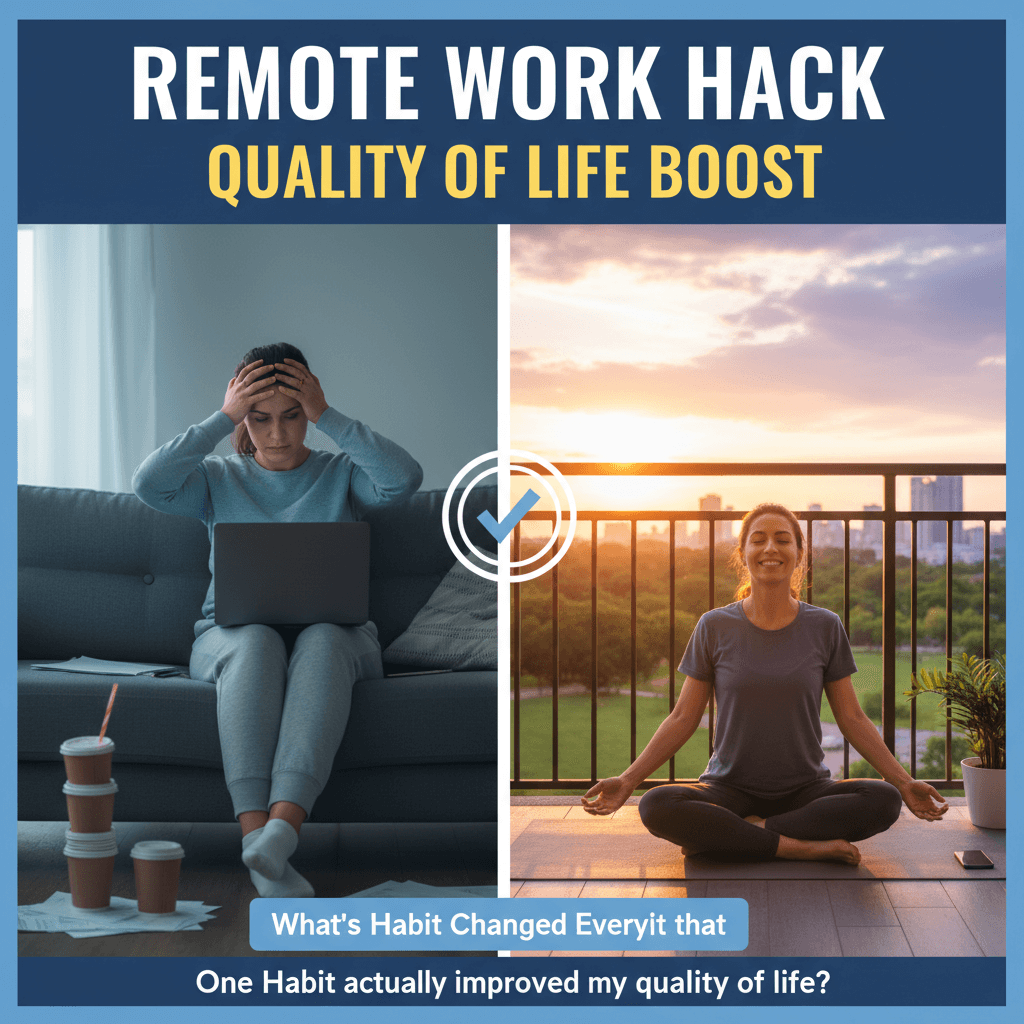
The afternoon my apartment shrank
On a gray Tuesday in late winter, I found myself sitting at my kitchen table—also my office desk, my lunch spot, and, lately, my stress capsule—staring at a blinking cursor on Slack. It wasn’t the message that bothered me; it was the fact that I felt both wired and exhausted at the same time. My laptop was warm against my wrists. One tab showed a grocery list. Another showed an analytics dashboard. Somewhere behind me, a load of laundry hummed. The apartment felt like it had somehow gotten smaller since morning. I checked the time: 6:43 p.m. The day had leaked into the evening like tea into water—too diluted to notice until it was all the same color.
What snapped me out of it wasn’t discipline. It was the quiet voice that said, This can’t be the plan. I closed the laptop and went outside. I walked to the end of the block and back, phone in my pocket, breathing cold air. It took six minutes. When I returned, the apartment had grown again. I saw my home as home. The next day, I tried something different: at 5:30 p.m., I gave myself a small sequence to end the day—review, capture, reset, and step away. It was simple, almost laughably so. But within a week, the habit had a name and a feeling: a daily shutdown ritual.
I didn’t invent it. Variations of it show up in team handbooks, in casual posts on community forums, and in passing comments on video calls: “Oh yeah, I always tidy my desk before closing,” or “I set Slack to Do Not Disturb and leave a note for myself.” Over time, I realized this wasn’t just a productivity hack. It was a boundary-keeping ritual—a way to tell my brain, my body, and the people I work with that my workday had ended. And that one change improved my sleep, my patience with loved ones, and my ability to focus the next morning. Here’s how to use it yourself.
The one habit: the daily shutdown ritual
At its core, a daily shutdown ritual is a short, repeatable sequence you perform at the end of your workday. It closes open loops, sets tomorrow up for success, and gives your mind a clear, physical cue that work has ended. It’s not complicated, and that’s exactly why it works.
What it includes
- Review: Scan your tasks, calendar, and inbox. Mark what’s done. Note what’s not.
- Capture: Write down tomorrow’s top three priorities and the first “shovel-ready” action for each.
- Reset: Tidy your workspace. Close apps. Log out of collaboration tools. Set your status to offline.
- Signal: Perform a short, consistent action that marks the end: a walk around the block, brewing tea just for enjoyment, or moving your laptop into a drawer.
Done properly, this whole sequence takes 10–20 minutes. Some people make it a calendar event that starts 30 minutes before their hard stop. Others tie it to a fixed time (for example, “Start shutdown at 5:15 p.m., no matter what”). A few create a physical trigger—lighting a candle while closing the day—which later becomes a mental shortcut for ease and closure.
Why a single habit beats a dozen micro-hacks
When you’re remote, the line between “I’ll just check one more thing” and “It’s 9:30 p.m., how did that happen?” can be almost invisible. A shutdown ritual is like drawing a heavy dark line on the page. It consolidates several good practices—planning, boundaries, transitions—into one behavior you can actually maintain. Habits that improve quality of life are rarely flashy. They’re steady. They teach your nervous system what’s safe, what’s done, and what can wait until tomorrow.
Why it works: the mechanics behind the habit
People often say, “I know I should stop working earlier, but the tasks are never done.” That belief is true—and it’s part of the problem. Work is a stream, not a bucket. A shutdown ritual doesn’t pretend the stream ends; it builds a small dam at a healthy place along the river. Here’s what’s happening beneath the surface.
Cognitive offloading reduces rumination
When you capture tomorrow’s top priorities and define the very first small action for each, you unload the mental weight that causes evening rumination—those whirling thoughts about everything you didn’t do. The brain treats “things to remember” as open loops and keeps pinging you to confirm they’re not forgotten. Externalizing into a list—and making it specific (“Draft first paragraph,” not “Work on report”)—signals safety. The mind can let go because it trusts you’ll pick it up again with a clear next step.
Closure cues calm your nervous system
Your body pays attention to ritual. Repetitive, predictable cues—like shutting down apps in a set order or taking a short walk—teach your nervous system that a chapter is ending. Over time, the cues themselves become relaxing. It’s the same principle that helps people fall asleep faster when they keep the same bedtime routine. The habit creates an embodied sense of completion, which translates into better rest and brighter mornings.
Boundaries are clearer for others, not just for you
Remote work can blur not just your boundaries, but your team’s expectations too. When you set a clear status (“Offline—back at 9:30 a.m.”), schedule messages to send the next day, and signal your working hours, you reduce accidental after-hours bleed. Colleagues learn your rhythms. You replace hopeful silence with explicit norms, which prevents misunderstanding and quiet resentment.
Consistency reduces decision fatigue
Every day involves thousands of tiny choices. A ritual turns end-of-day uncertainty (“What should I do now?”) into a script. Fewer decisions mean more calm—and ironically, more flexibility. Because you’re not negotiating your exit every night, you can choose thoughtfully when you truly need to make an exception.
Make it yours: a 15-minute shutdown you’ll actually keep
Here’s a simple, durable sequence you can adopt today. Modify it to fit your tools, role, and household rhythms, but keep the bones intact. The power comes from repetition.
Minute 1–5: Review and reconcile
- Open your task manager and calendar. Check off what’s done. Move or delete what no longer matters.
- Do a 2-minute inbox sweep. Star or label messages you’ll handle tomorrow. Leave no vague “I’ll figure it out later” items.
- Glance at tomorrow’s calendar. Note any time-bound commitments and prep needs (documents to read, files to have ready).
Minute 6–10: Capture tomorrow’s top three
- Choose three outcomes that, if completed tomorrow, would make the day successful. Be honest about capacity.
- For each outcome, write the smallest, concrete first action (for example, “Open doc and outline 3 bullets” or “Ping Alia for Q3 data”).
- Timebox: place each outcome in a calendar block. If your day is already full of meetings, pick one outcome or split work into two 25-minute blocks.
Minute 11–13: Reset your environment
- Close all work apps and browser tabs. Log out of chat. Turn off notifications or switch to a “personal” device profile.
- Tidy your desk for exactly 90 seconds. The point isn’t perfection; it’s removing visual noise.
- Place a sticky note or open your task app with tomorrow’s top three visible, so your morning has a runway.
Minute 14–15: Signal the end
- Update your status: “Offline. Back at 9:30 a.m. If urgent, text me.” If possible, define “urgent” for your team ahead of time.
- Perform your closing cue: a 5–10 minute walk, stretching routine, watering plants, or brewing a “sign-off tea.” Do the same cue every day to strengthen the association.
Templates you can copy
- Auto-message for scheduled sends: “Sending tomorrow during work hours to respect focus time. No action needed tonight.”
- Slack status: “🔕 Shut down for the day. Back at 9:30 a.m. For urgent blockers only, text [number].”
- Calendar block: “Shutdown Ritual (Non-negotiable)” set to busy, recurring daily.
- Checklist: Review → Top 3 → Schedule → Close apps → Tidy 90s → Status → Cue
Adapting to your role and household
- Managers: Use scheduled send. Model boundaries in public channels. If you must nudge someone, schedule it for their morning.
- Parents/caregivers: Make the cue flexible. If daycare pickup is the hard stop, your cue might be the walk to the car or switching into “household playlist.” Keep the review-and-capture step even if it’s 3 minutes.
- Global teams: Include time zone clarity in your status. “Offline (UTC−5). Next overlap 13:00–16:00 UTC.”
- Freelancers: Tie the ritual to billable boundaries. Stop the clock when you start the ritual. Your cue is also your invoice note: “Session end: 5:30 p.m.”
Common friction points and fixes
- “Emergencies” creep in nightly: Define “urgent” with your team (for example, production down, payment failures, legal deadlines). Everything else waits.
- Meetings spill over: Schedule your shutdown 30 minutes before your intended stop time. Treat it like a meeting with your future self—no last-minute steals.
- You forget to do it: Stack your ritual onto a fixed event (an alarm, a calendar chime, your child’s pickup). Or place a physical reminder on your keyboard at lunch.
- It feels performative: Strip it down to three essentials for a week: write tomorrow’s top three, close apps, take a 5-minute walk. Let results persuade you, not optimism.
What remote workers keep saying: key takeaways from real discussions
Across community threads, team retros, and one-on-one conversations with remote colleagues, a few patterns repeat. Different roles and schedules, same themes. Here are the key takeaways that show up most often.
- Small, consistent cues beat big, inconsistent efforts. People who kept a 10–15 minute shutdown most days reported steadier evenings than those who tried long weekly planning sessions but skipped daily closure.
- Writing tomorrow’s first step matters as much as choosing the goal. Many said the “first action” trick eliminated morning dread. The problem was rarely motivation; it was ambiguity.
- Physical movement locks in the boundary. A short “fake commute” walk was one of the most cited elements in community posts. Even pacing the hallway or stepping onto a balcony did the job.
- Scheduled send is your friend. Team chats filled with late-night time stamps often reflect unsent boundaries. People who used scheduled send felt more respectful and less tempted to spiral back into work.
- Visual resets help homes feel like homes again. Clearing the desk, closing a laptop lid, or putting work gear into a bin restored a sense of separation—especially in small apartments and shared spaces.
- Leaders set cultural permission. When managers end their day openly—status updates, no late pings—teams follow. When leaders don’t, private shutdowns feel risky, and boundary erosion spreads.
- Exceptions stay exceptions when they’re named. Workers who kept a “rules for exceptions” note (for example, “Product launch week only”) could re-stabilize after crunch times. Those who didn’t saw longer-term drift.
- Anchoring the ritual to a value increases stickiness. Many people linked shutdown to a personal why: being more present with kids, protecting creative energy, preventing burnout. Values beat willpower on hard days.
What people stop doing once the habit sticks
- Mindless tab-refreshing after dinner
- “Quick checks” that become 45-minute detours
- Sleeping with the laptop open on the table “just in case”
- Ruminating about vague tasks (“I know I’m forgetting something”)
What they start doing instead
- Intentionally starting evenings—cooking, calling someone, reading three pages
- Brief decompression walks or stretches without screens
- Morning ramp-ups that take 5 minutes instead of 25
- Team clarity about availability, leading to fewer accidental pings
Beyond the basics: deepen the ritual for durable quality of life
Once your daily shutdown is steady, you can add gentle upgrades that amplify the benefits without complicating your life. Think of these as optional layers that serve your energy, not your ego.
Weekly reset: the 30-minute Friday close
- Archive the week: Skim your calendar, jot down quick wins, and file notes into the right folders. This helps your memory store the week as complete.
- Preview the next one: Identify one meaningful outcome for early in the week and lay out documents so Monday you’re not “finding the file.”
- Gratitude snapshot: Write a short note (to a teammate or yourself) about something that went right. Closure works better with appreciation.
Environment design: reduce “accidental work”
- Use separate browser profiles for work and personal life. Closing the “work” profile becomes part of your reset.
- Place your charger far from communal spaces. A dying battery at 7 p.m. becomes a helpful guardrail, not an inconvenience.
- Hide or cover work gear after hours. Even a cloth over the monitor can quiet the visual cue to re-engage.
Team norms that reinforce, not resist
- Adopt a shared language for availability: “core hours,” “focus blocks,” and “no-meeting windows.” Post these where everyone can see them.
- Normalize delayed responses. Add “Non-urgent. Reply tomorrow is fine.” to messages sent near day’s end.
- During handoffs, include context and next steps so teammates in other time zones aren’t blocked—and you aren’t tempted to hover.
Data without obsession
- Track one metric for a month: evening work minutes, sleep onset time, or morning ramp-up time. Let the habit prove itself gently.
- If numbers nudge you into anxiety, stop tracking. The point is peace, not a dashboard.
Recovery strategies when you skip
- Don’t “pay penance” with a longer ritual the next day. Just do the standard shutdown at the next stop.
- Use a mini version if you’re slammed: two bullets for tomorrow, close apps, one minute of breathing.
- Reflect on the miss once, kindly. Was it a boundary issue, an expectations issue, or a genuine emergency? Adjust accordingly.
Actionable takeaways you can use today
- Put a 15-minute “Shutdown Ritual” block on your calendar for the next 10 workdays. Make it busy and recurring.
- Prepare a reusable note template: “Top 3 for Tomorrow” with three blank bullets and a checkbox for “First tiny action.”
- Draft your Slack/Teams status and your definition of “urgent.” Share with your immediate team.
- Pick a physical cue you actually like: a mug of decaf, a 6-minute walk, watering the ficus. Enjoy it enough to repeat it.
- Decide a backup time. If the day explodes, do a 3-minute mini shutdown at the absolute latest time you can manage.
- Commit to a one-week experiment. Evaluate by how your evening feels and how easily you start tomorrow—not by task count alone.
A 7-day challenge to lock it in
- Day 1–2: Keep it bare bones: Top 3, close apps, 5-minute cue. Notice your evening.
- Day 3–4: Add scheduled send and a tidy-90-seconds step. Share your status end time in a team channel.
- Day 5: Invite a colleague to try it with you. Accountability lightens the lift.
- Day 6: Do a tiny weekly reset (10 minutes): name one win, confirm Monday’s first action.
- Day 7: Reflect briefly. What felt different? What part was easiest to keep? Keep that core and drop any flourish that felt heavy.
Your turn: end the day on purpose
The habit that improved my quality of life wasn’t a new app, a fancy chair, or a color-coded calendar. It was a quiet promise I made to myself and kept most days: end the workday on purpose. That promise looked like a checklist, a closed laptop, a short walk. Over time, it looked like clearer evenings, warmer conversations, and better mornings. It looked like a home that felt like a home again.
You don’t need to overhaul your life to feel this shift. You need one ritual, 10–15 minutes, and the willingness to treat your future self as a teammate worth supporting. Start today. Block the time. Write your top three for tomorrow. Close the apps. Step outside or into your breath. The work will be there in the morning. You will be more fully there too.
Call to action: Commit to a 7-day shutdown ritual challenge starting this week. Put it on your calendar, invite one colleague, and share your “Top 3 for Tomorrow” template with your team. At the end of the week, reflect in writing on two changes you felt—one in your evenings, one in your mornings—and decide how you’ll keep the ritual going. Your quality of life is built in small, repeatable moments. Build this one.
Where This Insight Came From
This analysis was inspired by real discussions from working professionals who shared their experiences and strategies.
- Source Discussion: Join the original conversation on Reddit
- Share Your Experience: Have similar insights? Tell us your story
At ModernWorkHacks, we turn real conversations into actionable insights.
![[Workflow Included] A simple 5-node Instagram posting workflow for beginners](https://modernworkhacks.com/wp-content/uploads/2026/04/workflow-included-a-simple-5-node-instagram-posting-workflow-for-beginners-1024x675.png)




0 Comments