I still remember the first time I tried to keep up with a major machine learning conference deadline season. My inbox overflowed with preprints, arXiv links, and Twitter threads dissecting “groundbreaking” results—some brilliant, others questionable, all moving at a dizzying pace. Late one night, scrolling through Reddit, I saw a post asking a deceptively simple question: “Has anyone actually reproduced this result?” The comments exploded. That moment crystallized a growing anxiety across the field: as machine learning research accelerates, can we still trust the integrity of what we read?
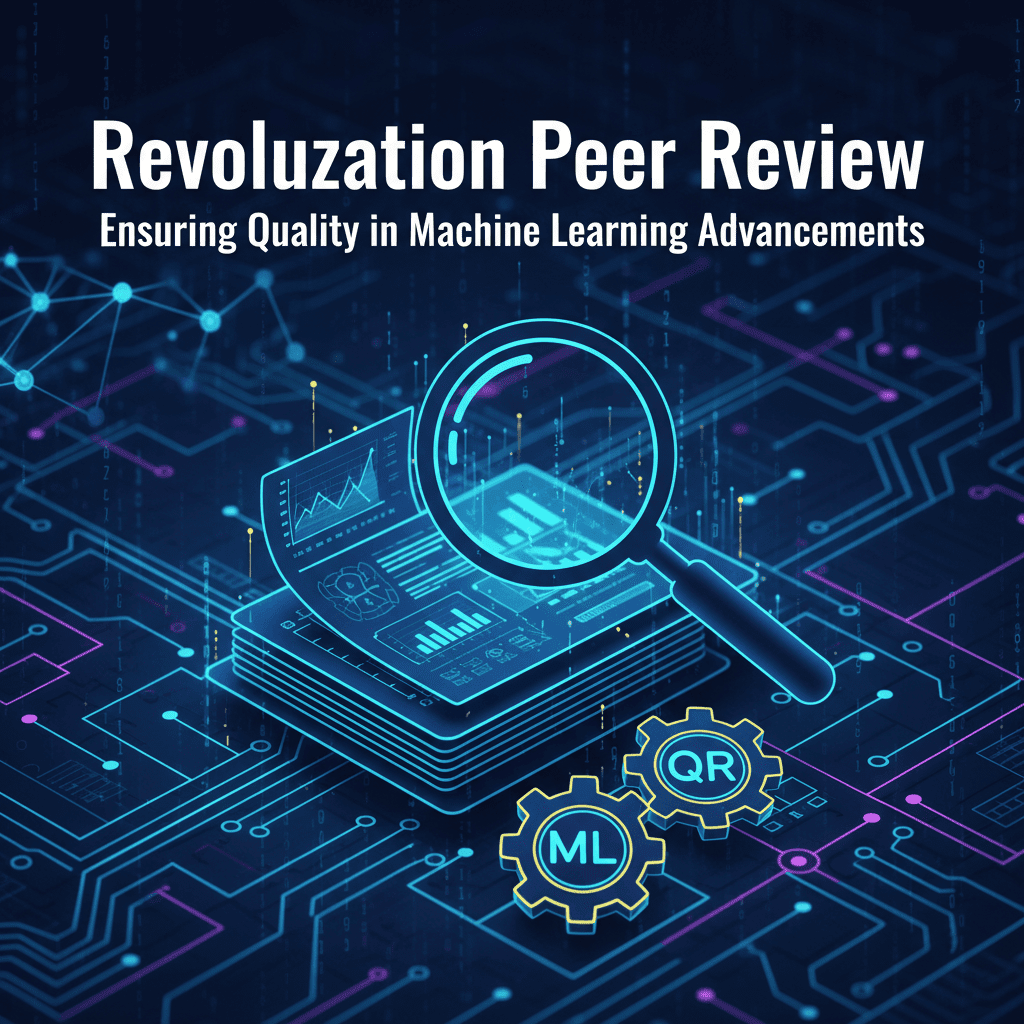
This article argues that peer review—the backbone of scientific credibility—is under unprecedented strain in machine learning. Yet it is also at a moment of reinvention. By examining current failures, emerging reforms, and real-world experiments from academia and industry, I aim to show how peer review can evolve to protect quality without slowing innovation. The stakes are high, and the conversation is no longer confined to journal editors; it is playing out across conferences, companies, and highly engaged online communities.
The Machine Learning Publication Boom and Its Consequences
An Unprecedented Scale Problem
Machine learning has experienced an explosion in research output. Major conferences like NeurIPS, ICML, and ICLR now receive tens of thousands of submissions annually. NeurIPS alone crossed the 13,000-submission mark in recent years, a figure that would have seemed unimaginable a decade ago. This growth reflects healthy interest and investment, but it also stretches peer review systems far beyond their original design.
Traditional peer review assumes a manageable volume, careful reading, and iterative feedback. In machine learning today, reviewers are often overwhelmed, juggling dozens of papers under tight deadlines. The result is uneven scrutiny: some papers receive meticulous attention, while others are skimmed or evaluated by overburdened junior reviewers.
Why this matters: When flawed or overstated results slip through, they can shape benchmarks, influence funding, and even guide product decisions in high-stakes domains like healthcare or autonomous systems.
- Actionable takeaway: As an author, clearly state assumptions and limitations up front to reduce reviewer cognitive load.
- Actionable takeaway: As a reviewer, prioritize methodological soundness over novelty when time is constrained.
- Actionable takeaway: As a reader, treat conference acceptance as a signal, not a guarantee of correctness.
Reddit, arXiv, and the New Public Review Culture
One striking development is how peer review has partially spilled into public spaces. Reddit threads, Twitter debates, and blog posts now function as informal post-publication review. Highly upvoted Reddit discussions often dissect experimental flaws or replication failures within days of a paper’s release.
While this democratizes critique, it also raises questions about accountability and expertise. A viral comment can overshadow careful but less visible scholarly feedback. Still, the intensity of engagement shows that the community deeply cares about quality.
- Actionable takeaway: Monitor community feedback on your work to identify blind spots early.
- Actionable takeaway: Engage constructively in public critique, focusing on evidence rather than personalities.
Where Traditional Peer Review Falls Short
Speed Versus Rigor
Machine learning thrives on speed. New models, datasets, and techniques emerge weekly. Peer review, however, is inherently slow. The tension between these forces has led to compromises: shorter reviews, fewer rounds of revision, and limited opportunities for replication.
Several high-profile cases illustrate the risk. Papers later found to rely on data leakage or flawed baselines had already influenced subsequent research. By the time corrections emerged, citations and implementations were widespread.
Research insight: Studies on reproducibility in AI have found that a significant portion of published results cannot be easily replicated without access to proprietary data or extensive undocumented tuning. This undermines confidence in the literature as a cumulative knowledge base.
- Actionable takeaway: Allocate review time explicitly for checking experimental design, not just results.
- Actionable takeaway: Encourage authors to include ablation studies and negative results.
Incentive Misalignment
Another core problem is incentives. Academic careers reward publication volume and prestige, not careful replication or peer review labor. Reviewers are typically unpaid, under-credited, and invisible. In industry, researchers face pressure to publish quickly to establish thought leadership.
This misalignment fuels superficial reviewing and discourages deep engagement. Reddit discussions frequently point out that “no one is rewarded for saying no,” even when skepticism is warranted.
- Actionable takeaway: Institutions should formally recognize reviewing as scholarly output.
- Actionable takeaway: Senior researchers can model restraint by declining to publish incremental work.
Emerging Reforms in Peer Review
Open and Transparent Review Models
One promising reform is open peer review, where reviews and reviewer identities are published alongside papers. Conferences like ICLR have experimented with this model, increasing accountability and allowing the community to learn from the review process itself.
Transparency can improve review quality, but it also introduces social risks. Junior reviewers may hesitate to critique influential authors. Balancing openness with psychological safety remains a challenge.
- Actionable takeaway: Adopt signed reviews with optional anonymity for early-career researchers.
- Actionable takeaway: Use published reviews as teaching tools in graduate courses.
Structured and AI-Assisted Reviewing
Ironically, machine learning itself may help fix peer review. Structured review forms that require explicit evaluation of datasets, metrics, and ethical considerations reduce ambiguity. Some venues are experimenting with AI tools to flag missing details or statistical red flags.
These tools are not substitutes for human judgment, but they can act as quality filters, freeing reviewers to focus on deeper conceptual issues.
- Actionable takeaway: Use checklists to ensure reproducibility criteria are met.
- Actionable takeaway: Treat AI review tools as assistants, not arbiters.
Industry and Academia: Shared Responsibility
Lessons from Industry Research Labs
Industry labs like Google DeepMind and OpenAI operate internal review processes that often exceed academic standards, including mandatory reproducibility checks and cross-team audits. While not perfect, these practices demonstrate that rigor and speed can coexist.
When industry papers enter academic venues, they bring both strengths and tensions. Proprietary data can limit transparency, yet industry resources often enable more thorough validation.
- Actionable takeaway: Encourage disclosure of what cannot be shared and why.
- Actionable takeaway: Borrow internal review practices for academic labs.
Community-Led Replication Efforts
Grassroots initiatives, such as reproducibility challenges at conferences, show what collective effort can achieve. Teams attempt to replicate accepted papers, publishing successes and failures. These efforts send a powerful signal: reproducibility is valued.
Reddit and GitHub often amplify these projects, drawing attention to both robust and fragile findings.
- Actionable takeaway: Participate in or mentor replication teams.
- Actionable takeaway: Cite replication studies alongside original work.
Reimagining Trust in a High-Velocity Field
From Gatekeeping to Ongoing Evaluation
Perhaps the most radical shift is conceptual. Instead of viewing peer review as a one-time gatekeeping event, we can see it as an ongoing process. Preprints, conference reviews, post-publication commentary, and replications together form a living evaluation ecosystem.
This aligns with how machine learning actually progresses: iteratively, collaboratively, and publicly.
- Actionable takeaway: Update papers with post-publication corrections.
- Actionable takeaway: Track how results hold up over time, not just at acceptance.
Building a Culture of Careful Progress
Ultimately, peer review reform is cultural, not just procedural. It requires valuing careful progress over hype and recognizing that trust is a shared asset. The passionate debates on Reddit are not a sign of decay; they are evidence of a community that refuses to be complacent.
Statistic to consider: Surveys of ML researchers consistently rank reproducibility and review quality among their top concerns, even above funding or tooling. That consensus is a foundation for change.
- Actionable takeaway: Normalize saying “this needs more work” without stigma.
- Actionable takeaway: Mentor early-career researchers in ethical reviewing.
A Call to Action for the Machine Learning Community
The question that opened this article—can we trust the integrity of machine learning literature—does not have a simple yes or no answer. Trust is something we build continuously through systems, incentives, and daily choices. Peer review, though strained, remains our most powerful tool for safeguarding quality.
I challenge you, whether you are an author, reviewer, or engaged reader, to treat peer review as a shared responsibility rather than an obstacle. Advocate for reforms, participate in public but respectful critique, and reward rigor in your own work. The future of machine learning depends not just on smarter models, but on a community committed to credible knowledge.
If we get peer review right, we do more than filter papers—we preserve the trust that allows innovation to matter.
Where This Insight Came From
This analysis was inspired by real discussions from working professionals who shared their experiences and strategies.
- Share Your Experience: Have similar insights? Tell us your story
At ModernWorkHacks, we turn real conversations into actionable insights.
![[Workflow Included] A simple 5-node Instagram posting workflow for beginners](https://modernworkhacks.com/wp-content/uploads/2026/04/workflow-included-a-simple-5-node-instagram-posting-workflow-for-beginners-1024x675.png)



0 Comments