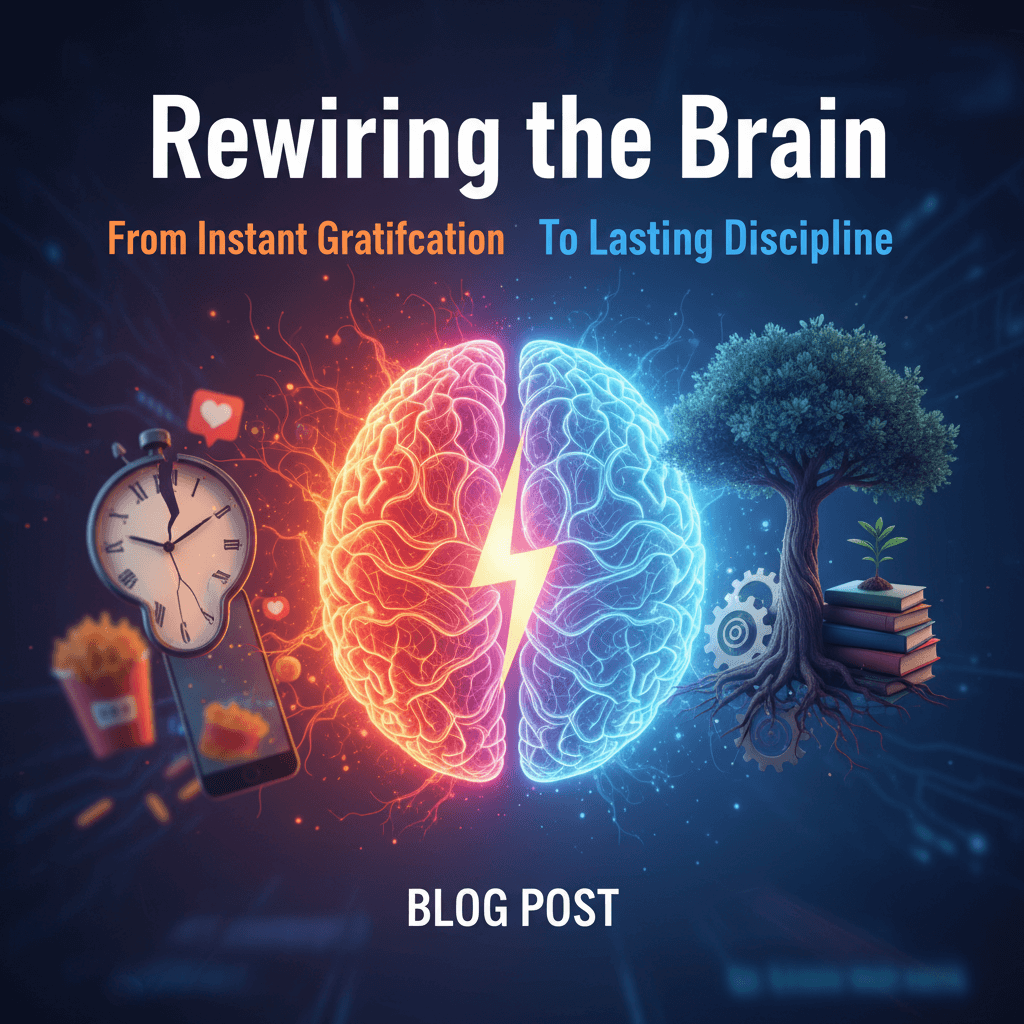
I remember sitting at my desk one morning, coffee still steaming, laptop open to a document that mattered deeply to my career. I had planned two focused hours. Instead, I reached for my phone “just to check something.” Forty minutes later, I was deep into a Reddit thread about productivity hacks, ironically doing everything except being productive. That moment sparked a question that still drives my work today: Can we train our brains to prioritize discipline over dopamine?
This article explores that question through science, lived experience, and practical tools. In a digital world engineered for instant gratification, discipline often feels like an outdated virtue. Yet the most fulfilled, productive people I know aren’t superhuman—they’ve simply learned how to work with their brains instead of against them. By understanding how temptation works and intentionally rewiring our habits, lasting discipline becomes not just possible, but sustainable.
The Dopamine Economy We’re Living In
Why Instant Gratification Feels So Powerful
Dopamine is often misunderstood as the “pleasure chemical,” but research shows it’s more accurately about anticipation and reward-seeking. Every notification, scroll, or “like” delivers a tiny hit that trains our brains to crave more. Social media platforms, games, and even email are designed around this loop.
A 2018 study published in Nature Communications found that unpredictable rewards—like variable notification timing—create stronger habitual behavior than consistent ones. This explains why we compulsively check our phones even when nothing important is waiting.
- Actionable takeaway: Turn off non-essential notifications for one week and notice how often you reach for your phone out of habit rather than necessity.
- Actionable takeaway: Batch dopamine-triggering activities, such as social media, into specific time windows instead of letting them bleed into your day.
What Reddit Conversations Reveal
On Reddit, especially in communities like r/productivity and r/getdisciplined, thousands of users share the same frustration: “I know what I should do, but I keep doing the opposite.” These threads are often highly upvoted, signaling widespread resonance. The takeaway isn’t that people lack motivation—it’s that they’re fighting systems designed to hijack attention.
One user described installing website blockers only to uninstall them during moments of stress. That honesty highlights an important truth: tools alone don’t create discipline; understanding does.
- Actionable takeaway: Instead of judging lapses, document them. Ask, “What emotion or trigger pushed me here?”
- Actionable takeaway: Engage in communities not for hacks, but for shared accountability and reflection.
How the Brain Learns Discipline
Neuroplasticity: The Brain Can Change
The hopeful news is that our brains are adaptable. Neuroplasticity—the brain’s ability to reorganize itself—means habits aren’t fixed traits. Repeated behaviors strengthen neural pathways, whether those behaviors involve scrolling endlessly or focusing deeply.
Research from University College London suggests it takes an average of 66 days for a behavior to become automatic, though complexity matters. Discipline, then, is not a personality type; it’s a trained response.
- Actionable takeaway: Commit to a single habit for 30 days before adding another. Discipline compounds.
- Actionable takeaway: Track consistency, not perfection. Missed days don’t erase progress.
The Role of Delayed Gratification
The famous Stanford marshmallow experiment often gets oversimplified, but its core insight remains powerful: the ability to delay gratification correlates with long-term success indicators. More recent follow-ups suggest environment matters as much as willpower.
If your environment constantly tempts you, discipline will feel exhausting. Change the environment, and discipline becomes lighter.
- Actionable takeaway: Make distractions harder to access and productive tools easier to reach.
- Actionable takeaway: Practice small delays, such as waiting five minutes before responding to non-urgent impulses.
Tools That Support Discipline Without Draining Willpower
Digital Tools That Actually Help
I’m cautious about productivity apps, but some genuinely support behavioral change. Tools like Freedom, Cold Turkey, and Screen Time analytics don’t just block distractions—they make behavior visible.
One freelance designer I interviewed reduced her daily screen time by 32% after setting app limits and reviewing weekly reports. The data turned vague guilt into actionable insight.
- Actionable takeaway: Use analytics to identify peak distraction hours and schedule focused work elsewhere.
- Actionable takeaway: Pair blockers with intentional breaks to avoid rebellion.
Analog Methods Still Matter
Despite the tech focus, analog tools remain powerful. Writing tasks by hand, using physical timers, or keeping a visible habit tracker engages different cognitive pathways.
I personally use a simple notebook to plan my day. The tactile act slows my thinking and reduces impulsive task-switching.
- Actionable takeaway: Start each morning by writing your top three priorities on paper.
- Actionable takeaway: Use a physical timer for deep work sessions to create psychological boundaries.
Building Sustainable Habits in a Distracting World
Start Smaller Than You Think
One of the most common mistakes I see is overambition. People try to overhaul their entire routine overnight. Sustainable discipline grows from wins so small they feel almost trivial.
A Reddit user shared how committing to just five minutes of reading a day eventually led to finishing twelve books in a year. The habit grew naturally.
- Actionable takeaway: Choose a habit so small you can’t reasonably avoid it.
- Actionable takeaway: Attach new habits to existing routines, like reading after brushing your teeth.
Identity-Based Discipline
James Clear popularized the idea that habits stick when they reinforce identity. Instead of saying “I’m trying to write,” say “I’m a writer who writes daily.” The brain seeks consistency with self-image.
Neuroscience supports this: identity-aligned behaviors activate reward circuits more strongly than obligation-based ones.
- Actionable takeaway: Reframe habits in identity terms and repeat them internally.
- Actionable takeaway: Collect evidence of identity through small consistent actions.
When Discipline Fails: What to Do Instead of Quitting
Normalize Relapse Without Romanticizing It
Discipline isn’t linear. Even the most focused people relapse into distraction, especially during stress or change. The difference is how quickly they recover.
A 2021 study in Behavior Research and Therapy found that self-compassion after failure significantly improved long-term habit adherence compared to self-criticism.
- Actionable takeaway: Treat lapses as data, not moral failure.
- Actionable takeaway: Create a simple “reset ritual” to re-enter productive mode.
Redefining Success Metrics
Many of us measure success by output alone. But discipline is also about showing up, even imperfectly. Shifting metrics from results to consistency reduces burnout.
- Actionable takeaway: Track days you showed up, not just tasks completed.
- Actionable takeaway: Celebrate adherence to process, not just outcomes.
Synthesis: Training the Brain for the Long Game
Rewiring the brain from instant gratification to lasting discipline isn’t about resisting pleasure—it’s about choosing meaningful rewards over shallow ones. The digital world isn’t going to get less tempting, but we can become more intentional.
What I’ve learned, both personally and through countless stories from Reddit and research, is that discipline thrives when we design for it. When we respect how our brains work, leverage tools wisely, and build habits that align with identity, discipline stops feeling like punishment and starts feeling like freedom.
Your challenge: Choose one habit this week that supports your future self. Make it small, protect it fiercely, and observe how your brain responds. You’re not fighting dopamine—you’re teaching it where to aim.
Where This Insight Came From
This analysis was inspired by real discussions from working professionals who shared their experiences and strategies.
- Share Your Experience: Have similar insights? Tell us your story
At ModernWorkHacks, we turn real conversations into actionable insights.
![[Workflow Included] A simple 5-node Instagram posting workflow for beginners](https://modernworkhacks.com/wp-content/uploads/2026/04/workflow-included-a-simple-5-node-instagram-posting-workflow-for-beginners-1024x675.png)


0 Comments