I remember a December afternoon not long ago, sitting at my desk with a mug of coffee gone cold. My calendar was color-coded to perfection. My task manager held neatly nested projects. My notes app had folders within folders. And yet, at the end of the day, the most important task—the one that actually moved my work forward—was untouched. I had been productive all day, or so it felt. In reality, I had been busy preparing to be productive.
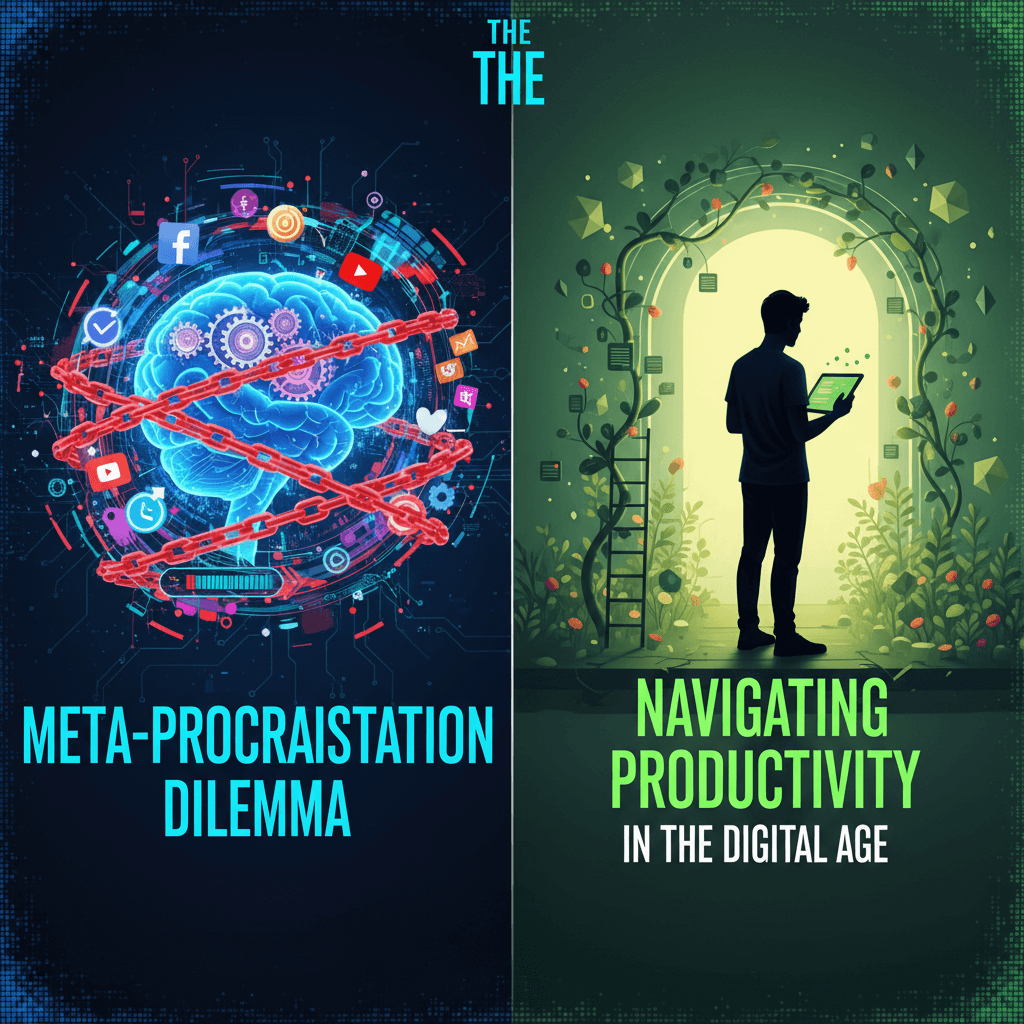
If this scenario feels uncomfortably familiar, you’re not alone. In a world brimming with productivity tools, why do tasks still go unfinished? As the year draws to a close and reflection becomes inevitable, many people are confronting an uncomfortable truth: productivity itself has become a form of procrastination. This phenomenon, often called meta-procrastination, is where organizing, planning, and optimizing replace actual execution.
Fueled by a high-engagement Reddit discussion where users openly admitted to spending their “deep work” time reorganizing systems instead of doing the work, this article explores how productivity can become a mirage—and how to navigate your way back to meaningful output using both community wisdom and expert-backed strategies.
Understanding Meta-Procrastination: When Productivity Becomes the Problem
What Meta-Procrastination Really Looks Like
Meta-procrastination isn’t laziness. In fact, it often feels like the opposite. It’s the act of endlessly refining systems, tools, and workflows as a substitute for progress. Think of rewriting your to-do list five times, switching between note-taking apps, or building a “perfect” Notion dashboard while avoiding the uncomfortable task it was meant to support.
In the Reddit thread that sparked this conversation, one user confessed to spending weeks designing a personal knowledge management system—without writing a single page of the article it was supposed to support. The comments flooded in with similar stories, revealing just how widespread this pattern is.
The Psychology Behind It
Research in behavioral psychology helps explain why this happens. Planning offers a sense of control and accomplishment without the risk of failure. According to a study published in Psychological Science, people often overvalue preparatory actions because they provide immediate emotional rewards, while execution carries uncertainty and discomfort.
In short, organizing feels safe. Doing the work does not.
Actionable Takeaways:
- Name the behavior. Simply recognizing that you’re meta-procrastinating can break its spell.
- Ask a blunt question: “Is this action directly moving the task forward?” If not, pause.
- Limit planning time. Set a timer for organizing, then switch to execution when it ends.
The Digital Productivity Trap: Tools, Apps, and the Illusion of Progress
Too Many Tools, Too Little Output
The average knowledge worker now uses dozens of digital tools each week. According to a 2023 report by Asana, employees switch between apps an average of 25 times per day, contributing to what researchers call “work about work.” This constant context-switching drains cognitive energy while creating the illusion of productivity.
I’ve personally fallen into this trap. I once spent an entire weekend migrating tasks from one app to another because a YouTube video promised “frictionless productivity.” On Monday, my workload was identical—only now it lived in a shinier interface.
Why Optimization Feels So Good
Optimization offers instant gratification. You check off tasks like “set up weekly review” or “clean inbox,” which triggers dopamine without demanding deep focus. Over time, your brain learns that system-building is easier and more rewarding than system-using.
Actionable Takeaways:
- Adopt tool minimalism. One task manager, one calendar, one notes app is often enough.
- Define a “tool freeze.” Commit to no new apps for 30 days.
- Measure output, not inputs. Track completed deliverables instead of time spent organizing.
Community Insights: What Reddit Gets Right About Deep Work
The Myth of Endless Preparation
One of the most upvoted comments in the Reddit discussion cut straight to the point: “If you’re always preparing to start, you’re never actually starting.” This resonates because it exposes a cultural myth—that more preparation inevitably leads to better results.
In reality, most meaningful work clarifies itself only through action. Writers discover their arguments by writing. Developers refine architecture by building. Clarity is often a byproduct of movement, not a prerequisite.
Redefining Deep Work
Cal Newport’s concept of deep work is frequently misinterpreted. Deep work is not about perfect conditions; it’s about sustained focus on cognitively demanding tasks. Organizing folders rarely qualifies.
Actionable Takeaways:
- Redefine deep work. If it doesn’t create something tangible, it’s probably not deep work.
- Use “messy starts.” Begin tasks before you feel ready.
- Publicly commit. Share your goal with a peer to increase accountability.
Expert Strategies to Break the Meta-Procrastination Cycle
The Bias Toward Action
Psychologist Adam Grant often speaks about cultivating a bias toward action. This doesn’t mean acting recklessly—it means valuing motion over perfection. Research from Harvard Business School suggests that individuals who prioritize action learn faster and outperform perfectionists over time.
In my own work, I’ve adopted a rule: if a task can be started in under two minutes, I start it immediately. The momentum often carries me further than planned.
Time-Boxing for Execution
Time-boxing—assigning fixed blocks of time to tasks—reduces the temptation to over-plan. When the clock is ticking, the question shifts from “What’s the best way?” to “What can I do right now?”
Actionable Takeaways:
- Start with a 25-minute execution block. No organizing allowed.
- Lower the bar. Aim for a rough first version, not a polished outcome.
- End sessions mid-task. This makes restarting easier next time.
Case Studies: From Over-Organized to Productive
The Freelancer Who Stopped Optimizing
A freelance designer I interviewed admitted to losing clients due to missed deadlines—despite having an immaculate project management system. Her turning point came when she limited herself to three daily priorities written on paper. Within two months, her on-time delivery rate jumped dramatically, and her stress decreased.
The Startup Team That Killed Their Dashboard
A small SaaS startup noticed their team spent hours updating internal dashboards that no one acted on. After eliminating most reports and focusing on weekly outcomes instead, they reduced meeting time by 40% and shipped features faster.
Actionable Takeaways:
- Simplify ruthlessly. Remove systems that don’t change behavior.
- Review outcomes weekly. Ask what actually moved the needle.
- Choose visibility over elegance. Simple systems work because they’re used.
Reclaiming the End of the Year: Reflection Without Paralysis
Healthy Reflection vs. Disguised Avoidance
Year-end reflection is valuable—but it can also become another form of meta-procrastination. Reviewing goals endlessly without acting on insights leads nowhere. According to a study in the Journal of Applied Psychology, reflection only improves performance when paired with concrete next steps.
A Simpler Way Forward
Instead of overhauling your entire productivity system for the new year, consider making one behavioral change. For me, it was committing to start each day by tackling the hardest task first, before checking email or adjusting plans.
Actionable Takeaways:
- Limit reflection time. One hour is often enough.
- Extract one lesson. Apply it immediately.
- Design for friction. Make avoidance harder than action.
Conclusion: The Courage to Do the Work
The meta-procrastination dilemma isn’t about a lack of discipline or intelligence. It’s about living in a digital age that rewards preparation, optimization, and visible busyness over quiet, uncomfortable execution. Productivity tools promise control, but real progress requires courage.
As this year comes to a close, I challenge you to audit not your tools, but your actions. Where are you organizing instead of executing? Where are you preparing instead of beginning? Choose one task you’ve been avoiding and start it imperfectly, today.
The challenge is simple: for the next seven days, measure success not by how organized you feel, but by what you finish. In doing so, you may find that the productivity you’ve been chasing was never in your system—it was in your willingness to begin.
Where This Insight Came From
This analysis was inspired by real discussions from working professionals who shared their experiences and strategies.
- Share Your Experience: Have similar insights? Tell us your story
At ModernWorkHacks, we turn real conversations into actionable insights.
![[Workflow Included] A simple 5-node Instagram posting workflow for beginners](https://modernworkhacks.com/wp-content/uploads/2026/04/workflow-included-a-simple-5-node-instagram-posting-workflow-for-beginners-1024x675.png)



0 Comments