On a Tuesday night a few years ago, I was sitting on the edge of my daughter’s bed, laptop still open on my knee, answering emails while she told me about her day at school. Halfway through her story, she stopped and asked, “Are you listening?” That moment landed harder than any missed deadline ever had. I was technically present, but emotionally elsewhere—chasing goals I believed were “for the family” while quietly drifting away from the very people I was working for.
That night forced an uncomfortable realization: ambition without intention can quietly erode the life it’s meant to support. The idea that success demands constant hustle, endless hours, and personal sacrifice is deeply ingrained, especially in online communities and Reddit threads where productivity and wealth-building are hot topics. But what if that trade-off is a false one?
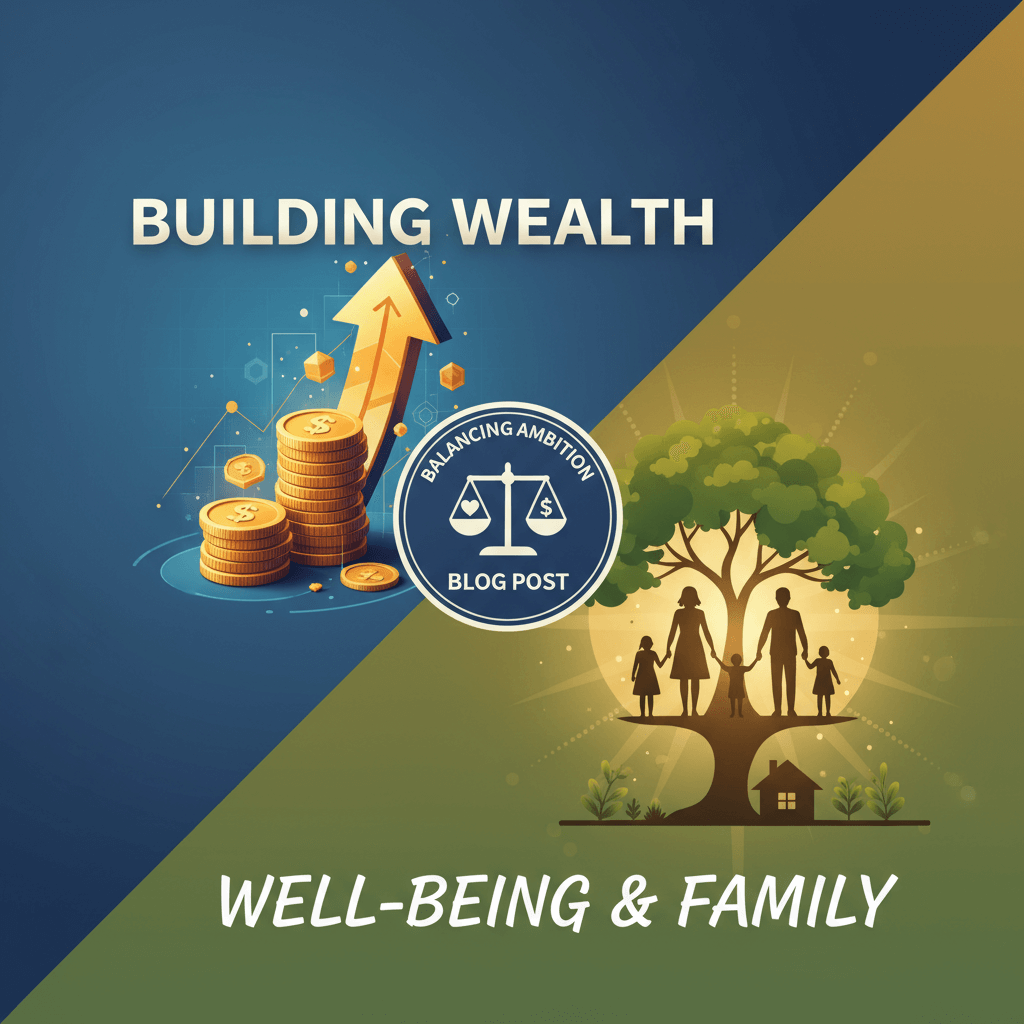
My thesis is simple but challenging: true success comes from building wealth and personal growth in ways that actively strengthen well-being and family life, not undermine them. This article explores a holistic approach to ambition—one that values flexibility, sustainability, and presence as much as income and achievement.
Rethinking Ambition Beyond Hustle Culture
Hustle culture tells us that grinding harder is the only path to success. Sleep less. Work more. Sacrifice now, live later. Yet many Reddit discussions reveal a growing skepticism of this mindset, especially among parents and caregivers who feel trapped between financial pressure and family guilt.
The Hidden Cost of Constant Hustle
Research from the American Psychological Association shows that chronic work stress is linked to higher rates of anxiety, depression, and cardiovascular disease. More strikingly, a Harvard Business Review analysis found that overworked employees are significantly more likely to experience burnout, which ultimately reduces productivity and earning potential.
In other words, the hustle often backfires.
I’ve seen this firsthand in a former colleague, Mark, who climbed the corporate ladder rapidly in his thirties. He earned well into six figures but missed birthdays, anniversaries, and eventually his marriage collapsed. Financial success didn’t cushion the emotional fallout.
Actionable Takeaways
- Redefine ambition: Write a personal definition of success that includes health, relationships, and time—not just income.
- Audit your energy: Track not only how you spend money, but how you spend emotional and physical energy each week.
- Question “busy”: Before committing to new obligations, ask whether they align with your long-term life vision.
Financial Growth as a Tool, Not a Tyrant
Money is often framed as the ultimate scorecard, but I’ve come to see it as a tool—powerful, neutral, and dangerous when misunderstood. Financial success should buy freedom and security, not perpetual pressure.
Building Wealth That Supports Life
According to a 2023 survey by Pew Research Center, nearly 60% of parents report feeling financially stretched, even when incomes rise. The issue isn’t always earnings; it’s alignment. When spending, saving, and earning don’t reflect real priorities, money becomes a source of stress rather than stability.
A Reddit user I once interviewed for a side project shared how he shifted from chasing promotions to building multiple income streams. By focusing on low-maintenance investments and freelance consulting, he reduced his working hours by 20% while maintaining income—gaining back family dinners and weekends.
Actionable Takeaways
- Clarify your “enough” number: Define the income level that genuinely meets your family’s needs and values.
- Prioritize leverage: Explore income streams that scale without linear time investment, such as index funds or digital products.
- Automate wisely: Use budgeting and investing automation to reduce mental load and decision fatigue.
Well-being Is a Strategic Advantage
For years, I treated self-care as optional—something to fit in after work was done. That mindset changed when I learned that well-being isn’t a reward; it’s infrastructure.
The Science of Sustainable Performance
Studies from Stanford University show that productivity per hour drops sharply after 50 hours of work per week. Meanwhile, the World Health Organization officially recognizes burnout as an occupational phenomenon, emphasizing its long-term consequences.
One entrepreneur I coached implemented mandatory “offline evenings” twice a week. His revenue didn’t drop. Instead, his decision-making improved, and his team reported higher morale. Rest wasn’t a setback; it was a multiplier.
Actionable Takeaways
- Schedule recovery: Treat rest, exercise, and mental health as non-negotiable calendar commitments.
- Model balance: Especially for children, your habits teach more than your words ever will.
- Measure differently: Track mood, energy, and presence alongside traditional productivity metrics.
Family as a Core Stakeholder in Success
We often say we’re doing it “for the family,” yet family rarely has a seat at the planning table. That disconnect can quietly breed resentment on both sides.
Designing Life With, Not Around, Family
Research from the Journal of Family Psychology suggests that perceived parental availability matters more to children than total hours worked. It’s not just about being home—it’s about being present.
I began involving my partner in major career decisions, discussing not only income potential but also stress, travel, and flexibility. The result was fewer surprises and more shared ownership of our direction.
Actionable Takeaways
- Hold family check-ins: Regularly discuss schedules, stress points, and upcoming goals together.
- Create rituals: Anchor your week with predictable family moments, like shared meals or walks.
- Protect presence: Set clear boundaries around devices during family time.
Flexible Strategies for Different Lifestyles
No single blueprint fits everyone. A single parent, a dual-income household, and a caregiver supporting aging parents all face different constraints. Flexibility is not weakness—it’s realism.
Breaking the Myth of One Right Path
Reddit discussions often highlight alternative models: remote work, compressed workweeks, geographic arbitrage, and phased career growth. Data from Gallup indicates that flexible work arrangements increase employee engagement by up to 21%.
One couple I interviewed relocated to a lower-cost city while keeping remote roles. Their salaries dipped slightly, but childcare costs and stress plummeted, resulting in a net gain in both savings and happiness.
Actionable Takeaways
- Negotiate creatively: Ask for flexibility, not just raises—time is often more valuable than money.
- Experiment in seasons: Treat life phases as dynamic; what works now may change later.
- Leverage community: Share resources, childcare, and support networks to reduce pressure.
Redefining Success for the Long Game
When I look back at that moment on my daughter’s bed, I don’t feel regret—I feel gratitude. It forced a course correction early enough to matter.
Success, I’ve learned, is not a finish line but a rhythm. It’s the ability to pursue growth without burning bridges, to build wealth without mortgaging health, and to achieve goals while staying deeply connected to the people who give those goals meaning.
The most compelling insight from high-engagement Reddit threads isn’t about side hustles or investment hacks—it’s about regret avoidance. People don’t lament earning less; they lament missing more.
Here’s my challenge to you: this week, choose one ambition-driven habit and redesign it with family and well-being in mind. Start small. Protect an evening. Rework a goal. Ask a harder question about “why.” Over time, these small shifts compound—just like money—into a life that feels successful on every level.
Because the real secret isn’t choosing between ambition and family. It’s learning how to let them grow together.
Where This Insight Came From
This analysis was inspired by real discussions from working professionals who shared their experiences and strategies.
- Share Your Experience: Have similar insights? Tell us your story
At ModernWorkHacks, we turn real conversations into actionable insights.
![[Workflow Included] A simple 5-node Instagram posting workflow for beginners](https://modernworkhacks.com/wp-content/uploads/2026/04/workflow-included-a-simple-5-node-instagram-posting-workflow-for-beginners-1024x675.png)



0 Comments