
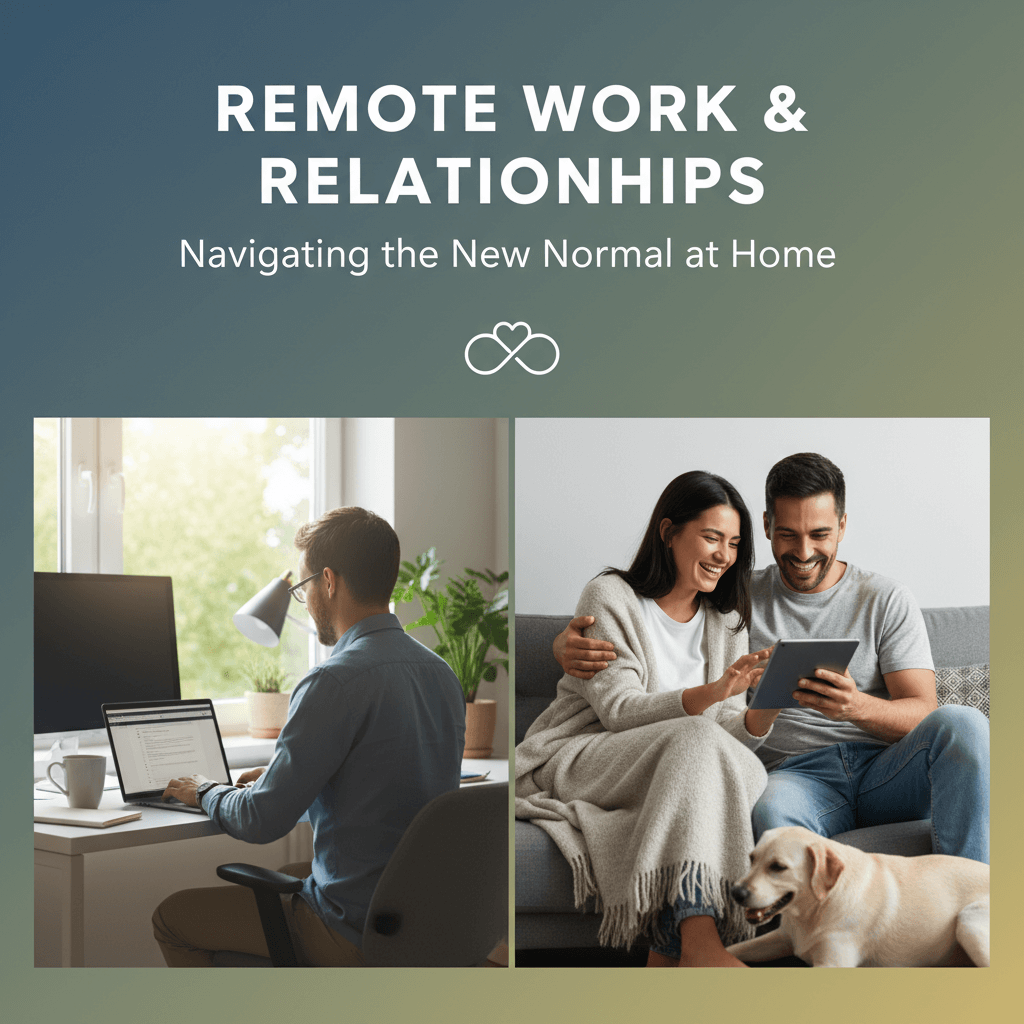
At 9:03 a.m., my partner and I were both on video calls, seated six feet apart at the same kitchen table. I was pitching a strategy to a client. He was troubleshooting a server outage. Between us sat a half-empty coffee mug, a shared notepad, and a growing sense of irritation. When my microphone accidentally picked up his frustrated sigh, I shot him a look that said, “Really?” He mouthed back, “Sorry.” By noon, we hadn’t said a real word to each other.
Moments like this have become surprisingly common. Remote work, once considered a perk, is now a defining feature of modern life. For couples, it has raised a big question: Is teleworking bringing us closer—or quietly driving us apart? The truth is more nuanced. Working from home can deepen intimacy, improve equity, and strengthen teamwork. It can also magnify unresolved tensions, blur boundaries, and strain even strong relationships. In this article, I’ll explore how remote work is reshaping partnerships at home, drawing from real experiences, research, and expert insight—along with practical strategies to help couples not just survive, but thrive.
The New Reality: When Home Becomes the Office
Why This Shift Feels So Disruptive
Before widespread remote work, home and work had clearer physical and psychological boundaries. Commutes, offices, and schedules acted as buffers. Now, those buffers are gone. According to a 2023 Pew Research Center study, nearly 35% of U.S. workers whose jobs can be done remotely now work from home full-time, and many share that space with a partner.
This shift isn’t just logistical—it’s emotional. We’re suddenly seeing our partners in professional modes we rarely encountered before: stressed, authoritative, distracted, or disengaged. That can be jarring, especially when both partners are navigating it simultaneously.
Actionable Takeaways
- Name the transition: Acknowledge out loud that working from home is a major lifestyle change, not a minor adjustment. Simply saying, “This is new for both of us” can reduce blame.
- Create symbolic boundaries: Even small rituals—closing a laptop, changing clothes, or taking a short walk—help signal the shift from work mode to partner mode.
- Audit expectations: Talk explicitly about what each of you expects the workday to look like at home, rather than assuming alignment.
Closeness or Conflict: How Proximity Amplifies Everything
The Double-Edged Sword of Constant Togetherness
One Reddit user wrote, “I love my partner, but I didn’t sign up to be coworkers.” That sentiment appeared again and again in high-engagement threads. Constant proximity can create more opportunities for connection—shared lunches, spontaneous hugs, quick check-ins—but it also amplifies friction.
Research from the Journal of Social and Personal Relationships suggests that increased time together doesn’t automatically lead to greater relationship satisfaction. Instead, satisfaction depends on perceived fairness, autonomy, and emotional support. When those elements are missing, being together more often can actually intensify dissatisfaction.
Case Example: Emma and Luis
Emma, a marketing manager, and Luis, a software engineer, both went remote in 2020. At first, they loved it. By month six, resentment crept in. Emma felt Luis “disappeared” into work all day. Luis felt micromanaged. The issue wasn’t love—it was unspoken assumptions about availability.
Actionable Takeaways
- Define “together time” versus “parallel time”: Sitting in the same room doesn’t always count as quality time.
- Use micro-check-ins: A quick “How are you holding up?” text can feel supportive without being intrusive.
- Normalize alone time: Wanting space doesn’t mean rejection; it often means self-regulation.
The Equity Question: Chores, Care, and Invisible Labor
Why Remote Work Can Expose Imbalances
One of the most heated discussions on Reddit revolves around fairness at home. When both partners work remotely, traditional assumptions about who does what often resurface—or are challenged. Data from the Bureau of Labor Statistics shows that even in dual-income households, women still perform about 60% of unpaid domestic labor.
Remote work can either reinforce this gap or create an opportunity to rebalance it. The difference lies in intentionality.
Case Example: A Subtle Inequity
A couple I interviewed—both consultants—worked identical hours. Yet one partner consistently handled meals, laundry, and pet care “because they were already home.” Over time, that imbalance eroded goodwill, even though neither partner initially saw it as unfair.
Actionable Takeaways
- List everything: Write down all household and care tasks, including mental load items like scheduling appointments.
- Assign ownership, not help: Ownership means responsibility from start to finish, not “helping out.”
- Revisit quarterly: Work demands change; your division of labor should too.
Communication Under Pressure: From Passive Tension to Productive Dialogue
Why Miscommunication Is So Common at Home
Remote work increases cognitive load. Back-to-back calls, constant notifications, and fewer natural breaks all tax our nervous systems. Under stress, many of us default to shorter tempers or withdrawal—especially with the people we feel safest around.
Couples therapists report that conflicts about “small things” often mask deeper issues like feeling unappreciated or unheard.
Actionable Takeaways
- Time conversations strategically: Don’t raise sensitive topics mid-meeting or right after a stressful call.
- Use “process” language: Say, “When interruptions happen during calls, I feel flustered,” instead of assigning blame.
- Schedule relationship check-ins: A 20-minute weekly conversation can prevent months of simmering tension.
Redefining Intimacy and Support in a Work-From-Home World
Emotional Intimacy Beyond Physical Presence
Being home together doesn’t guarantee emotional closeness. Intimacy now often shows up in quieter ways: respecting a do-not-disturb sign, celebrating a win after a tough call, or offering empathy instead of solutions.
A 2022 study in the Harvard Business Review found that employees with supportive partners at home reported lower burnout and higher job satisfaction. The key factor wasn’t constant encouragement—it was feeling understood.
Actionable Takeaways
- Ask better questions: Replace “How was work?” with “What took the most energy today?”
- Celebrate small wins: Acknowledge progress, not just big achievements.
- Protect couple rituals: Shared meals, walks, or end-of-day checkouts anchor connection.
Designing a Sustainable Future Together
From Crisis Response to Long-Term Strategy
Remote work is no longer a temporary experiment. It’s a long-term reality for millions. Couples who thrive are those who treat their home like a shared ecosystem—one that requires ongoing design, feedback, and adjustment.
When my partner and I finally talked about that tense morning at the kitchen table, we didn’t just fix seating arrangements. We clarified expectations, rebalanced chores, and agreed on signals for availability. The result wasn’t perfection, but progress.
Actionable Takeaways
- Co-create a vision: Ask, “What do we want our days to feel like?” not just “How do we manage logistics?”
- Experiment openly: Treat changes as trials, not permanent verdicts.
- Seek outside input if needed: A coach or therapist can help couples navigate stuck patterns.
Closing Thoughts: A Challenge for the New Normal
Remote work didn’t create relationship issues—it revealed them. It also opened the door to deeper collaboration, fairness, and intimacy for couples willing to engage intentionally. The question isn’t whether working from home is good or bad for relationships. It’s whether we’re willing to adapt our habits, communication, and expectations to meet this new reality.
My challenge to you is simple but not easy: Start one honest conversation this week about how remote work is affecting your relationship. Not to assign fault, but to understand. Because the couples who emerge strongest from this shift aren’t the ones with the most space or the quietest homes—they’re the ones who choose to navigate the new normal together.
Where This Insight Came From
This analysis was inspired by real discussions from working professionals who shared their experiences and strategies.
- Share Your Experience: Have similar insights? Tell us your story
At ModernWorkHacks, we turn real conversations into actionable insights.
![[Workflow Included] A simple 5-node Instagram posting workflow for beginners](https://modernworkhacks.com/wp-content/uploads/2026/04/workflow-included-a-simple-5-node-instagram-posting-workflow-for-beginners-1024x675.png)




0 Comments