
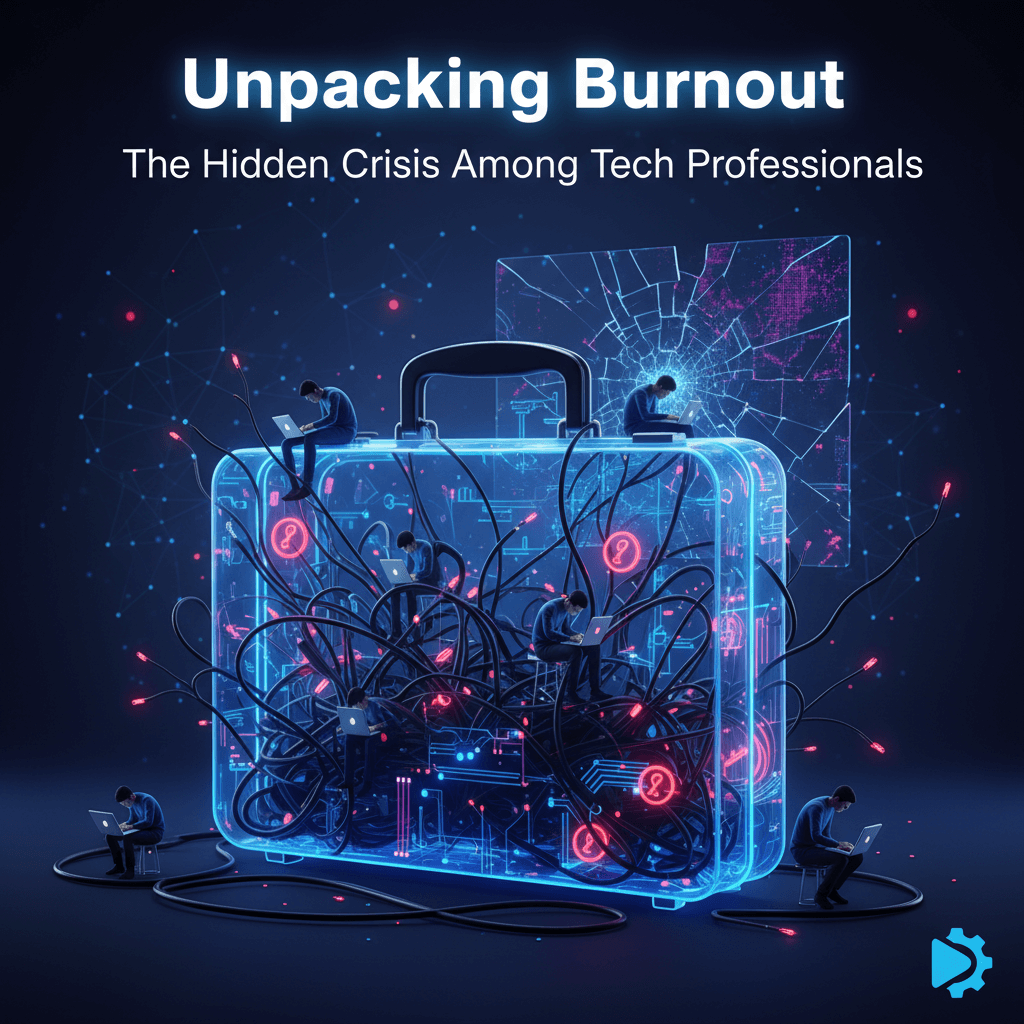
Burnout in tech isn’t just a phase—it’s a crisis worth unraveling.
Two years ago, a senior software engineer I’ll call Alex messaged me late at night. On paper, Alex had “made it”: a six-figure salary, equity in a fast-growing startup, and work that powered products used by millions. Yet the message wasn’t celebratory. It was desperate. “I can’t sleep anymore,” Alex wrote. “My chest tightens when Slack pings. I’m scared I’m broken, but I’m also scared to stop.”
Alex’s story is not an anomaly. It’s a pattern. Across Reddit threads, private Discords, and hushed one-on-one conversations, tech professionals are quietly admitting what the industry rarely says out loud: burnout is everywhere. This article unpacks that hidden crisis—how it manifests, why tech culture fuels it, and what individuals and organizations can do to address it before the cost becomes irreversible.
The Scope of the Problem: Burnout as a Systemic Issue
Burnout in tech is often framed as a personal failing—an individual who couldn’t “handle the pace.” In reality, the data tells a very different story.
What the Research Reveals
A 2023 report from Blind, an anonymous professional network heavily used by tech workers, found that over 57% of tech employees self-identified as burned out. Similarly, a study published in the Journal of Occupational Health Psychology linked prolonged high cognitive load—common in software development—to emotional exhaustion and reduced job performance.
These numbers matter because they signal a systemic issue, not a fringe experience. When more than half of a workforce feels depleted, the problem isn’t resilience—it’s design.
- Takeaway 1: If burnout feels common in your team, it probably is. Normalize conversations with data, not shame.
- Takeaway 2: Treat burnout as a workplace health issue, not an individual weakness.
The Reddit Effect: A Window Into Reality
Reddit communities like r/cscareerquestions and r/ExperiencedDevs offer raw, unfiltered insight. One highly upvoted post read: “I love coding. I hate my job. I don’t know how both can be true.” Thousands echoed the sentiment.
What makes these discussions powerful is their honesty. People admit to crying between stand-ups, fantasizing about quitting without a plan, or feeling numb even after shipping major features. The anonymity strips away corporate polish and reveals lived truth.
- Takeaway 3: Pay attention to community discourse—it often surfaces problems long before companies do.
Why Tech Is a Perfect Storm for Burnout
The tech industry didn’t invent burnout, but it has perfected the conditions for it.
Always-On Culture and Invisible Labor
Modern development work rarely ends at 5 p.m. Global teams, on-call rotations, and “just one more deploy” stretch workdays indefinitely. Add cognitive labor—keeping systems in your head, anticipating edge cases—and the brain never truly rests.
I’ve experienced this myself. Even during vacations, part of my mind stayed tethered to unresolved tickets and potential outages. That low-grade vigilance is exhausting, even when nothing goes wrong.
- Actionable step: Create explicit off-hours rules for communication and incident escalation.
- Actionable step: Document systems thoroughly to reduce mental load on individuals.
Identity Tied to Output
In tech, competence is currency. Promotions, respect, and even self-worth often hinge on shipping fast and solving hard problems. When work slows or mistakes happen, identity takes a hit.
One Reddit user shared how a single missed deadline spiraled into months of anxiety and overwork. The fear wasn’t just losing a job—it was losing a sense of self.
- Actionable step: Separate performance reviews from personal worth in team language.
- Actionable step: Celebrate learning and recovery, not just output.
How Burnout Actually Shows Up Day to Day
Burnout isn’t always dramatic. More often, it’s quiet and insidious.
The Subtle Warning Signs
Before people quit or collapse, they disengage. Code reviews become mechanical. Curiosity fades. Small obstacles feel overwhelming.
According to the World Health Organization, burnout is characterized by emotional exhaustion, cynicism, and reduced professional efficacy. In tech, this can look like apathy toward code quality or resentment toward users.
- Actionable step: Watch for changes in engagement, not just missed deadlines.
- Actionable step: Encourage regular check-ins that go beyond task updates.
Physical and Mental Health Costs
Burnout doesn’t stay at work. Developers report insomnia, chronic headaches, digestive issues, and anxiety disorders. A 2022 survey by Mental Health America found that tech workers reported higher rates of anxiety than the national average.
One engineer described needing medication just to get through sprint planning. “I didn’t realize how bad it was until my doctor asked about my job,” they wrote.
- Actionable step: Advocate for mental health benefits that include therapy and burnout prevention.
- Actionable step: Treat stress symptoms as legitimate health concerns.
Community-Driven Coping Strategies That Actually Help
Despite the grim picture, tech communities are also incubators for solutions.
Redefining Success Through Peer Support
In several Reddit threads, developers shared how joining smaller, values-driven teams helped them recover. Others found relief by moving from hypergrowth startups to slower-paced companies.
One case study stood out: a backend engineer who negotiated a four-day workweek without a pay cut by clearly outlining productivity metrics. Six months later, both their output and well-being improved.
- Actionable step: Benchmark your workload against peers, not industry hype.
- Actionable step: Experiment with alternative schedules or roles.
Boundaries as a Skill
Burnout recovery often starts with learning to say no. This is harder in tech, where urgency is normalized.
I’ve had to practice scripts like, “I can take this on next sprint, but not today.” It felt risky at first. It turned out to be respected.
- Actionable step: Prepare boundary-setting language in advance.
- Actionable step: Track how often “urgent” requests truly are urgent.
What Leaders and Organizations Must Own
Individual coping strategies help, but they are not enough.
Rethinking Productivity Metrics
Measuring success by hours logged or tickets closed incentivizes burnout. Research from MIT Sloan shows that sustainable productivity correlates more with autonomy and recovery time than sheer output.
Teams that shifted to outcome-based metrics reported lower attrition and higher engagement.
- Actionable step: Audit what behaviors your metrics reward.
- Actionable step: Build slack time into project plans.
Psychological Safety as Infrastructure
When people fear repercussions for admitting overload, burnout thrives. Leaders who model vulnerability—taking time off, admitting limits—set a powerful precedent.
One engineering manager shared on Reddit how openly discussing their own burnout reduced turnover on their team by half.
- Actionable step: Encourage leaders to share their own boundaries.
- Actionable step: Make mental health discussions routine, not reactive.
Reframing the Future of Tech Work
Burnout is not inevitable. It’s a signal.
The tech industry prides itself on solving complex problems. Burnout is one of the most complex—and human—challenges it faces. Ignoring it costs talent, innovation, and lives. Addressing it requires humility, structural change, and collective effort.
I think back to Alex. After months of struggle, they took a sabbatical, joined a smaller company, and rebuilt their relationship with work. “I still care,” Alex told me recently. “I just don’t let it consume me anymore.”
The challenge is clear: If you’re a tech professional, start a conversation—on your team, in your community, with yourself. If you’re a leader, redesign systems that reward sustainability over sacrifice. Burnout thrives in silence. It weakens in daylight.
The future of tech depends not just on smarter code, but on healthier people. The question is whether we’re willing to build that future intentionally.
Where This Insight Came From
This analysis was inspired by real discussions from working professionals who shared their experiences and strategies.
- Share Your Experience: Have similar insights? Tell us your story
At ModernWorkHacks, we turn real conversations into actionable insights.
![[Workflow Included] A simple 5-node Instagram posting workflow for beginners](https://modernworkhacks.com/wp-content/uploads/2026/04/workflow-included-a-simple-5-node-instagram-posting-workflow-for-beginners-1024x675.png)



0 Comments