I still remember the Slack message that landed in my inbox at 7:42 a.m. on a Tuesday. It was short, polite, and unmistakably firm: starting next month, everyone was expected back in the office three days a week. No discussion. No exceptions. By lunchtime, our team channel—normally filled with project updates and GIFs—had turned into a quiet storm of frustration, resignation, and gallows humor. One colleague quietly updated their LinkedIn profile. Another started calculating childcare costs. Someone else simply wrote, “Why?”
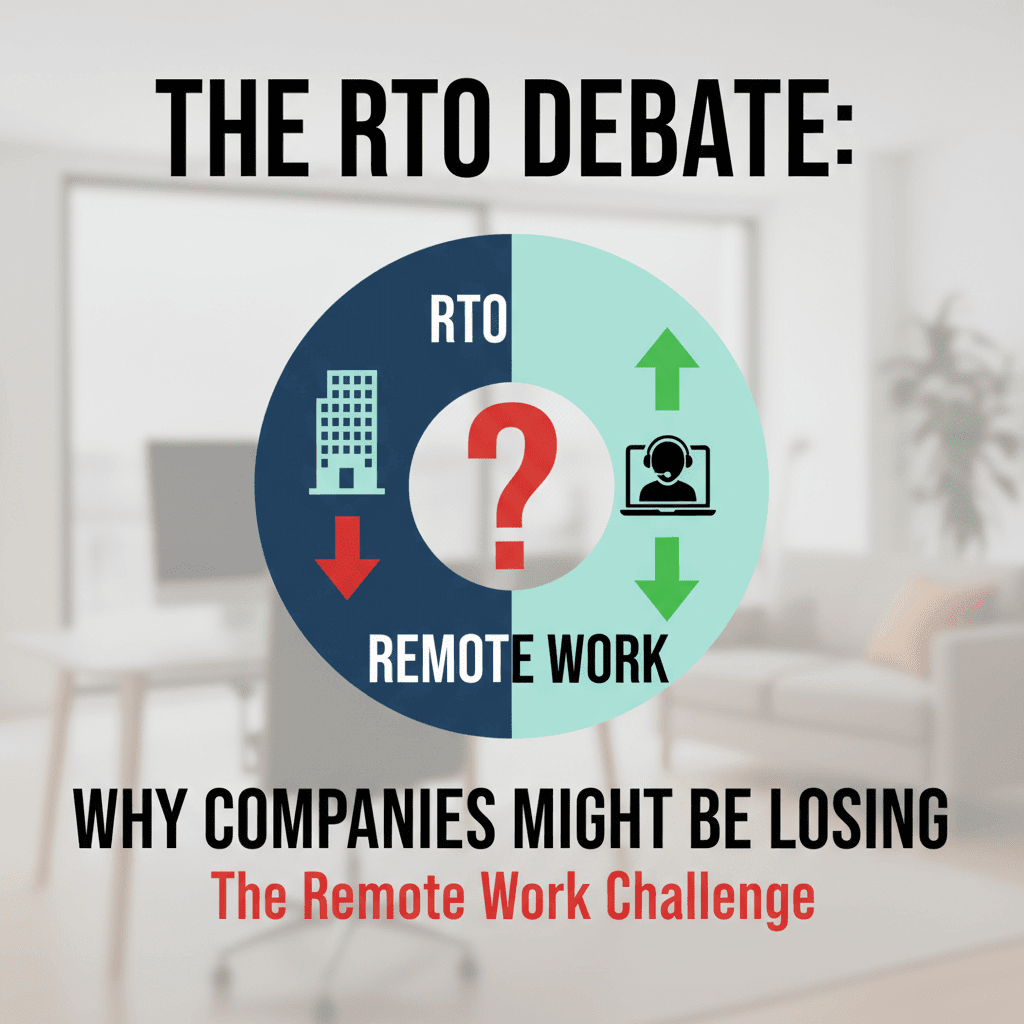
That moment captures the heart of today’s return-to-office (RTO) debate. Is this push back to physical workplaces a necessary correction—or a power play rooted in outdated assumptions about productivity and control? My thesis is simple: many companies enforcing rigid RTO mandates are misreading both the data and the mood of their workforce, and in doing so, they may be losing the remote work battle entirely.
The Rise of RTO and the Backlash It Sparked
From Emergency Measure to New Normal
Remote work wasn’t born in the pandemic, but COVID-19 accelerated its adoption at a scale few predicted. In 2020, millions of employees proved—often under extreme circumstances—that distributed work could function. According to a 2022 Gallup study, over 70% of U.S. employees worked remotely at least part-time during the pandemic, and productivity levels largely held steady or improved.
For many workers, remote work stopped being a perk and became an expectation. So when companies began issuing blanket RTO mandates in 2023 and 2024, the reaction wasn’t gratitude—it was resistance.
- Actionable takeaway: Leaders should acknowledge that remote work is now a baseline expectation, not a temporary accommodation.
- Actionable takeaway: Frame any office return as an experiment, not a decree, with clear goals and metrics.
Reddit as a Canary in the Coal Mine
If you want to understand the emotional temperature of the workforce, Reddit is an unfiltered window. Threads in communities like r/antiwork, r/careerguidance, and r/WorkReform routinely rack up tens of thousands of upvotes from employees venting about RTO mandates. These aren’t just complaints; they’re stories of burnout, lost flexibility, and perceived betrayal.
High engagement on these threads matters because it signals collective sentiment. When thousands of people resonate with the same frustration, it’s no longer an individual issue—it’s a cultural shift.
- Actionable takeaway: Monitor employee sentiment in informal spaces, not just internal surveys.
- Actionable takeaway: Treat backlash as data, not noise.
Productivity Myths and What the Data Actually Says
The Visibility Fallacy
One of the most persistent arguments for RTO is that people work better when managers can see them. This belief is deeply ingrained, especially among leaders who built their careers in physical offices. But visibility is not the same as productivity.
A Stanford study led by economist Nicholas Bloom found that remote workers were 13% more productive than their in-office counterparts, largely due to fewer interruptions and better work-life balance. More recent hybrid-era data suggests productivity gains persist when employees have autonomy over where they work.
- Actionable takeaway: Measure output, not presence—define productivity in terms of results.
- Actionable takeaway: Train managers to lead distributed teams effectively instead of defaulting to supervision by proximity.
When Productivity Drops—and Why
To be fair, remote work isn’t universally perfect. Some teams do struggle with collaboration, onboarding, or innovation. But research shows these issues often stem from poor systems, not remote work itself.
Companies that saw productivity dips typically lacked clear documentation, asynchronous workflows, or intentional communication norms. In other words, they tried to replicate office habits online rather than redesigning work for a digital-first world.
- Actionable takeaway: Invest in documentation and asynchronous tools before blaming remote work.
- Actionable takeaway: Identify which roles truly benefit from in-person collaboration—and which do not.
Employee Satisfaction, Retention, and the Hidden Costs of RTO
The Attrition Risk
One of the most underappreciated consequences of RTO mandates is voluntary turnover. A 2023 survey by FlexJobs found that 38% of respondents would “absolutely” leave their job if required to return to the office full-time. That number jumped to over 50% among workers with caregiving responsibilities.
I’ve personally watched high performers exit quietly, taking institutional knowledge with them. Replacing them cost far more than any perceived gains from office attendance.
- Actionable takeaway: Calculate the true cost of attrition before enforcing RTO.
- Actionable takeaway: Segment your workforce—one-size-fits-all policies drive away top talent.
The Equity Dimension
Remote work has been a powerful equalizer for many groups, including people with disabilities, parents, and employees in high-cost cities. RTO can unintentionally roll back these gains.
When commute time, childcare logistics, or physical accessibility become barriers again, companies risk narrowing their talent pool and undermining diversity goals.
- Actionable takeaway: Assess how RTO impacts different employee groups differently.
- Actionable takeaway: Treat flexibility as a diversity and inclusion strategy, not just a perk.
What Successful Remote-First and Hybrid Companies Do Differently
Case Study: GitLab and Intentional Remote Design
GitLab is often cited as a gold standard for remote work—and for good reason. With over 1,500 employees across more than 60 countries, the company operates with no physical headquarters. Its success isn’t accidental.
GitLab invests heavily in documentation, transparent decision-making, and asynchronous communication. Meetings are minimized. Expectations are explicit. The result is a workforce that knows how to operate without constant oversight.
- Actionable takeaway: Document everything—from decisions to workflows.
- Actionable takeaway: Default to asynchronous communication to respect time zones and focus.
Hybrid Models That Actually Work
Not every company wants—or needs—to be fully remote. Some of the most successful organizations adopt intentional hybrid models. Atlassian, for example, allows teams to decide when and why they meet in person, rather than mandating specific days.
The difference is autonomy. Employees understand the purpose of being together, which makes office time feel valuable rather than performative.
- Actionable takeaway: Tie in-office days to specific goals, like planning or retrospectives.
- Actionable takeaway: Give teams, not executives alone, a voice in hybrid design.
The Power Dynamics Behind RTO Decisions
Control Versus Trust
Let’s address the uncomfortable truth: for some leaders, RTO is about control. The office represents certainty, hierarchy, and familiarity. Remote work challenges those dynamics by shifting power toward outcomes and trust.
When employees sense that RTO is driven by mistrust rather than strategy, engagement plummets. People don’t resist work—they resist feeling controlled.
- Actionable takeaway: Be transparent about the reasons behind RTO decisions.
- Actionable takeaway: Replace surveillance tools with clear goals and accountability.
Real Estate, Sunk Costs, and Ego
Another rarely acknowledged factor is real estate. Long-term leases and expensive offices create pressure to “use” the space. But sunk costs are not a strategic rationale.
Clinging to office utilization metrics while ignoring employee sentiment is a recipe for long-term damage. Buildings don’t create value—people do.
- Actionable takeaway: Separate real estate decisions from talent strategy.
- Actionable takeaway: Be willing to write off past assumptions in favor of future performance.
Where the RTO Debate Goes From Here
The return-to-office debate isn’t really about location. It’s about trust, autonomy, and how we define work in a knowledge economy. Companies that treat RTO as a simple reset button are missing the bigger picture.
My challenge to leaders is this: instead of asking how to get people back into the office, ask how to design work that people don’t want to escape from. That means listening—really listening—to employee experiences, experimenting with flexibility, and letting go of the idea that productivity requires physical presence.
The remote work battle isn’t being lost because employees are lazy or disengaged. It’s being lost because many organizations are fighting yesterday’s war with yesterday’s playbook. The winners will be those who adapt, trust their people, and build systems that work wherever work happens.
Where This Insight Came From
This analysis was inspired by real discussions from working professionals who shared their experiences and strategies.
- Share Your Experience: Have similar insights? Tell us your story
At ModernWorkHacks, we turn real conversations into actionable insights.
![[Workflow Included] A simple 5-node Instagram posting workflow for beginners](https://modernworkhacks.com/wp-content/uploads/2026/04/workflow-included-a-simple-5-node-instagram-posting-workflow-for-beginners-1024x675.png)



0 Comments