
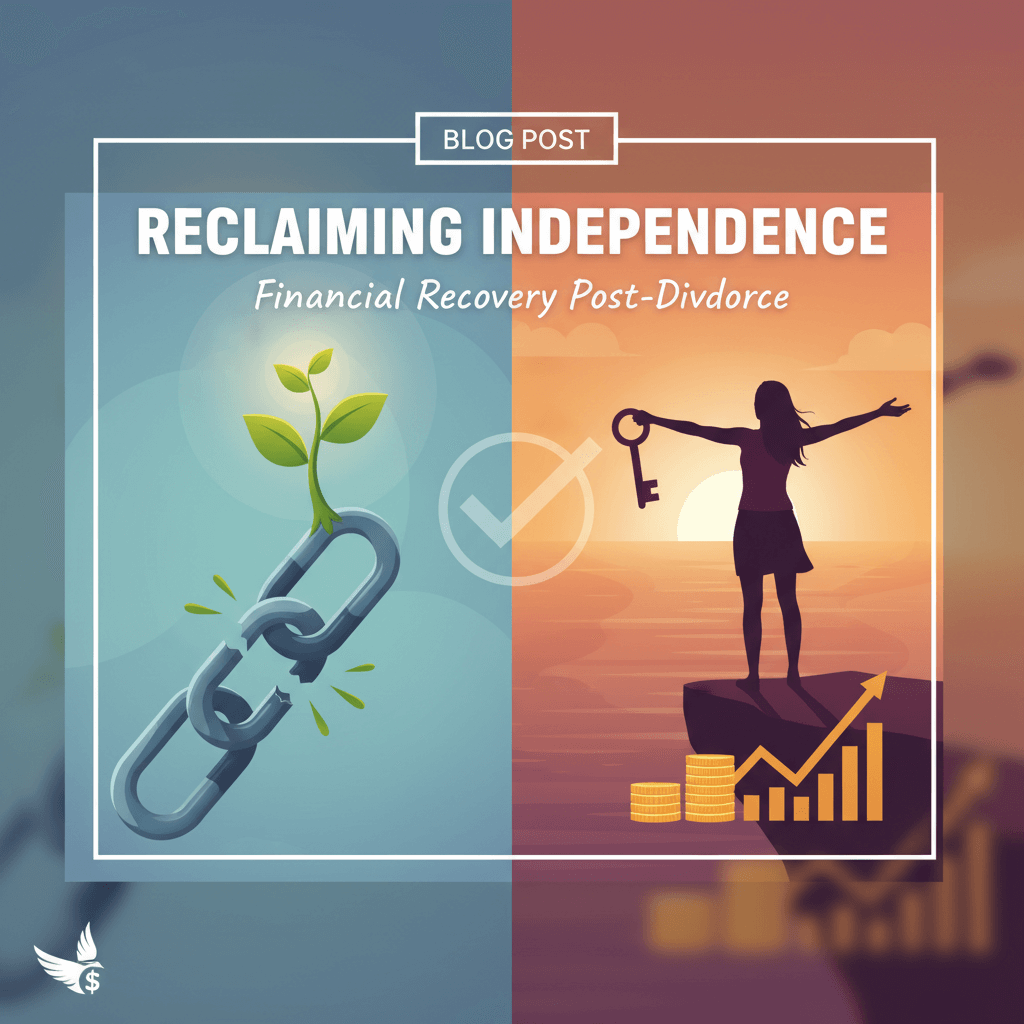
When Sarah found herself sitting across from her divorce attorney at 42, she had $327 in her personal bank account. Despite a household income that had topped $180,000 annually during her 15-year marriage, she had surrendered financial control years ago. “I remember staring at my bank statement thinking this can’t be my new reality,” she told me. “But that moment of panic became my turning point.”
Three years later, Sarah owns a thriving consulting business, maintains an emergency fund covering six months of expenses, and recently purchased her own home. Her story isn’t an anomaly—it’s increasingly becoming the narrative for many who discover that divorce, while emotionally and financially challenging, can catalyze a powerful financial rebirth.
The financial aftermath of divorce is often painted as devastating—and the statistics initially support this concern. According to the U.S. Government Accountability Office, women’s household income falls by 41% following divorce, nearly twice the decline men experience. Yet beneath these sobering numbers lies a counterintuitive truth: many divorcees ultimately develop stronger financial foundations than they maintained during their marriages.
The Financial Awakening: From Dependence to Empowerment
For many, divorce forces a financial awakening that, while initially overwhelming, ultimately leads to greater financial literacy and independence.
Understanding Your Financial Reality
Michael, 51, had delegated financial management to his ex-wife throughout their 22-year marriage. “I couldn’t tell you what our mortgage payment was or how much we had in savings,” he admits. “The divorce process was my crash course in personal finance.”
This experience mirrors what certified divorce financial analyst Kimberly Foss observes in her practice: “The partner who wasn’t involved in finances often experiences the steepest learning curve, but frequently becomes the most dedicated financial student post-divorce.”
Taking control begins with these essential steps:
- Conduct a complete financial inventory – List all assets, debts, income sources, and expenses to establish your starting point.
- Check your credit report – Review for accuracy and understand your credit standing as you begin rebuilding.
- Create a realistic post-divorce budget – Adjust your lifestyle expectations to match your new financial reality.
Emotional Spending vs. Strategic Planning
Research from the Financial Therapy Association indicates that 72% of recently divorced individuals engage in some form of emotional spending during the first year after divorce. This common coping mechanism can derail financial recovery before it begins.
“I bought a car I couldn’t afford two months after my divorce was finalized,” admits Tanya, 38. “It felt like reclaiming my identity, but it set me back financially for years.”
Financial therapist Amanda Clayman suggests these healthier alternatives:
- Implement a 48-hour waiting period for non-essential purchases over $100
- Find cost-free ways to process emotions, such as journaling or support groups
- Develop a “values-based spending plan” that aligns expenditures with your most important goals
Rebuilding Your Financial Foundation
The post-divorce period presents a unique opportunity to establish financial habits aligned with your personal values and goals, often for the first time.
Creating Security Through Emergency Savings
A 2022 study from the Divorce Financial Recovery Institute found that divorcees who established emergency funds within the first year post-divorce reported 58% lower financial anxiety levels than those who didn’t prioritize savings.
Jason, 44, credits his post-divorce emergency fund with changing his relationship with money: “Having that safety net gave me the confidence to make better decisions. I wasn’t operating from fear anymore.”
Financial advisors specializing in divorce recovery recommend:
- Start with a modest goal of saving $1,000 before expanding to three to six months of essential expenses
- Automate transfers to savings accounts on paydays to remove decision fatigue
- Keep emergency funds in high-yield savings accounts that remain accessible but separate from daily spending accounts
Reestablishing Credit Independence
For many divorcees, rebuilding credit becomes a critical priority, especially if credit was previously shared or primarily in their ex-spouse’s name.
“I discovered my credit score was 612 after my divorce,” explains Elena, 47. “I had always been an authorized user on my ex-husband’s cards, but had minimal credit history of my own. Rebuilding became my financial priority.”
Credit restoration strategies that have proven effective include:
- Applying for a secured credit card with a modest limit and using it for small, regular purchases
- Maintaining low credit utilization (under 30% of available credit)
- Setting up automatic payments to ensure consistent, on-time payment history
Transforming Financial Mindsets
Perhaps the most profound change many experience post-divorce is not in their bank accounts but in their relationship with money itself.
From Scarcity to Abundance Thinking
Financial psychologist Dr. Brad Klontz notes that divorce often triggers scarcity mindsets that can become self-fulfilling prophecies. “The belief that there will ‘never be enough’ leads to financial paralysis or impulsive decisions that confirm the original fear,” he explains.
Robert, 53, describes his journey: “For the first year after my divorce, I hoarded every penny, afraid to invest or even spend on necessities. I was living in a constant state of financial panic. Learning to distinguish between healthy caution and paralyzing fear was transformative.”
Strategies for cultivating financial confidence include:
- Celebrating small financial wins to build momentum and positive associations with money management
- Working with financial professionals who specialize in post-divorce planning to develop realistic growth strategies
- Participating in financial education through workshops, courses, or coaching specifically designed for divorce recovery
Reclaiming Financial Agency
A surprising finding from a longitudinal study by the Institute for Divorce Financial Analysts revealed that 67% of participants reported greater satisfaction with their financial decision-making three years post-divorce compared to during their marriages—regardless of whether their absolute financial position had improved.
“The sense of agency—of making financial choices aligned with your own values—creates psychological benefits that often outweigh the challenges of having fewer resources,” explains financial therapist Lindsay Bryan-Podvin.
This renewed sense of financial agency manifests through:
- Setting and achieving personal financial goals without compromise or negotiation
- Aligning spending with individual values and priorities
- Experiencing direct consequences (both positive and negative) of financial decisions
Building Sustainable Financial Systems
Successful financial recovery post-divorce requires not just emotional healing but practical systems that support long-term stability.
Creating Structures for Financial Success
Diana, 46, credits her post-divorce financial renaissance to establishing clear systems: “During my marriage, our finances were chaotic. After the divorce, I built simple, consistent routines around money management that removed so much stress.”
Effective financial structures often include:
- Regular financial review sessions – Weekly for spending, monthly for budgets, quarterly for investments and goals
- Automated savings and bill payments – Removing the cognitive load of routine financial tasks
- Digital tools for tracking and planning – Apps and software that provide visibility and accountability
Planning for Future Security
Research from the National Endowment for Financial Education shows that divorcees who develop comprehensive financial plans within two years of divorce accumulate retirement savings at rates comparable to those who remained married.
“My divorce forced me to take retirement planning seriously for the first time,” shares William, 49. “I realized no one was going to secure my future except me.”
Key components of post-divorce financial security planning include:
- Revising retirement contribution strategies to account for solo financial responsibility
- Updating estate planning documents, beneficiary designations, and insurance policies
- Developing multiple income streams to create financial resilience
From Survival to Thriving: Embracing Financial Independence
The journey from financial survival to prosperity after divorce rarely follows a linear path, but those who successfully navigate this transition often discover unexpected benefits.
A five-year study by financial researcher Olivia Bernard found that divorcees who achieved financial stability reported higher levels of life satisfaction than they had experienced in the final years of their marriages. “Financial empowerment creates ripple effects through all aspects of life,” Bernard notes. “The confidence gained through financial recovery transfers to career advancement, personal relationships, and overall wellbeing.”
This was certainly true for Sarah, whose story opened this article. “Managing my finances successfully gave me confidence I never knew I was missing,” she reflects. “Each financial milestone I reach reinforces that I’m capable of building the life I want, on my terms.”
For those currently navigating the financial aftermath of divorce, consider these final recommendations:
- Be patient with the process. Financial recovery typically takes two to five years, with progress rarely occurring in a straight line.
- Seek community support. Connect with others who understand the unique challenges of post-divorce finances through support groups or online communities.
- Reframe setbacks as learning opportunities. Each financial challenge provides valuable information about your habits, needs, and goals.
Divorce may initially appear as a financial setback, but for many, it ultimately serves as the catalyst for developing authentic financial independence. The skills, confidence, and resilience built through this process often create a financial foundation stronger than what existed before—proof that sometimes our greatest challenges reveal our most significant opportunities for growth.
What financial step will you take today to move from surviving to thriving in your post-divorce journey?
Where This Insight Came From
This analysis was inspired by real discussions from working professionals who shared their experiences and strategies.
- Share Your Experience: Have similar insights? Tell us your story
At ModernWorkHacks, we turn real conversations into actionable insights.
![[Workflow Included] A simple 5-node Instagram posting workflow for beginners](https://modernworkhacks.com/wp-content/uploads/2026/04/workflow-included-a-simple-5-node-instagram-posting-workflow-for-beginners-1024x675.png)




0 Comments