When Melissa, a senior marketing manager at a Fortune 500 company, received the email announcing a mandatory five-day return to office policy, her heart sank. For the past two years, she had built a rhythm that allowed her to be present for her children’s school events while delivering her best work during her peak productivity hours—often early mornings and evenings. The rigid 9-to-5 mandate felt like stepping back in time, and within weeks, she joined the 37% of employees who changed jobs in 2022 specifically for flexibility.
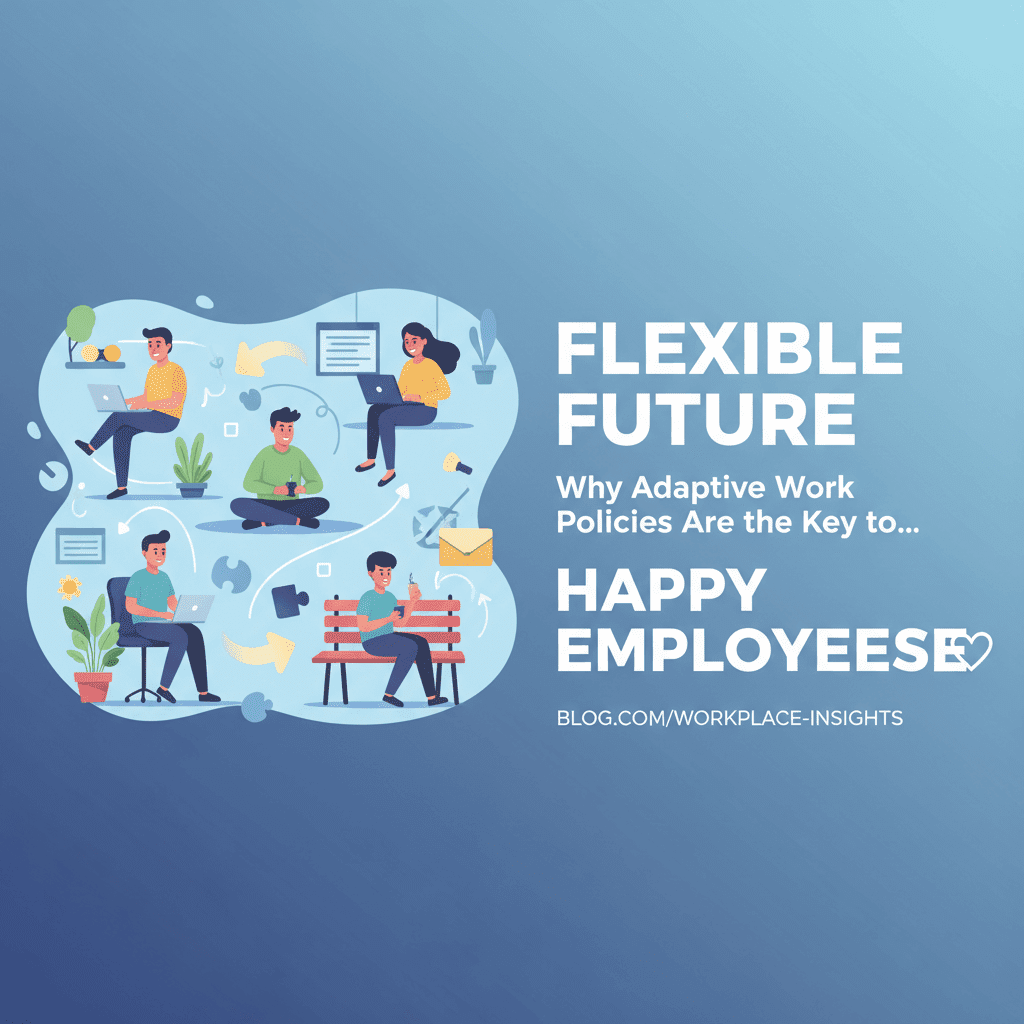
Stories like Melissa’s are playing out across the corporate landscape as companies grapple with post-pandemic work arrangements. While some executives cling to traditional office models, forward-thinking organizations are discovering something revolutionary: flexibility isn’t just a perk—it’s becoming the foundation of successful workplace cultures and a key driver of employee satisfaction, productivity, and retention.
The Great Disconnect: Why Traditional RTO Mandates Are Failing
The data is clear and increasingly difficult for leadership to ignore. According to a 2023 Future Forum survey, 65% of knowledge workers prefer flexible work arrangements, yet many companies continue pushing inflexible return-to-office mandates, creating what workplace experts call “the great disconnect.”
The Hidden Costs of Rigid Policies
When major tech company Snapchat announced its four-day-a-week office mandate in 2022, they experienced a 26% increase in resignation rates within the first three months. Similarly, when IBM reversed its remote work policies in 2017, they lost significant talent—including 14% of their senior leadership—before eventually adopting a more flexible approach again in 2021.
The financial implications extend beyond turnover costs:
- Productivity losses: Research from Stanford University shows that rigid schedules can reduce productivity by up to 20% for employees whose natural work patterns don’t align with traditional hours.
- Real estate inefficiency: Companies with strict in-office requirements maintain expensive office space that often sits at just 40-60% capacity, according to JLL’s 2023 workplace utilization report.
- Diversity impact: Inflexible policies disproportionately affect caregivers, people with disabilities, and those with longer commutes—often pushing out valuable talent and perspectives.
The Flexibility Spectrum: Beyond “Remote vs. Office”
The most successful companies have moved past the binary remote-or-office debate to embrace what workplace strategists call “the flexibility spectrum”—recognizing that different roles, teams, and individuals may require different arrangements.
Case Study: Cisco’s Team Agreements
Cisco’s approach to flexibility offers a compelling example of adaptive policies in action. Rather than implementing a one-size-fits-all mandate, they developed “Team Agreements”—collaborative documents where each team determines their optimal working arrangement based on their specific needs and functions.
The results have been remarkable: employee satisfaction scores increased by 22%, voluntary turnover decreased by 8%, and productivity metrics improved across 76% of teams. Jeetu Patel, Cisco’s EVP, explains: “We’ve moved from prescribing how work happens to establishing what outcomes matter, then letting teams design their best path to those outcomes.”
The Four Dimensions of Workplace Flexibility
True flexibility encompasses multiple dimensions:
- Spatial flexibility: Where work happens (office, home, third spaces, or a mix)
- Temporal flexibility: When work happens (core hours, flexible schedules, asynchronous options)
- Procedural flexibility: How work happens (communication channels, meeting protocols)
- Operational flexibility: What tools and resources support different working styles
Organizations that address all four dimensions, like Dropbox with their “Virtual First” model or Spotify’s “Work From Anywhere” program, report the highest employee satisfaction scores and lowest turnover rates in their industries.
The Science Behind Why Flexibility Works
The benefits of workplace flexibility aren’t just anecdotal—they’re backed by substantial research spanning psychology, neuroscience, and organizational behavior.
Autonomy and Psychological Ownership
A landmark 2022 study in the Journal of Organizational Behavior found that employees with schedule flexibility experienced a 34% increase in psychological ownership of their work—the feeling that their job is truly “theirs.” This ownership correlates directly with a 28% increase in discretionary effort and a 41% boost in work satisfaction.
Dr. Teresa Amabile, Harvard Business School professor and workplace researcher, explains: “When people feel they have meaningful choice in how they approach their work, we see dramatic improvements in creative problem-solving, persistence through challenges, and overall engagement.”
Chronobiology and Peak Performance
Humans aren’t designed for identical work schedules. Research in chronobiology—the study of natural biological rhythms—shows that:
- Approximately 14% of people are true “morning larks,” with peak cognitive performance before noon
- About 21% are “night owls,” reaching their cognitive peak in late afternoon or evening
- The majority fall somewhere between, with performance peaks that don’t neatly align with traditional 9-to-5 schedules
When Microsoft Japan implemented a flexible work program allowing employees to align work hours with their chronotype, they saw a remarkable 40% increase in productivity and 23% decrease in fatigue-related errors.
Implementation: How Leading Companies Are Making Flexibility Work
The transition to flexible work arrangements requires thoughtful implementation. Here’s how leading organizations are succeeding where others struggle:
Salesforce: Purpose-Driven Office Design
Salesforce redesigned their physical offices around what they call “the magnet, not mandate” philosophy. Instead of requiring attendance, they created compelling collaboration spaces that draw people in for specific purposes—team workshops, client meetings, or social connection—while supporting focused individual work elsewhere.
Their approach includes:
- Activity-based spaces: Different zones designed for different work modes
- Technology parity: Ensuring remote participants have equal presence in meetings
- Intentional gathering: Coordinated team days when collaboration benefits are highest
The result? Office utilization rates above industry averages (72% on designated collaboration days) while maintaining a primarily flexible model that 83% of employees report increases their job satisfaction.
GitLab: Asynchronous-First Communication
As a fully distributed company with over 1,500 employees across 65 countries, GitLab has pioneered asynchronous work practices that many hybrid companies now emulate. Their comprehensive public handbook details how they’ve built a high-performance culture without synchronous work requirements.
Key elements include:
- Documentation-first approach: Capturing decisions and discussions in accessible formats
- Reduced meeting load: 70% fewer meetings than industry average
- Clear response expectations: Guidelines for communication timing based on urgency
GitLab reports 35% higher productivity than industry benchmarks and consistently ranks among top employers for work-life satisfaction.
Overcoming Leadership Resistance to Flexible Work
Despite compelling evidence, some leaders remain skeptical about flexible work arrangements. Addressing these concerns directly is essential for organizations navigating this transition.
From Control to Outcomes
The most successful flexible work implementations shift from measuring presence to measuring results. When investment firm Capital One transitioned to a flexible model, they implemented what they call “Outcome-Based Performance Frameworks”—clear metrics and deliverables that focus on what gets accomplished rather than when or where the work happens.
This approach requires:
- Clear goal-setting: Specific, measurable objectives for individuals and teams
- Regular check-ins: Structured feedback cycles independent of location
- Performance transparency: Visible progress tracking accessible to all stakeholders
After implementation, Capital One saw performance ratings improve across 68% of teams, while manager concerns about visibility decreased by 47%.
The Future Is Flexible: Building Your Organization’s Approach
As we look ahead, organizations that thrive will be those that embrace flexibility as a strategic advantage rather than a temporary accommodation. The key is developing an approach that aligns with your specific organizational needs while responding to employee expectations.
Start With These Actions
- Conduct a flexibility audit: Assess current policies against the four dimensions of flexibility and identify gaps.
- Pilot program development: Test different approaches with specific teams before broader implementation.
- Invest in manager training: Equip leaders with skills to manage distributed teams and focus on outcomes.
Remember that flexibility isn’t binary—it exists on a spectrum. The goal isn’t necessarily to become fully remote or abandon all structure, but to find the optimal balance that serves both organizational objectives and employee needs.
As Prithwiraj Choudhury, Harvard Business School professor and remote work researcher, notes: “The organizations that will win the talent war are those that recognize flexibility as a competitive advantage—not just in where work happens, but in creating environments where people can do their best work in ways that honor their whole lives.”
The future of work isn’t about returning to the past or maintaining pandemic-era extremes—it’s about moving forward with policies that adapt to human needs while driving organizational success. The companies that embrace this flexible future won’t just have happier employees; they’ll have stronger businesses built for the challenges ahead.
Where This Insight Came From
This analysis was inspired by real discussions from working professionals who shared their experiences and strategies.
- Share Your Experience: Have similar insights? Tell us your story
At ModernWorkHacks, we turn real conversations into actionable insights.
![[Workflow Included] A simple 5-node Instagram posting workflow for beginners](https://modernworkhacks.com/wp-content/uploads/2026/04/workflow-included-a-simple-5-node-instagram-posting-workflow-for-beginners-1024x675.png)



0 Comments