
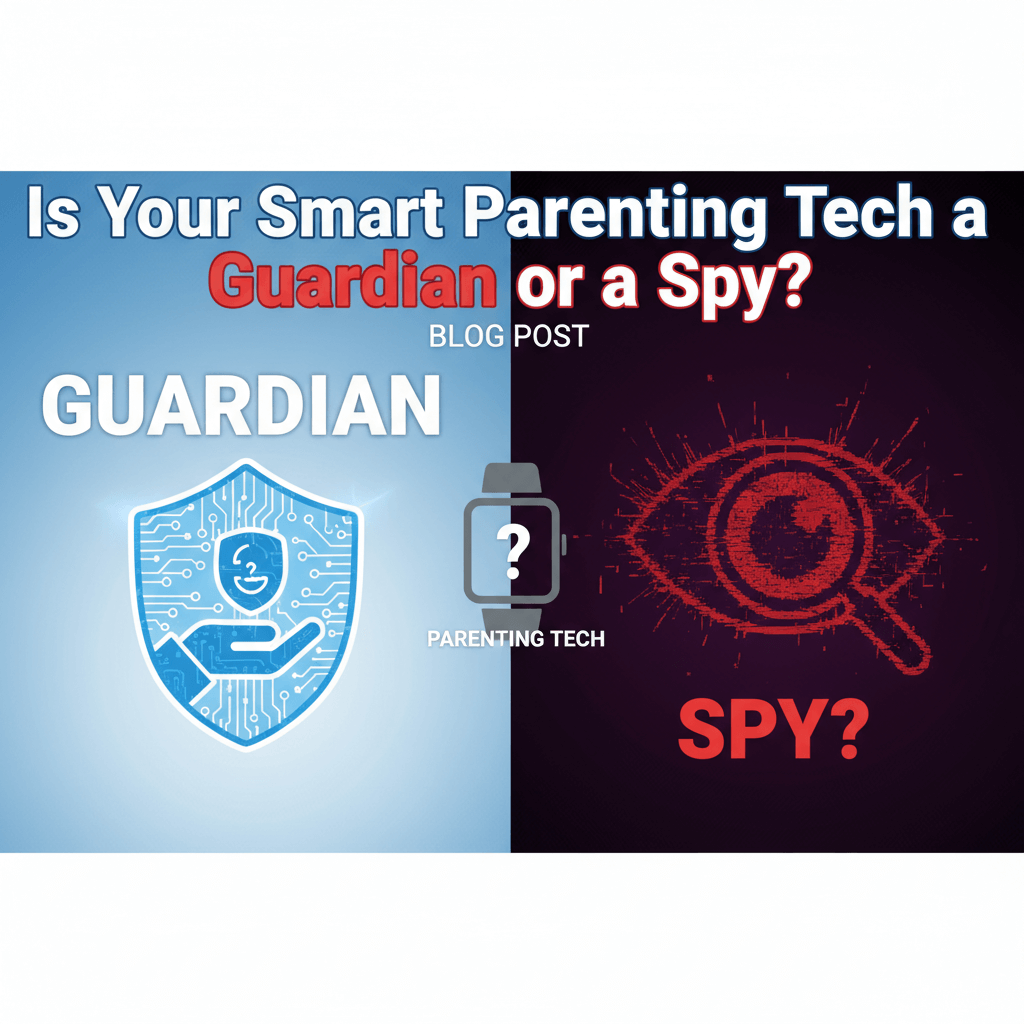
The soft blue glow of the baby monitor illuminated Sarah’s face as she checked on her sleeping toddler from the kitchen. With a few taps on her smartphone, she could see her daughter’s breathing patterns, room temperature, and even receive alerts if anything seemed amiss. “It gives me such peace of mind,” she told me. But later that evening, Sarah confessed something unexpected: “Sometimes I wonder if I’m watching too much. Will my daughter grow up feeling like privacy doesn’t exist?”
Sarah’s question cuts to the heart of modern parenting’s most pressing technological dilemma. As smart devices proliferate in our homes and children’s lives, we’re navigating uncharted territory between protection and surveillance. The line between being a vigilant guardian and becoming an invasive spy has never been blurrier—or more important to define.
The Evolution of Parenting Tech: From Simple Monitors to AI Surveillance
Parenting technology has undergone a remarkable transformation in just one generation. What began as simple audio monitors has evolved into comprehensive surveillance systems that track everything from sleep patterns to social media activity.
The Technological Leap
The first electronic baby monitors appeared in the 1930s, but the real revolution began in the 2010s. Today’s parenting tech landscape includes:
- Smart baby monitors that track breathing, sleep position, and vital signs
- GPS trackers embedded in watches, backpacks, and even clothing
- AI-powered content filters that monitor children’s online activities
- Smart home systems that record when children enter or leave the house
According to research from the Family Online Safety Institute, 76% of parents now use at least one form of monitoring technology with their children—a figure that has doubled since 2016.
The Driving Forces
This technological adoption isn’t happening in a vacuum. Dr. Elena Korngold, a child development specialist at Cornell University, explains: “Parents today are responding to a perfect storm of anxieties. Media coverage of child abductions and online predators, though statistically rare, creates a perception that children face unprecedented dangers.”
The statistics tell a more nuanced story. While children do face new digital risks, physical safety for children has actually improved in many ways. The FBI reports that child abductions by strangers have decreased by 40% since the 1990s, even as parental monitoring has increased dramatically.
The Guardian Argument: When Monitoring Means Protection
For many families, smart technology serves as an essential safety net in a complex world. The case for these technologies as guardians rests on several compelling foundations.
Medical Necessity and Peace of Mind
For parents of children with medical conditions, advanced monitoring can be life-saving. The Martinez family in Boston credits their smart sock monitor with alerting them when their infant son’s oxygen levels dropped dangerously low due to an undiagnosed heart condition.
“That technology gave us precious minutes to react,” Carlos Martinez told me. “For families like ours, these aren’t luxury items—they’re necessities.”
Even for children without medical concerns, monitoring technology can alleviate parental anxiety, potentially creating a more relaxed home environment. Research published in the Journal of Family Psychology suggests that reduced parental anxiety correlates with more secure attachment patterns in young children.
Digital Safety in a Connected World
As children navigate increasingly complex online spaces, monitoring software can serve as a digital safety net. Consider these actionable approaches:
- Use content filters as teaching tools by reviewing blocked content together and discussing why certain material is inappropriate
- Gradually reduce monitoring as children demonstrate responsible digital citizenship
- Focus monitoring on younger children while transitioning to trust-based approaches with teenagers
Melissa Chung, a cybersecurity expert and mother of three, advocates for a balanced approach: “The goal isn’t perpetual surveillance but rather a temporary scaffolding while children develop their own judgment skills.”
The Surveillance Concern: When Monitoring Becomes Invasive
Despite the benefits, the proliferation of monitoring technology raises serious concerns about children’s development, privacy rights, and family dynamics.
Developmental Implications
Child psychologists increasingly warn that constant surveillance may undermine crucial developmental processes. Dr. Samuel Farber of the Child Development Institute explains: “Children need graduated independence to develop self-regulation, risk assessment, and personal boundaries. When they know they’re always being watched, they don’t learn to monitor themselves.”
A longitudinal study from the University of Michigan found that adolescents subject to high levels of parental monitoring without appropriate privacy allowances showed higher rates of anxiety and lower scores on measures of autonomous decision-making by age 19.
The Trust Paradox
Perhaps most concerning is how surveillance technology can erode the trust that forms the foundation of healthy parent-child relationships.
Sixteen-year-old Zoe’s experience illustrates this dynamic. When she discovered her parents had installed keylogging software on her computer without discussion, her response was not improved behavior but sophisticated evasion. “I started using school computers for anything personal,” she explained. “I didn’t feel protected—I felt violated.”
This reaction is common. Research from the Pew Research Center found that 70% of teens have taken active measures to hide their online activity from parents who monitor without transparent communication.
The Privacy Rights Question: Do Children Deserve Digital Privacy?
Underlying this entire debate is a fundamental question: What privacy rights should children have, and how do these evolve as children grow?
Legal vs. Ethical Considerations
Legally, the picture is clear but ethically complex. Parents in most jurisdictions have broad legal authority to monitor their minor children. However, legal permission doesn’t automatically make an action developmentally appropriate or ethically sound.
Dr. Korngold suggests three principles for navigating this territory:
- Proportionality: The degree of monitoring should match the specific need and risk
- Transparency: Children should generally know when and how they’re being monitored
- Progressive privacy: Privacy allowances should increase with age and demonstrated responsibility
Cultural and Generational Perspectives
Our views on children’s privacy rights are not universal. Different cultures and generations have markedly different perspectives on appropriate boundaries.
A comparative study across 12 countries found that parents in South Korea and China were significantly more likely to view extensive digital monitoring as appropriate compared to parents in Sweden or Canada. Even within the United States, generational divides are apparent, with parents who grew up with social media often more sensitive to digital privacy concerns than older generations.
Finding the Balance: Ethical Frameworks for Smart Parenting
So how can parents navigate this complex territory? Several frameworks offer practical guidance for deploying technology ethically.
The Transparency Principle
The most consistent recommendation from both psychologists and ethicists is maintaining transparency. Consider these approaches:
- Discuss monitoring technologies before implementing them, explaining your concerns and reasoning
- Create clear family policies about what is monitored and why
- Regularly review and adjust monitoring practices as children mature
The Gonzalez family exemplifies this approach. When their daughter turned 13, they sat down together to create a “digital contract” that outlined when and how monitoring would occur, with clear provisions for increased privacy as trust was established.
The Graduated Independence Model
Rather than viewing monitoring as all-or-nothing, consider a staged approach that evolves with your child’s development:
Ages 5-8: Close supervision with simple explanations about safety
Ages 9-12: Monitored independence with regular check-ins and discussions
Ages 13-15: Selective monitoring focused on specific concerns with increased privacy
Ages 16+: Minimal monitoring with emphasis on trust and open communication
Technology expert and father James Liu suggests: “Think of monitoring tech as training wheels. They’re crucial at first, but the goal is to eventually remove them as balance develops.”
The Path Forward: Conscious Digital Parenting
As we navigate this new frontier, perhaps the most important question isn’t whether to use monitoring technology, but how to use it consciously and ethically.
The most successful families I’ve interviewed don’t simply deploy technology—they engage in ongoing conversations about it. They recognize that digital monitoring tools are neither inherently good nor bad; their impact depends entirely on how they’re implemented.
Consider these final guidelines for conscious digital parenting:
- Regularly reassess whether your current monitoring practices still serve their intended purpose
- Create technology-free spaces and times where family members can connect without digital intermediaries
- Model the privacy respect you hope to instill by asking permission before sharing information or photos of your children online
- Focus on building internal motivation and values rather than relying on external surveillance as the primary behavior regulator
The ultimate goal of parenting technology should be to eventually render itself unnecessary—to help raise children who internalize good judgment and make wise choices even when no one is watching.
As Sarah, the mother from our opening story, ultimately decided: “I realized I don’t want to raise children who behave well because they’re being monitored. I want to raise children who behave well because they’ve developed their own internal compass.”
In that wisdom lies perhaps the most important truth about smart parenting technology: The most sophisticated monitoring systems can track location, screen time, and online activity, but they can never replace the fundamental parenting work of building trust, teaching values, and gradually releasing control as children grow toward independence.
Where do you fall on this spectrum? Is your technology serving as a temporary scaffold or a permanent surveillance system? The answer may reveal not just your parenting philosophy, but your deepest hopes and fears for your children’s future.
Where This Insight Came From
This analysis was inspired by real discussions from working professionals who shared their experiences and strategies.
- Share Your Experience: Have similar insights? Tell us your story
At ModernWorkHacks, we turn real conversations into actionable insights.
![[Workflow Included] A simple 5-node Instagram posting workflow for beginners](https://modernworkhacks.com/wp-content/uploads/2026/04/workflow-included-a-simple-5-node-instagram-posting-workflow-for-beginners-1024x675.png)





0 Comments