
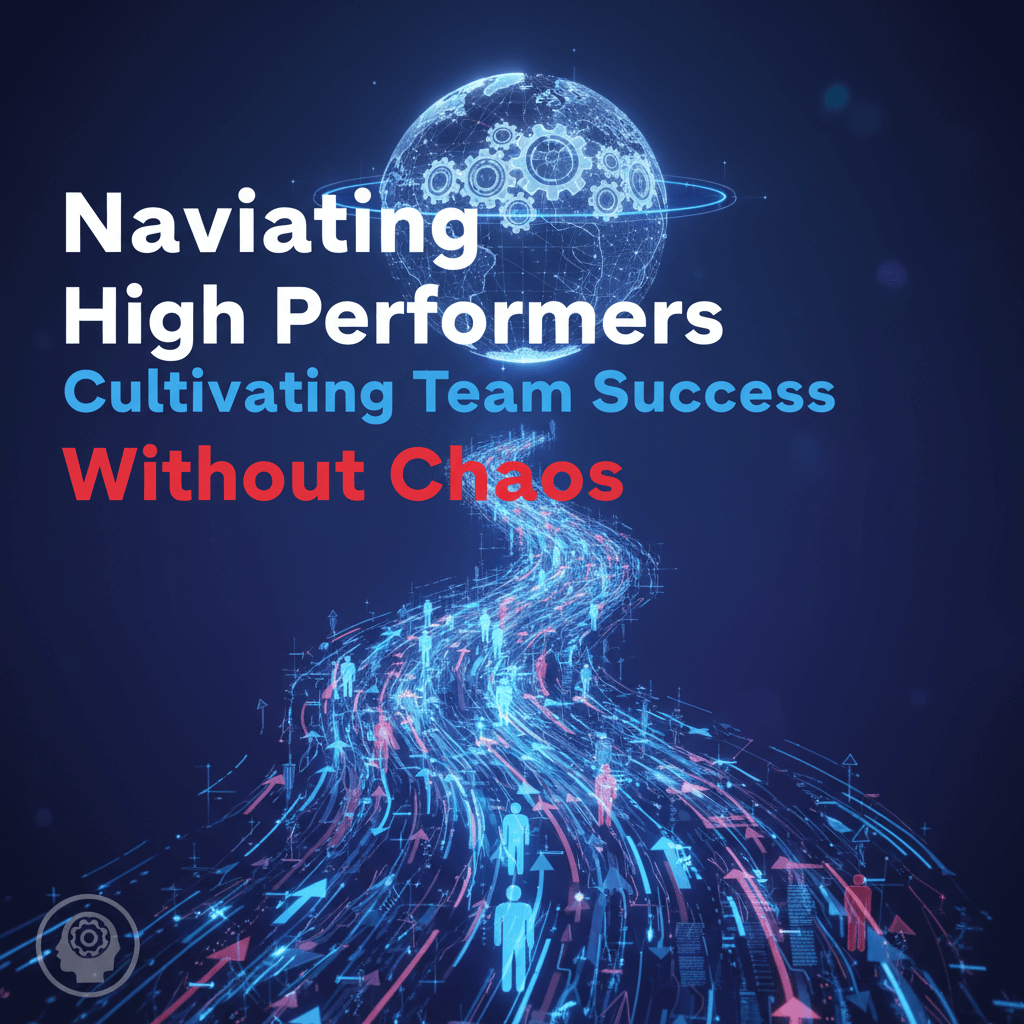
The weekly team meeting had just erupted into another heated debate. Marcus, our star performer, was pushing for an aggressive timeline on the new product launch while the rest of the team exchanged nervous glances. His ideas were brilliant—they always were—but his intensity often left others feeling steamrolled. As the leader, I watched the familiar scene unfold: one vocal high performer dominating the conversation while other valuable team members retreated into silence. The innovation we needed was happening, but at what cost to team cohesion?
This scenario plays out in organizations everywhere. High performers are invaluable assets who drive innovation and results, but without proper leadership, they can inadvertently create team dysfunction, resentment, and ultimately, undermine the collective success they’re meant to enhance.
The challenge for today’s leaders isn’t about reining in top talent or forcing conformity—it’s about creating environments where high performers can thrive while ensuring the entire team rises together. This delicate balancing act requires intentional leadership strategies that harness individual excellence while fostering collaborative success.
Understanding the High Performer Dynamic
High performers typically contribute 400% more productivity than average workers, according to research from personnel assessment firm Maximus. While these statistics highlight their value, they don’t capture the complex interpersonal dynamics that emerge when exceptional talent works alongside others.
The Double-Edged Sword of Exceptional Talent
High performers bring unmistakable advantages: they raise standards, inspire innovation, and deliver outstanding results. However, their presence can create unintended consequences:
- The competence-confidence paradox – Their exceptional abilities may intimidate team members, causing others to withhold ideas or contributions.
- Pace disparity – High performers often work at accelerated speeds, potentially creating friction when collaborating with others.
- Expectation imbalance – Leaders may unconsciously develop different standards for high performers versus other team members.
Sarah, a product director at a mid-size tech company, experienced this firsthand: “Our lead developer could solve problems in hours that would take others days. We celebrated his brilliance until we realized junior team members had stopped speaking up in meetings. They assumed their ideas couldn’t compete with his, so why bother? We were getting his genius but losing the diversity of thought that drives true innovation.”
Recognizing High Performer Types
Not all high performers create the same team dynamics. Understanding the specific type you’re working with is crucial:
- The Solo Virtuoso – Delivers exceptional individual results but may struggle with collaboration
- The Inspirational Pacesetter – Elevates team performance through example but can unintentionally create burnout culture
- The Visionary Disruptor – Challenges conventions with breakthrough ideas but may create implementation chaos
Each type requires different leadership approaches to maximize their contributions while maintaining team harmony.
Creating Psychological Safety Alongside Excellence
Google’s Project Aristotle research conclusively showed that psychological safety—the belief that one can speak up without fear of punishment or humiliation—was the most critical factor in high-performing teams. This becomes even more crucial when managing exceptional talent.
Establishing Balanced Contribution Protocols
When working with high performers, deliberate communication structures ensure all voices are heard:
- Implement round-robin input sessions where each team member contributes before open discussion begins
- Create “idea incubation periods” where concepts are developed before being critiqued
- Use anonymous idea submission channels for sensitive topics where status differences might inhibit participation
“We instituted a ’24-hour rule’ for major proposals,” explains Carlos, an engineering manager at a Fortune 500 company. “After our star architect presents an approach, no decisions are made for 24 hours. This gives everyone time to process, formulate questions, and contribute alternatives without the pressure of immediate response. Our solutions improved dramatically because quieter team members now meaningfully contribute.”
Normalizing Both Excellence and Learning
Research from Harvard Business School shows that teams that openly discuss both successes and failures outperform those focused solely on achievements. Leaders must create environments where:
- High performance is celebrated without creating untouchable “hero” narratives
- Learning processes and growth mindsets receive as much attention as outcomes
- Mistakes are treated as valuable data rather than performance failures
This approach prevents the formation of two-tier team cultures where high performers seem to operate under different rules than everyone else.
Strategic Role Definition and Team Composition
A 2021 McKinsey study found that teams with clearly defined, complementary roles were 1.9 times more likely to deliver successful outcomes than those with ambiguous responsibilities—especially when high performers were involved.
Designing Roles That Leverage Strengths Without Creating Silos
Effective leaders craft roles that maximize individual excellence while ensuring interdependence:
- Create “specialist-plus-connector” responsibilities where high performers must both excel in their domain and enable others’ success
- Implement skill-sharing rotations where high performers formally transfer knowledge to teammates
- Establish cross-functional partnerships that pair high performers with complementary talent
Elena, VP of Marketing at a consumer goods company, restructured her team using this approach: “Instead of letting our analytics genius work in isolation, we paired him with creative team members in ‘insight pods.’ He maintained his deep analytical work but now had formal responsibility for making his insights accessible to non-technical colleagues. The result was more innovative campaigns and a more cohesive team.”
Balancing Team Composition for Collective Intelligence
Research from MIT’s Center for Collective Intelligence demonstrates that team performance depends more on how members interact than on individual brilliance. When building teams with high performers:
- Balance technical expertise with collaboration skills
- Include “translators” who can bridge communication between different thinking styles
- Consider cognitive diversity alongside skill diversity
Feedback Systems That Elevate Everyone
Traditional feedback systems often reinforce disparities between high performers and others. A more nuanced approach is required to maintain excellence while developing the entire team.
Developing Multi-Dimensional Performance Metrics
Organizations that rely solely on outcome-based metrics inadvertently create environments where high performers can succeed at the expense of team dynamics. Expanded metrics should include:
- Collaboration effectiveness – How well does the individual enhance others’ work?
- Knowledge transfer impact – How effectively does the person develop capabilities in others?
- Process improvement contributions – Beyond personal output, how does the individual improve team systems?
“We completely redesigned our performance reviews,” shares Michael, CTO at a financial services firm. “Our most brilliant developer was shocked when his ‘exceeds expectations’ rating included improvement areas around mentoring. We made it clear: at senior levels, technical brilliance alone wasn’t enough. True high performance meant elevating the entire team’s capabilities.”
Constructive Challenge Frameworks
High performers often require—and respect—more direct feedback than other team members. Effective leaders create feedback systems that:
- Provide appropriately challenging growth opportunities for top talent
- Establish clear boundaries around interpersonal behaviors regardless of performance level
- Create safe channels for team members to provide upward feedback about high performers
According to research from leadership development firm DDI, teams where all members receive equivalently rigorous feedback show 27% higher engagement scores than those with unbalanced feedback approaches.
Cultivating a Collective Excellence Mindset
The most successful teams with high performers develop a shared identity where individual brilliance serves collective success rather than personal status.
Reframing Recognition Systems
How leaders acknowledge achievements significantly impacts team culture. Effective approaches include:
- Celebrating “invisible contributions” that enable others’ visible successes
- Highlighting collaborative achievements alongside individual excellence
- Creating team-based rewards that incentivize collective performance
“We implemented a monthly ‘Constellation Award’ alongside our existing ‘Star Performer’ recognition,” explains Priya, a hospital administrator. “It specifically honors those who made others shine brighter. This simple addition transformed how our medical teams operated—suddenly our renowned surgeons were actively mentoring residents and collaborating with nursing staff in new ways.”
Developing Shared Ownership Narratives
The stories organizations tell about success shape how team members view their roles. Leaders should:
- Consistently communicate how diverse contributions create collective outcomes
- Share case studies highlighting interdependence rather than heroic individual efforts
- Create forums where team members articulate how others’ contributions enabled their success
A 2020 Deloitte study found that organizations with strong “collective success narratives” reported 34% higher retention rates among both high performers and their teammates.
From Individual Stars to Constellations of Excellence
The most effective leaders don’t dim their brightest stars—they help those stars illuminate the entire team. By implementing thoughtful structures around communication, role design, feedback, and recognition, leaders create environments where high performers catalyze rather than complicate team success.
The journey requires continuous calibration. As Marcus, our opening example’s high performer, later reflected: “I always thought my job was to push the boundaries and deliver exceptional results. It took a great leader to show me that my true impact would come from helping others push boundaries alongside me.”
For leaders navigating the complex terrain of managing high performers, the path forward isn’t about choosing between individual excellence and team harmony. It’s about deliberately designing systems where these seemingly opposing forces become complementary strengths.
The question isn’t whether your organization needs high performers—it absolutely does. The real question is: Are you creating the conditions where high performers elevate everyone around them rather than eclipse them? In today’s complex business environment, sustainable success depends on your answer.
How will you transform your stars into constellations?
Where This Insight Came From
This analysis was inspired by real discussions from working professionals who shared their experiences and strategies.
- Share Your Experience: Have similar insights? Tell us your story
At ModernWorkHacks, we turn real conversations into actionable insights.
![[Workflow Included] A simple 5-node Instagram posting workflow for beginners](https://modernworkhacks.com/wp-content/uploads/2026/04/workflow-included-a-simple-5-node-instagram-posting-workflow-for-beginners-1024x675.png)


0 Comments