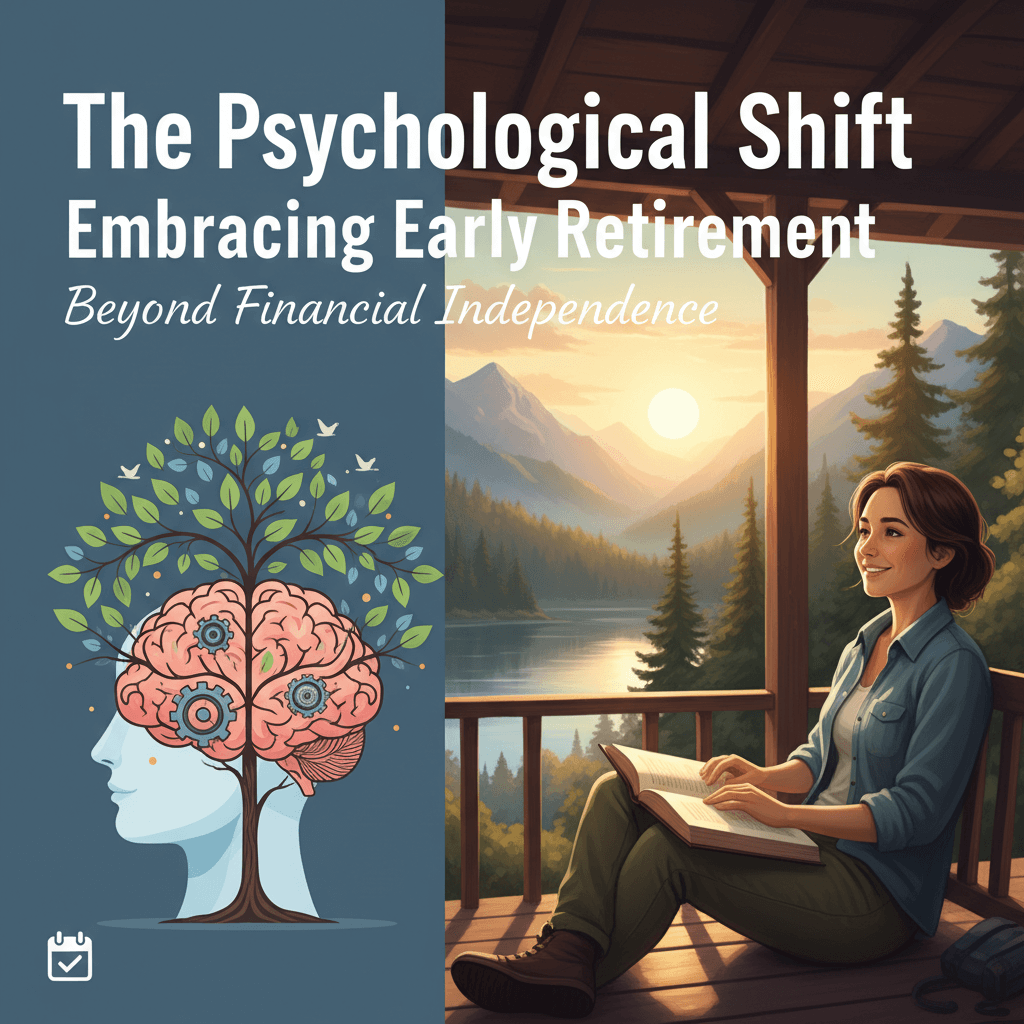
As I watched Mark clear out his desk after 22 years at the same company, something unexpected happened. Instead of the celebration I anticipated, I witnessed a moment of panic flash across his face. At 47, he had achieved what many consider the ultimate dream—financial independence and early retirement. His investments would generate more than enough to support his lifestyle indefinitely. Yet there he stood, holding a box of desk plants and family photos, visibly unsettled by the reality of what came next.
“I’ve been working toward this for decades,” he confided later. “But now that it’s here, I feel strangely… lost. Everyone talks about the money part, but no one prepared me for this emptiness.”
Mark’s experience highlights a crucial truth: retiring isn’t just a financial journey; it’s a mental metamorphosis. While the FIRE (Financial Independence, Retire Early) movement has masterfully documented the mathematical path to freedom, the psychological terrain remains largely uncharted for many early retirees.
The Identity Void: Who Am I Without My Career?
For decades, our society has conditioned us to define ourselves by our professional achievements. When someone asks, “What do you do?” they’re rarely inquiring about your hobbies or family life—they want to know your job title. This cultural programming creates a profound identity challenge for early retirees.
The Status Withdrawal
Dr. Elizabeth Kubler, a psychologist specializing in life transitions, explains: “Many high-achievers experience what I call ‘status withdrawal’—a genuine psychological response similar to other forms of withdrawal. The brain has become accustomed to the dopamine hits that come with professional recognition, accomplishments, and the social standing that accompanies career success.”
Take Jonathan, a former marketing executive who retired at 42. “At industry events, I used to be introduced as the VP of Global Strategy. People wanted my opinion, my business card, my time. Six months into retirement, I attended a neighborhood barbecue where no one knew my former title. I felt invisible, irrelevant. It was humbling and honestly terrifying.”
To navigate this identity void successfully:
- Begin identity diversification before retirement. Cultivate interests, relationships, and community roles unrelated to your career while still working.
- Practice introducing yourself without mentioning your job. Get comfortable defining yourself through values, interests, and personal qualities instead.
- Expect and normalize the discomfort. Understanding that identity disruption is a natural part of the retirement transition can make it less threatening when it occurs.
Purpose Recalibration: Finding Meaning Beyond Work
Research from the Institute of Economic Affairs found that retirement increases the probability of suffering from clinical depression by about 40%. This statistic isn’t shared to discourage early retirement but to emphasize the importance of purpose recalibration before making the leap.
The Productivity Paradox
Many early retirees report feeling guilty about “not being productive” despite having legitimately earned their freedom. This productivity paradox stems from our cultural equation of worth with output—a mindset that doesn’t dissolve simply because your financial needs are met.
Samantha, a software engineer who retired at 39, shared: “I spent the first year of retirement feeling anxious whenever I relaxed. I’d be reading a novel mid-afternoon and suddenly feel this wave of guilt, like I was getting away with something forbidden. It took conscious effort to reprogram my definition of a ‘worthwhile’ day.”
Effective strategies for purpose recalibration include:
- Create a purpose portfolio. Just as you diversified your financial investments, diversify your sources of meaning across relationships, creativity, learning, service, and personal growth.
- Set intention-based goals rather than achievement-based goals. Focus on how you want to experience life rather than what you want to accomplish.
- Explore the concept of “contribution” outside traditional work. Mentoring, volunteering, community involvement, and creative pursuits can provide the sense of impact many miss from their careers.
Social Reconfiguration: Building Community Beyond Colleagues
A longitudinal study from the University of Michigan found that social isolation increases the risk of mortality by nearly 30%—a statistic particularly relevant for early retirees who suddenly lose daily contact with colleagues.
The Friendship Gap
Work provides built-in social structures that require minimal effort to maintain. Remove those structures, and many early retirees face an unexpected friendship gap, especially when retiring decades before their peers.
Carlos, a former attorney who retired at 48, described his experience: “I never realized how much of my social life was effortlessly built into my work routine—lunch with colleagues, happy hours, even complaining about deadlines created bonds. In retirement, I had to intentionally create every social interaction, which was exhausting at first. No one tells you that making friends in your 40s requires the social courage of a teenager.”
To successfully navigate social reconfiguration:
- Maintain valuable work relationships intentionally. Schedule regular check-ins with former colleagues whose friendship extends beyond professional convenience.
- Join interest-based communities rather than age-based ones. Early retirees often find more connection with people who share their passions than those who share their retirement status.
- Become comfortable with social initiation. In retirement, the responsibility for creating social connections falls primarily on you—embrace this role rather than resisting it.
Relationship Renegotiation: Partnership in 24/7 Proximity
Retirement doesn’t happen in isolation. For those with partners, it represents a fundamental shift in relationship dynamics that requires conscious renegotiation.
The Space Readjustment
Research from the Family and Marriage Counseling Association shows that relationship satisfaction often temporarily decreases in the first year of retirement as couples adjust to new proximity patterns and responsibility distributions.
Lisa and Michael, who both retired early in their 40s, found this adjustment particularly challenging. “We went from seeing each other mainly evenings and weekends to being in the same space constantly,” Lisa explained. “We had to learn to communicate about needs for independence and togetherness in ways we never needed to before. There were definitely some tense months until we figured out our new rhythm.”
Successful relationship renegotiation strategies include:
- Discuss expectations explicitly before retirement. Have candid conversations about how you envision daily life, division of household responsibilities, and personal space.
- Create independent pursuits alongside shared ones. Maintain individual interests and activities to preserve personal identity and provide natural space.
- Consider staggered retirement if appropriate. Some couples find transitioning one partner at a time creates a smoother overall adjustment.
Time Abundance: The Unexpected Challenge of Freedom
Perhaps the most surprising psychological hurdle early retirees face is adapting to time abundance after decades of time scarcity. The brain, conditioned to operate in a constant state of optimization and efficiency, can struggle when suddenly presented with open, unstructured days.
The Boredom Threshold
A study published in the Journal of Personality and Social Psychology found that many people would rather give themselves electric shocks than sit alone with their thoughts for 15 minutes—a finding that takes on new significance for early retirees facing decades of discretionary time.
Alex, a former financial analyst who retired at 37, described his experience: “I had this bizarre realization about three months in. I was sitting on my porch on a Tuesday morning with absolutely nothing I had to do, and I felt this rising anxiety. I’d spent my entire adult life optimizing every minute, and suddenly time was abundant. It was like breathing too much oxygen—surprisingly uncomfortable.”
Effective strategies for adapting to time abundance include:
- Create flexible routines rather than rigid schedules. Establish rhythm without recreating the constraints you retired to escape.
- Practice deliberate leisure. Approach recreational activities with the same intentionality you once brought to professional projects.
- Embrace the discomfort of unstructured time as growth. The ability to be present without constant productivity is a skill worth developing.
The Psychological Preparation Roadmap
Based on both research and the lived experiences of successful early retirees, a psychological preparation roadmap emerges that’s just as important as the financial one:
- Start identity diversification 2-3 years before retirement. Gradually reduce the percentage of your self-concept that comes from your professional role.
- Experiment with “retirement rehearsals” during extended vacations. Use these periods to identify psychological attachments to work that may need addressing.
- Build your post-retirement community before you need it. Strengthen non-work relationships and establish new social connections aligned with your future lifestyle.
- Develop a flexible purpose framework. Identify 3-5 core values that will guide your decisions about how to invest your time and energy.
- Consider working with a retirement coach or therapist. Professional guidance through this transition can be as valuable as financial advising.
Embracing the Metamorphosis
Early retirement isn’t an endpoint but a transformation—a psychological metamorphosis that deserves as much preparation and respect as the financial journey that enables it. Like any profound life change, it involves loss alongside gain, discomfort alongside liberation.
The most successful early retirees approach this transition with intentionality, patience, and self-compassion. They recognize that adapting to freedom after decades of structure is a legitimate challenge, not a character flaw or sign of ungratefulness.
As Mark, the executive we met at the beginning, reflected after two years of retirement: “I needed to give myself permission to be a beginner again—at leisure, at self-definition, at finding purpose beyond productivity. Once I embraced being a student of retirement rather than expecting to master it immediately, everything shifted. Now I can honestly say I’ve found a richness to life that was impossible within the constraints of my career, but that discovery was its own journey.”
If you’re contemplating early retirement or already navigating its psychological terrain, remember that the emotional adjustment deserves as much strategic planning as your withdrawal rate. The freedom you’ve earned through financial discipline creates the opportunity for profound personal growth—if you’re willing to embrace the metamorphosis with the same courage that fueled your path to financial independence.
What aspect of the psychological shift to early retirement concerns you most? How are you preparing for the non-financial dimensions of this transition? The community of those who’ve successfully navigated this path grows each year, and their collective wisdom offers a valuable resource for those following behind.
Where This Insight Came From
This analysis was inspired by real discussions from working professionals who shared their experiences and strategies.
- Share Your Experience: Have similar insights? Tell us your story
At ModernWorkHacks, we turn real conversations into actionable insights.
![[Workflow Included] A simple 5-node Instagram posting workflow for beginners](https://modernworkhacks.com/wp-content/uploads/2026/04/workflow-included-a-simple-5-node-instagram-posting-workflow-for-beginners-1024x675.png)



0 Comments